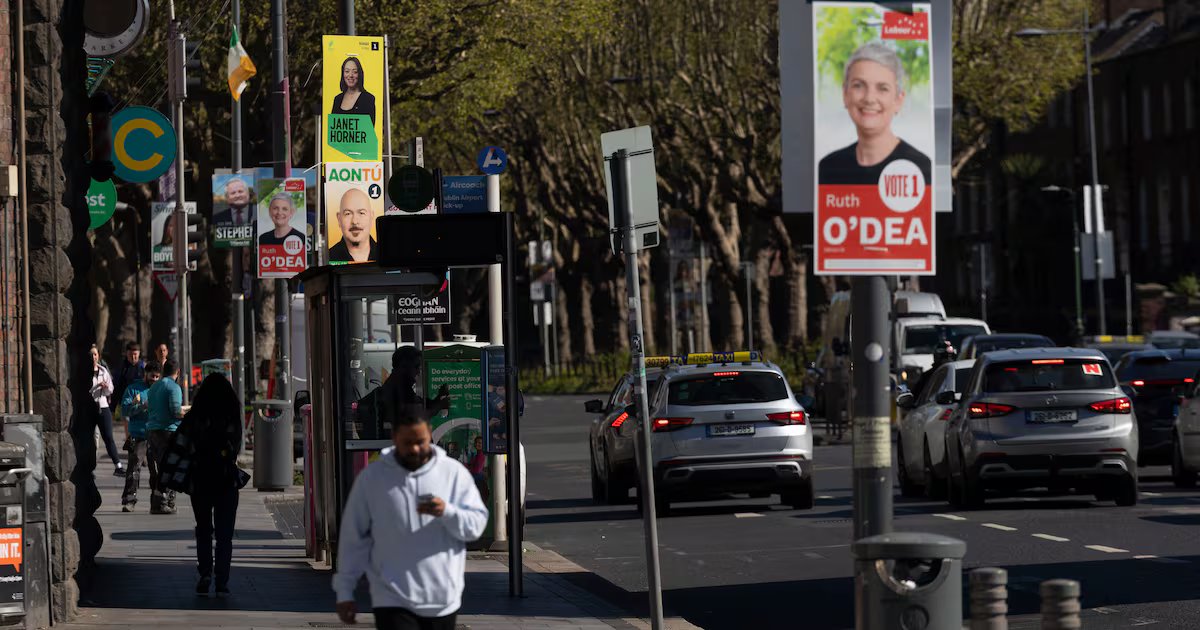
With the writs moved and polling day set for May 22nd, the four-week campaigns to fill the seats left vacant by Catherine Connolly and Paschal Donohoe are now formally under way. The byelections will offer a direct snapshot of the current political mood. They may also help shape the narrative of Irish politics for the foreseeable future.
However, the significance of these contests is sometimes overstated. A government with a comfortable majority can shrug off a mid-term reversal without lasting damage. History also tells us that the odds are against the Government parties, which may explain why Fianna Fáil and Fine Gael appear to have selected candidates with one eye on the next general election. The consequence could be that these elections become an audit of the Opposition.
Even at this early stage, two rather different contests are taking shape. Galway West is a constituency of contrasts: a city with serious congestion and housing pressures; the largest Gaeltacht in the State; remote island communities and a vast rural hinterland that felt the fuel protests acutely when Galway’s port was blockaded. The constituency may have produced two successive left-wing presidents, but the arithmetic does not favour a candidate of the left. The early frontrunner, Noel Thomas of Independent Ireland, is attempting to convert the raw energy of the fuel protests into an electoral message that also carries anti-immigration overtones. Whether that combination travels beyond its core audience will be one of the key questions of the campaign.
Dublin Central presents a different sort of test. Here, the pressure falls on Sinn Féin to demonstrate that Mary Lou McDonald’s personal mandate in her home constituency is transferable to her party’s candidate, Janice Boylan. That is far from guaranteed, with early reports suggesting a strong performance from the Social Democrats’ Daniel Ennis. The presence on the ballot of veteran criminal Gerry Hutch, who came within touching distance of the final seat in 2024, adds a further layer of unpredictability, if he does stand.
If the performances of the Government parties are particularly poor, this would not necessarily be without consequence. Both Micheál Martin and Simon Harris could face renewed pressure to offer further financial relief to households squeezed by the cost of living.
The deeper questions, though, concern the Opposition. Can the left alliance that delivered the presidency hold together under the competitive pressures of a Dáil contest? What are the implications for McDonald’s leadership if Sinn Féin fails to take a seat? And can Independent Ireland translate rural grievance into electoral breakthrough? Four weeks is a long time, but when the ballot boxes are opened on May 23rd they will provide at least a partial answer.