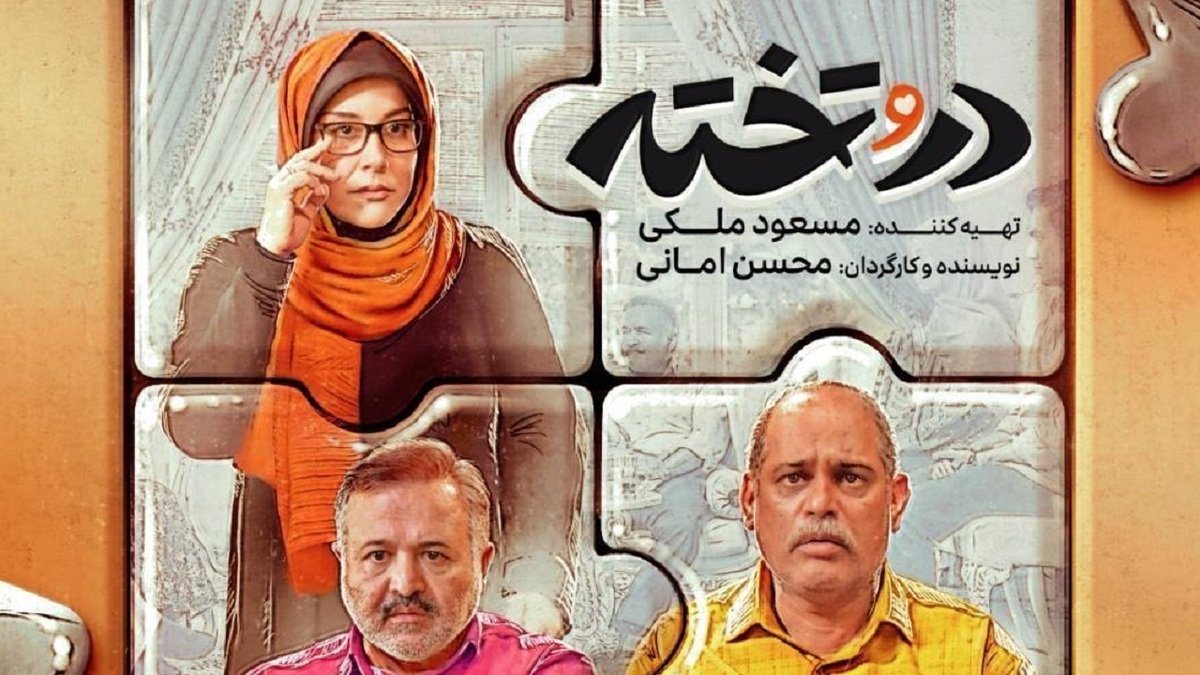
He boldly tackled a subject that is both sensitive and very tangible; A topic that maybe no one dared to talk about so openly for years. The story begins with a shocking incident: the transfer of two babies in the hospital, which is now revealed after 17 years. You may say that this story is old, but the art of the authors of this series is here, who have looked at the story from the perspective of our own culture and religious and customary issues. The discussion of “privacy” in this series is not just a word in the jurisprudence notebook; Rather, the driving engine is an attractive drum. When a truth is revealed, suddenly a child who grew up in the same house for 17 years, with the parents who gave him life, becomes unmarried. This is where the suspense of the story begins and the audience asks themselves: what should be done now?
Maybe the question arises, why did the director go to such a sensitive topic? While it was possible to go to the lap of routine and usual topics. The answer should be found in the words of the director himself. He says that the main spark of the work came from the leadership’s statements in 1392 and 1402; Where he had openly talked about the needs of 17-18-year-olds and the necessity of early marriage. For the director, this word has been a “license to dare”. The series actually wants to say that sometimes our concealment in the name of expediency causes great damage to the lives of young people. The door and the board is a mirror placed in front of us to remind us that honesty, however bitter, is the only way to salvation.
One of the greatest strengths of this collection is its brevity. In a situation where 26 or 40-episode serials are sometimes boring, recently, the national media has gone for short mini-series (such as eight-episode Mothers, seven-episode “Sada Qalb Man”) so as not to let the audience get bored and skip the good of watching the series. The fact that this series has 11 episodes also has a clear message: we will not waste your time.
On the other hand, when a series deals with heavy topics such as “Privacy”, “Moving the baby”, there is a danger of the atmosphere becoming too nervous and bitter, but the simplicity and intimacy of the role of the father (played by Nader Fallah and Seyed Seyed Ali Salehi) acts like an anchor that keeps the audience calm in the midst of all the tension.
A real dad show
In this series, the father is neither a mythical hero nor a dream character; He is a touchable and familiar man, similar to our own fathers. This simplicity makes the audience identify with him wholeheartedly when he faces the dilemma of morality and emotion and the series becomes more believable. A father who sees life as simple and intimate, is now involved in the most complex identity and religious crisis of his life. This contrast makes the drama very effective. His sincerity makes his expediency in not revealing the secret appear not out of malice, but out of paternal love.
In recent years, the image of the father in some works was either too harsh and traditional and controlling or too passive. Door and board has been able to play that authority combined with kindness and traditional simplicity. A father who is worried about “halal and haram”, but at the same time can’t get over his 17-year-old crush. Therefore, the trump card of the series is in drawing the father’s face; Fathers who have become the heroes of the story, not in their slogans, but in the simplicity of their behavior and the sincerity of their gaze.
In most Iranian movies and series, the father should always be the strong and flawless mountain of the family, but when we see Morteza (played by Seyed Ali Salehi) afraid of a cockroach, the series is smiling at us and saying: “He is also a human being with all his big and small weaknesses.” His simple fear and tiny trembling open the way for the audience to believe his trembling heart in front of that big 17-year-old secret.
This sequence says that being a hero does not mean not being afraid. Someone who is afraid of a cockroach now has to face a much bigger fear (losing a child or society’s judgment). This contrast makes his moral courage at the end of the story all the more valuable. If he was a fearless superman, his courage to reveal the truth would be worthless, but now we know how ordinary and even cowardly (even of a cockroach) he is, his standing in the face of great crisis is commendable.
A simple game that became the strength of the work
Another notable issue in the series is Nader Fallah’s acting. The audience always knows Fallah with bitter, serious and sometimes scary roles; From “Lanturi” and “Cold-hearted” to the series “Bei Afatfe” that is broadcasted on the home network these days. He plays the role of Assad in Be Aaffe; The same sullen, dry and stony character as always, but in this series, we are facing a new Nader Fallah. He plays the role of “Honest”; A father with a sense of humor is friendly and lovable. Fallah’s art here is that he was able to transcend himself. If it wasn’t for the similarity of faces, the audience would hardly believe that the same person played Sadeq Dar and Taht and the emotionless Asad.
In the end, the acting team and the agents of Dar and Tahtah are exactly like the name of the series, and they are well matched. If it wasn’t for Salehi, the boldness and change part wouldn’t be felt; If it wasn’t for Fallah, the sincerity of the work would be lame, and if it wasn’t for Asha Mehrabi, the emotion of the story would be invalid. This mini-series proved that it is possible to create a work that meets both the artistic standards and the audience by relying on local and real issues of the society and even to some extent taboo.