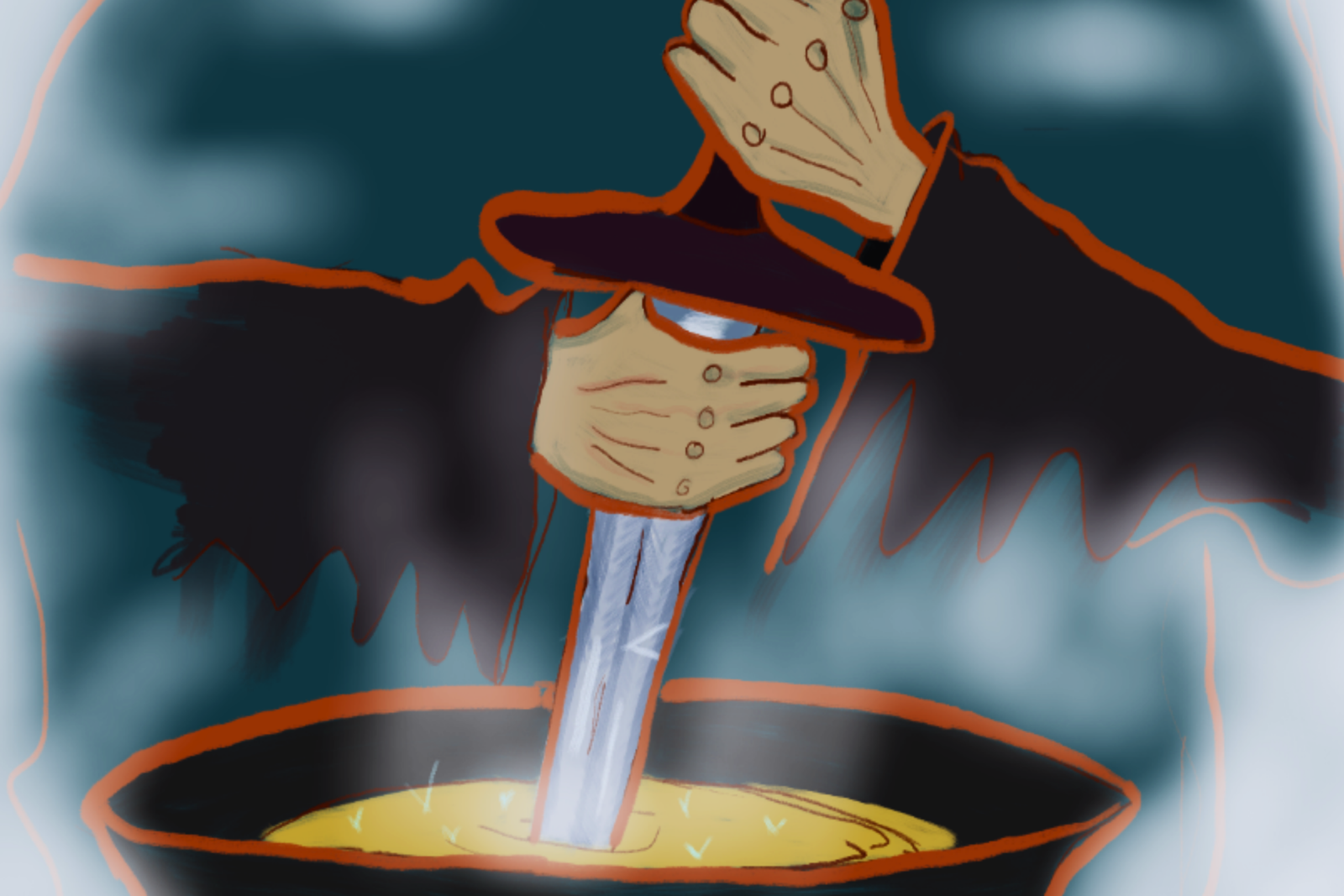
The ajika they offer in Imereti is not nearly as spicy as the one served further west. That’s probably because enough tears have already been shed on those rare occasions when it is prepared here. The occasion is the kelekhi, a Georgian funeral dinner. The kelekhi ajika is different from the usual kind, and critics from regions that claim the sauce as their own may even suggest it’s not ajika at all. But what does the name matter? What matters is that whoever mixes that kelekhi ajika with kelekhi lobio, a Georgian bean stew, and takes a bite, is instantly reconciled with one’s mortality and gets to accept a transcendental wisdom: that the only bad thing about dying is not being able to dine at your own funeral.
Here is Nini and the Dispatch newsletter, to talk about the culinary magic of Georgia’s funerals, and the solace and wisdom it offers to those left behind.
Kelekhi is a modest and somewhat uneasy ritual, or at least it is meant to be. It offers food to those who come to pay their respects, many of whom have traveled long distances and are likely hungry after an emotionally charged day. They may also drink a glass or two for the soul of the deceased, to help them on their way to eternal peace. There will be some community networking as well: in the countryside, there are few other opportunities to see distant relatives and learn about their lives, aside from occasional weddings.
Of course, no family is in the mood to arrange a large dinner in the midst of grief, and younger people will often tell you that the very idea of feasting minutes after someone is buried is outdated and disrespectful to the deceased. But one is also perfectly aware that the deceased themselves would not have wished to let their mourners go unfed. If they had lived a long, blessed life and passed away at a very old age, chances are they had even spent their later years replaying their last supra over and over again in their head.
One needs to respect their wish, but not overdo it.
The funeral meal often takes place in a plain, greyish hall reserved for such rituals. In rural areas, a special feast tent (“sepa”) may also be set up outdoors. If a grieving family member approaches you after the burial and asks you to “stay” for the kelekhi, you are expected to look shy and hesitant—you didn’t come here for lunch, after all. But neither should you make someone who has gone through so much pain plead too much. If nobody stays to break bread, it is not a good look for the family either.
The ritual expenses are covered by funds the mourners contribute. There is usually a designated person who collects the offerings and keeps the records in a “twelve-sheet notebook.” For those unsure of the proper amount, there is a reciprocal habit of consulting their own family records, their ancestral twelve-sheet notebook, to see what the family in question had offered when tragedy visited their household. Again, tribute should not be overdone.
Some dishes, like lobio, mimic, or claim to mimic, those from the everyday tables of Georgian families. Others, such as different types of plov – sweet or savory (shila), or tsandili, a sweet dessert made with honey, grains, and walnuts, or the kelekhi ajika, are typically reserved for funerals. Not that they are forbidden on less sorrowful days; they simply never taste quite as good.
Fatal Attraction
The question of why the funeral meal tastes so distinctively good is as inescapable as death itself. One can’t help but ask it after taking that first bite and, against one’s conscious will, enjoying it far too much. Browse the internet, and you’ll find people begging for recipes. Some even go so far as to confess to sinful intrusive thoughts about waiting for some distant elderly relative to pass away, just to receive that long-awaited kelekhi dinner invitation.
Those who have attended many kelekhis will offer their theories for why this is so.
There is, of course, a scientific answer. Some say that the flavors of kelekhi dishes simply blend better because they are cooked in large pots, unlike when they are prepared at home in smaller quantities. There must also be some forbidden-fruit psychology at play: the food may taste so good precisely because you are not supposed to enjoy it. But then there are spiritual explanations as well.
There is this roaming anecdote, often heard but hard to verify, about an “American” guest who was once so impressed by the kelekhi lobio that he took both the recipe and ingredients back home. Once he tried to recreate it in the United States, however, it was nothing like what he had at the funeral. Frustrated, he called his Georgian host to ask what he had forgotten to add, only to be told, over the telephone, that the missing ingredient was somebody’s dead body resting nearby.
Not sure about the body, but it would be quite understandable if the soul of the deceased had decided to mess with the meal.
Sauce to die for
Imagine leaving this world after a long, exhausting life and finding yourself in those few lingering days when your soul still clings to familiar places before ascending to heaven.
As the days pass, you look forward to your kelekhi, when everyone you have known and loved finally comes together. Your last spotlight, your last supra. And then all you see is appearances, reservations, “don’t eat this,” “don’t eat that,” endless tiptoeing so as not to disrespect your memory. While alive, you may have appreciated, or even wished for, all that sadness and tears and plainness. But death can be liberating. It frees us from societal pressures and from the vanity of wanting to be cried about. If someone truly wishes to eternalize your memory, they might be better off throwing an unforgettable party. But what can you do when, for us, mortals, joy can be a taboo even greater than death?
You can’t intervene too openly: you don’t want to take others with you just yet. So you use whatever otherworldly powers you have acquired and quietly work your magic on the food. It’s your last party, and they are going to enjoy it, whether they want to or not, and then they are going to talk about it for years to come.
But then there is another haunting question that the fatally delicious food invokes: does somebody really have to die for Georgians to deliver their best performance?
The question becomes all the more pressing as the nation keeps looking outward, only to find everyone else suddenly doing better, everyone else seemingly getting rid of autocrats one way or another, while we, who once saw ourselves as the most freedom-loving, self-reforming society, remain stuck in a deadly, inescapable circle.
What did we forget to add?
Certainly not sacrifice. But perhaps the missing ingredient is the positive liberties one acquires through death-like transformations, and perhaps the only thing that needs to die is the overly prudent politics of “don’t do this, don’t do that,” still dominating political discourse in Georgia even when there is not much left to lose.
Perhaps, at last, the time has come for politics of doing this and doing that.