“Beautiful people are loved more often and more diligently,” sang Vladimir Vysotsky. The thoughts of the Soviet poet are tested in practice in the short film “Bagel” (2026). The nine-minute film not only glorifies the power of love, but talks about the problems of teenagers and tests the strength of a simple modern family. The director of “Bagel” Ksenia Zolland shares the results of the test.
Being a teenager sounds difficult. You can easily call them the most vulnerable category of people with a lot of problems. And after all, everyone has gone through adolescence, so they must remember how difficult the experiences that accompany this period are. I remember my excess weight and the environment that was not always helpful, I remember the colossal work that I had to decide to do in order to cope with the feeling of inferiority.
In “Bablik,” a teenage story unfolds in the format of a sports drama—a metaphorical cluster of life plans, goals, and ambitions that is understandable to most viewers. Alas, professional sports is a traumatic story. Some find strength in themselves and, having recovered, return to the work of life, others end their careers – and then it turns out that there is nothing more outside of sports. There are plenty of “stories of failure” in the world of sports, and especially teenagers are rarely ready for a new way of life and the realization that the path to victory sometimes begins with complete defeat.
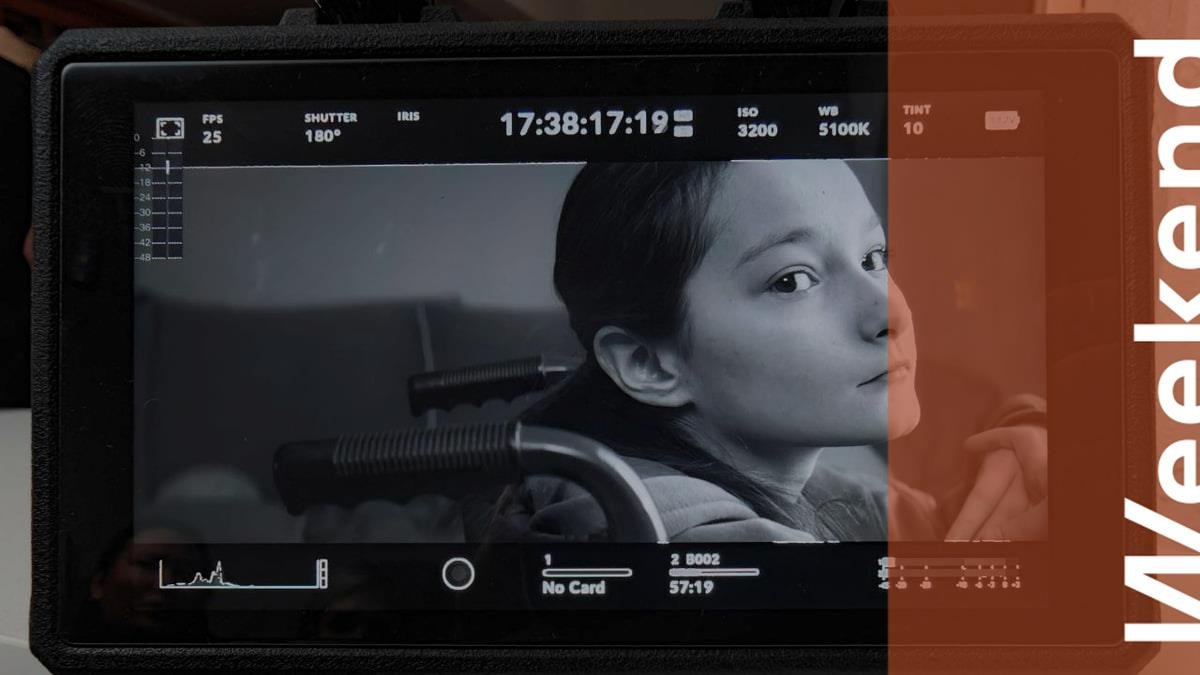
The fate of Zhenya, the main character of “Bablik” performed by Maria Shilina, turns out to be favorable to her: after the injury, the girl still uses a wheelchair, but is gradually recovering. All that remains is “a mere trifle” – fixing your psychological health – and you can return to school and sports.
Zhenya is an ordinary teenager from a simple family, in which events generally develop according to the scenario accepted at this social level. I say “in general” because I introduced into the plot the father of a family who does not behave according to the rules. It is curious that not all viewers are ready to perceive fathers as the authors of big changes and do not read the fact that it is thanks to his idea that the story of the teenager Zhenya moves onto a different track.
I understand that the tired mother is closer to the viewer – this image is widespread in society, is instantly read and evokes sympathy. Mothers deal with everyday issues, they are tired of everything and are not used to talking about it. And yes, you need to support your teenage daughter, but where can you get that much strength?
With the power given to me by cinema, I throw a pinch of therapy into what is happening with a teenager and her mother. And in the right place at the right time, the wisdom of the father sounds in the cinema. He comes up with a plan to help his daughter, but does not force it. A non-trivial approach to a task ultimately leads to the desired result and at the same time transmits the soft power of love. A power that does not manifest itself in loud statements, does not impose something that would cause rejection. She brings new love into life – more complex and ambiguous. Just not those who are “loved more often and more diligently.”
You won’t love a dog named Bagel for being photogenic, glamorous and cute. It is unlikely that anyone, with the exception of lovers of the Brussels Griffon breed, would think of publishing their photographs on social networks for the sake of public recognition. You need to mature before liking Bublik – he looks too specific, requires too much internal work – often there is not enough time or energy for this. Fortunately, Zhenya reveals both – as a result, the character of the heroine is revealed, and her personal story radically changes the vector of movement.
In addition to the ringing theme of love in all its forms, the nine minutes of “Bagel” will certainly lead viewers to think about the sudden influence of an unexpected factor. This is the appearance of Bagel, initially seemingly a burden and an obstacle, and then a catalyst for change. You never know where help will come from, and often what feels like a heavy weight on your leg suddenly becomes salvation.