The effects may not be limited artificial intelligence In the health sector, it focuses on diagnosis and treatment, but also extends to administrative decisions related to the provision of medical care. In this context, the Futurism website discussed the case of the death of a patient, after her family blamed a government system supported by artificial intelligence for delaying her transfer to the intensive care unit.
The report was based on what was published by the Brazilian newspaper MG1, which reported that Rebecca Cardoso Teniente Molina (32 years old) was receiving treatment for gallstones in a hospital in the municipality of São João Nepomuceno, before her health condition deteriorated and she needed to be transferred to an intensive care unit in another hospital. According to the report, she waited five days to get a suitable bed.
According to her family, a bed management system operating within the Health Care Operations Center in the Brazilian state of Minas Gerais gave her condition a lower than actual risk level, which led to a delay in her receiving priority transfer.
According to the patient’s sister, who legally represents the family, the system gave her condition a rating lower than its actual level of risk, which allowed other patients to get priority on the waiting list, while it did not accept raising the level of risk despite tests that indicated a deterioration in her health condition. It also considered that doctors had lost their independence in determining the seriousness of the patient’s condition, and that the decision was no longer in the hands of the treating physician present with the patient, but rather had become linked to the evaluation of the central system.
She also indicated that the family resorted to emergency legal action to demand that the patient be transferred to the intensive care unit, but the transfer was delayed. The family believes that the five-day waiting period was a decisive factor in her death.
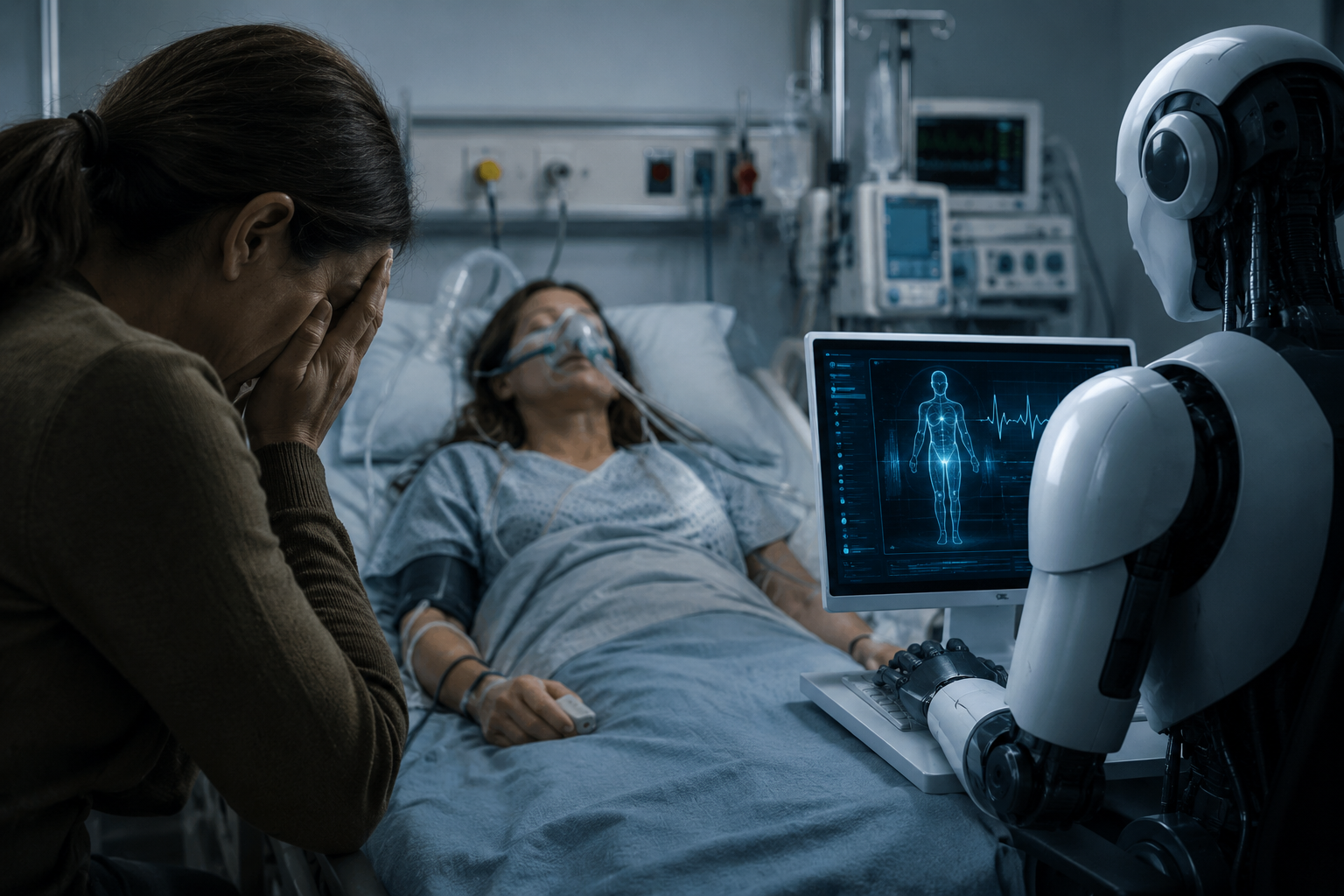
An expressive image designed with artificial intelligence (GPT chat)
On the other hand, the health authorities in the state of Minas Gerais confirmed that patient transfers depend on the availability of beds appropriate to the clinical needs of each patient, noting that the system did not fundamentally change the protocols approved for transferring patients between health institutions.
This issue brings to the forefront the debate about the limits of reliance on systems artificial intelligence In health care management, especially when its decisions are related to patients’ ability to obtain the necessary care in a timely manner.