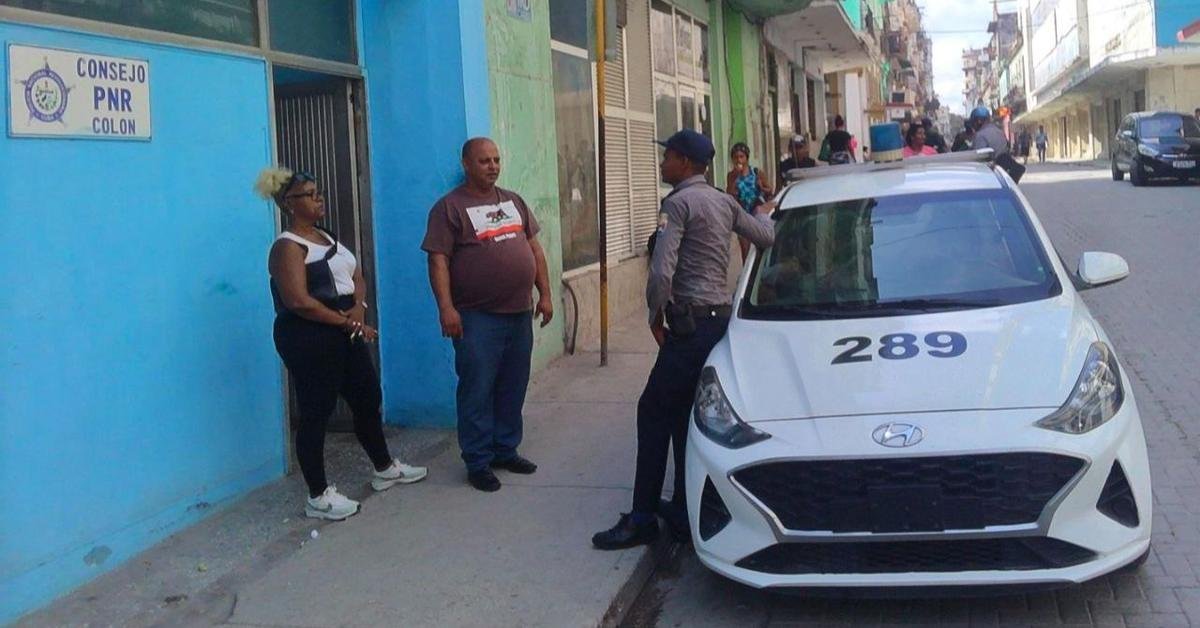
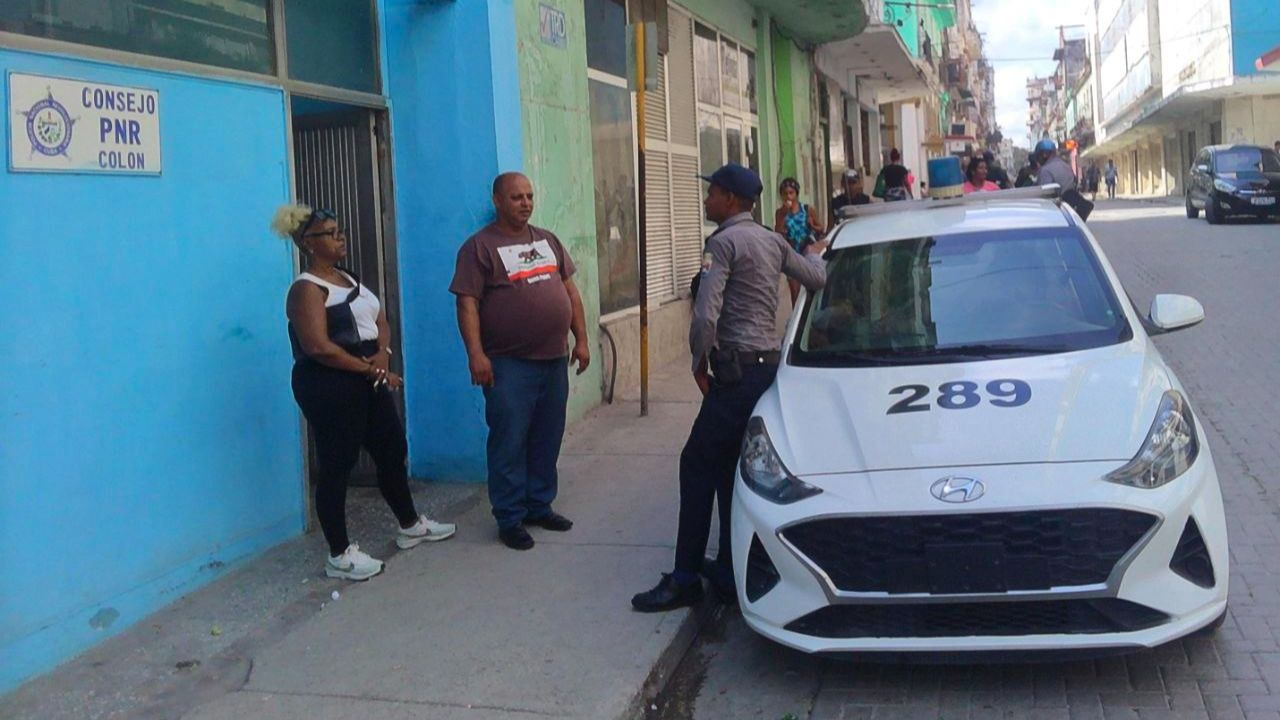
Madrid/The recent police operation in San Miguel del Padrónin which – in the words of the official press – the Ministry of the Interior and the National Police detained “undocumented and illegal people in the capital with inappropriate conduct,” and testimonies like that of Yoani Sánchezdirector of 14ymedioshow a reality that the regime avoids talking about: the increasing arrests of Cubans in Havana just for not residing at the address indicated on their identity card.
“Two police officers – from Guantánamo – detained me in the middle of a public street and, when they saw that my home was in Guantánamo, they threatened to deport me to the east,” a reader tells this newspaper who denounces his experience as an example of having been “a victim of harassment against ‘illegals’ in Havana.”
This same Friday it was also reported that the evangelical pastor Rolando Fidel Pérez Loraknown as “Pregonero de Cristo”, held in Villa Marista – headquarters of State Security – in the middle of the current wave of arrests against activists and opponentswill be forcibly transferred to Las Tunas. This is an example of how immigration control is also used as a mechanism of repression against dissent.
The cases show how the application of regulations that restrict the freedom of movement of Cubans within their own country has increased. The use of terms such as “illegal” and “deportation” by the authorities and official media themselves highlights the violence of this regional discrimination, by referring to provincial residents as if they were natives of a foreign nation.
The use of terms such as “illegal” and “deportation” by the authorities themselves and official media highlights the violence of this regional discrimination.
Javier Larrondo, president of the independent organization Prisoners Defenders, explains that “the Cuban does not identify that this is a violation of his rights and that, therefore, he is a conscientiously convicted person, in the sense that he is convicted of violating his fundamental rights.”
The legislation that applies to those who live in the capital without a residence permit is the Decree Law 217approved in 1997, entitled “Internal Immigration Regulations for the City of Havana and its Contraventions.”
The regulations impose that any person from another province who wishes to reside in Havana must first obtain an administrative permit: an authorization from the municipal government of the territory where the home in which they intend to reside is located. This means that the authorities handle it as a discretionary right of admission, through which they authorize or not authorize residence in the capital. Without an accreditation document from municipal entities, Cubans from other provinces are exposed to fines and being returned to their place of origin.
The complexity of accessing this institutional permit explains that many provincial citizens who move to the capital do not have their updated documents to be considered “legal.” Due to this same lack of movement rights and regional discrimination, nicknames such as “Palestinians” or “landless” have become common to refer to Cubans from the east of the country who reside in Havana, “the capital of all Cubans,” as their slogan says.
Nicknames such as “Palestinians” or “landless” have become common to refer to those from the east of the country who reside in Havana, “the capital of all Cubans.”
In the comments to the official publication Regarding the arrests of “illegal and undocumented” people in San Miguel del Padrón, some users also recounted their experience with this immigration discrimination. A resident of Santiago de Cuba recounted the visit she made to her father in Nuevo Vedado: “We were walking along 23rd Avenue and a police officer stopped us and asked us for documentation and began to ask us why we had gone and how long we were going to stay, and if we had brought a transfer for a month from Santiago de Cuba to Havana.”
He surveillance mechanism begins with the identification of migrants, either in random controls on the street by the National Police or in home inspections that have the support of the Committees for the Defense of the Revolution (CDR). After the fine, the citizen is given a period of less than 72 hours to return to his province. If this voluntary departure is not carried out, the transfer is done by force: those affected go through temporary detention centers – among them, the one known as El Vivac – and are returned to their provinces in buses or trains guarded by the police.
The Government justified the rule in 1997 due to demographic pressure on housing, employment, transportation and basic supplies. Organizations like Human Rights Watch (HRW), Cubalex and the Inter-American Commission on Human Rights have described these practices as serious violations of freedom of movement.
The Cuban Constitution that was approved in 2019 recognizes in its article 52 the freedom of people to enter, stay, transit and leave the national territory, and to change their address or residence, “without more limitations than those established by law.” This reservation leaves a wide margin to the State.
The regions far from Havana, the ones most abandoned by state management, are also the ones that suffer the most from the deterioration of living conditions.
Internal migration in Cuba responds to a logic that is repeated in the world: people move from less developed areas to cities with more economic dynamism. In the context of the current crisis, the regions far from Havana, the ones most abandoned by state management, are also those that suffer the most from blackouts, water shortages and the deterioration of living conditions in general.
Deciding where you live within your own country is a basic right, and international law has recognized it for decades. According to the independent organization Cubalex, classifying a Cuban as “illegal” for living in Havana has no basis in international law. The Universal Declaration of Human Rights It is stated in article 13: every person can move freely and choose their residence within the borders of a State. The International Covenant on Civil Rights and Politicos develops it in its article 12: “every person who is legally in the territory of a State will have the right to move freely through it and freely choose their residence there.”
Cubalex also points out that these arrests are incompatible with the prohibition of arbitrary detention, according to the Human Rights Committee.
The Cuban Government frequently denounces the immigration policies of the United States. Last Tuesday, the Vice Minister of Foreign Affairs, Carlos Fernández de Cossío, did it again in a extensive message on social networks. There is a contradiction when the Government censors the arrests and expulsions of migrants in the United States, but applies measures within Cuba that can end with citizens being forcibly returned to their provinces. Both procedures can affect freedom, family life and access to basic guarantees.