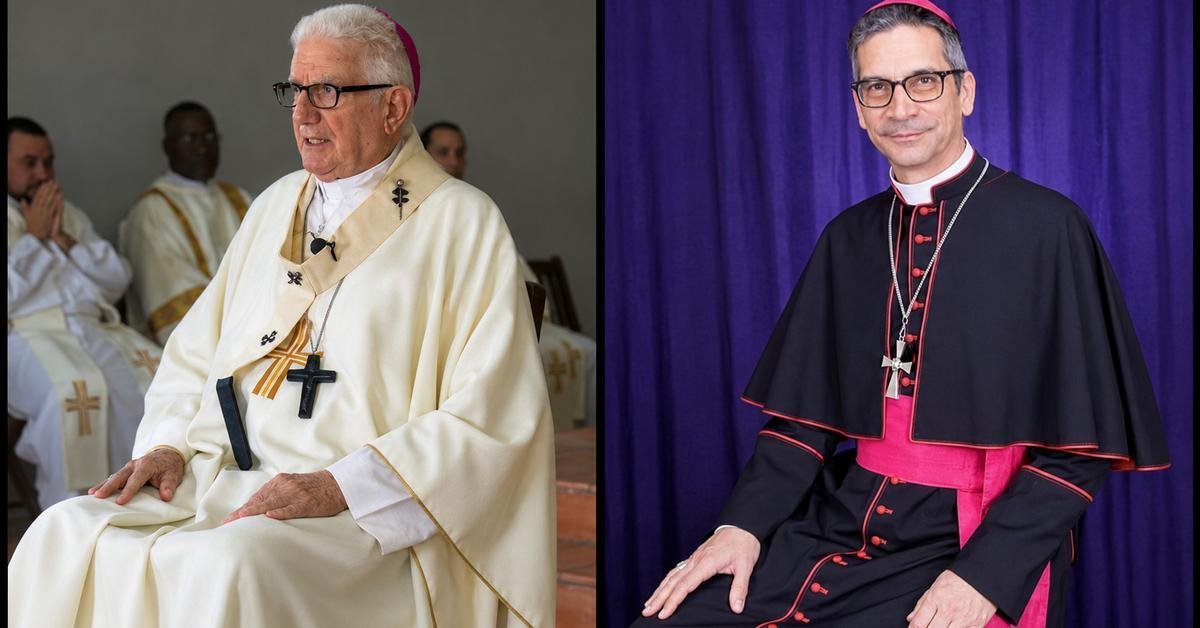
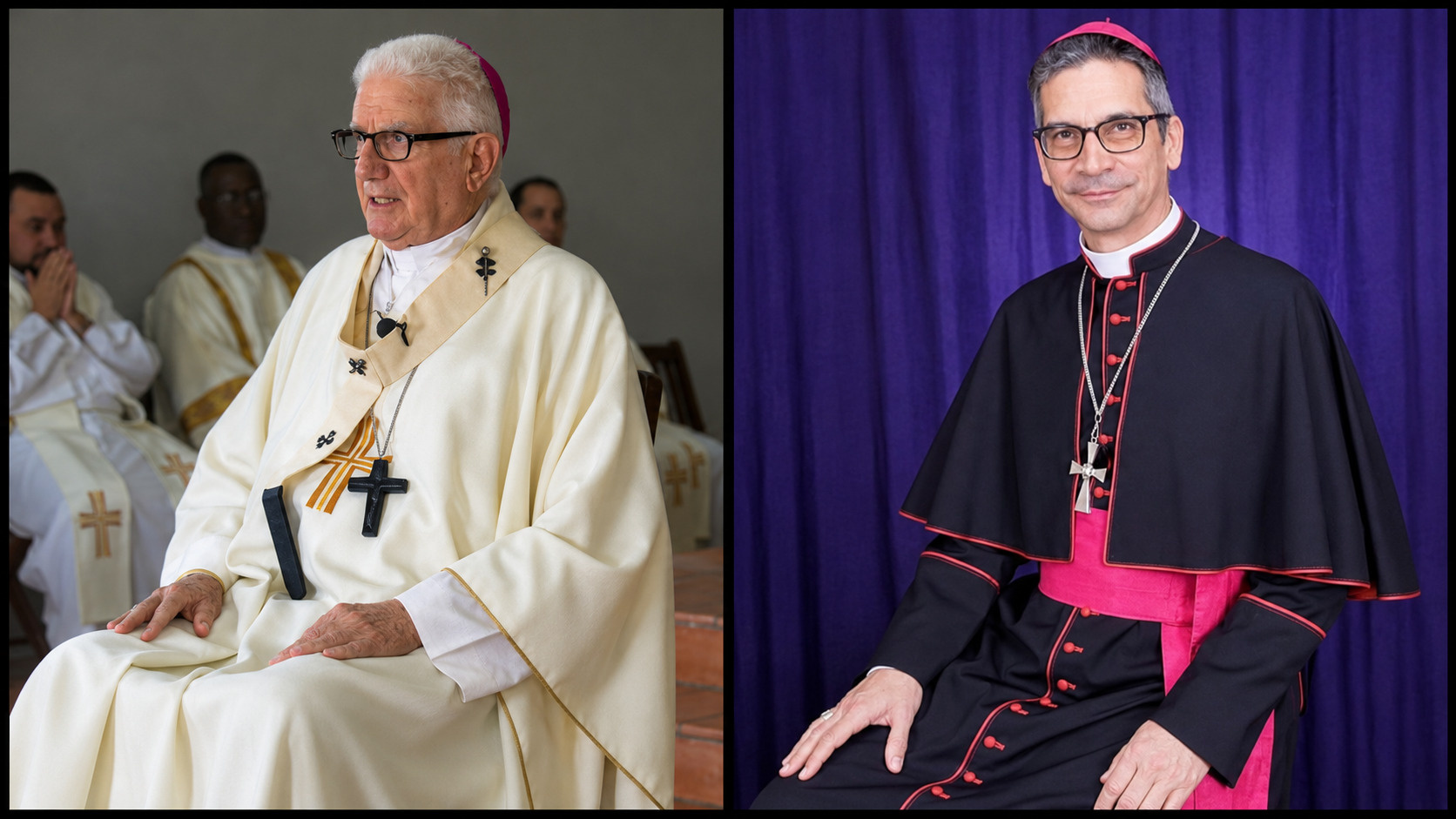
Havana/Pope Leo XIV accepted this Saturday the resignation of Dionisio Guillermo García Ibáñez, 81, as archbishop of Santiago de Cuba, and appointed in his place Juan Gabriel Díaz Ruiz, until now bishop of Matanzas and vice president of the Conference of Catholic Bishops of Cuba. The replacement puts an end to more than 19 years of García Ibáñez at the head of one of the most important headquarters of the Catholic Church on the Island, from which he has delivered some of the most forceful criticism of the ecclesiastical hierarchy against the abuses of power and the situation in the country.
The decision was announced this November 7 through an official statement from the Vatican and confirmed by the Cuban Episcopal Conference, which thanked the outgoing archbishop for his pastoral dedication and called on the faithful to accompany the new prelate with their prayers.
García Ibáñez turned 75 in 2020, the age at which bishops are called to present their resignation, as established by the Code of Canon Law. However, he remained at the head of the archdiocese for almost seven more years, until the Holy See accepted his retirement this Saturday.
Born in Guantánamo on January 31, 1945, he has distinguished himself for defending the needs and aspirations of Cubans. He was appointed archbishop of Santiago by Benedict XVI in February 2007, replacing Pedro Meurice Estíu, remembered for his critical position towards the regime. Previously, he had been the first bishop of Bayamo-Manzanillo, since 1995. He presided over the Cuban Episcopal Conference between 2009 and 2017 and is also listed as president of Cáritas Cuba.
“Our people also ask for freedom. For what? So that each one can carry out their project”
His almost two decades at the head of the archdiocese coincided with some of the most momentous episodes in Cuba’s recent history: the illness and death of Fidel Castro, the arrival of Raúl Castro to power, the diplomatic thaw with the United States promoted by Barack Obama, the visit of Pope Francis in 2015 and the rise of Miguel Díaz-Canel to the presidency.
He also witnessed especially difficult moments, such as the devastating passage of Hurricane Sandy through Santiago de Cuba in 2012, the covid-19 pandemic, the failed Ordering Task of 2021, the protests of July 11 of that same year and the subsequent wave of arrests and convictions. Added to all this was the migratory exodus, the worsening of the economic crisis and the prolonged blackouts that have marked recent years.
In March 2024, a few days after the protests Due to the blackouts and food shortages in several locations in the east of the country, he gave a homily at the Santuario del Cobre in which he supported the demands of the protesters.
“Our people also ask for freedom. For what? So that each one can carry out their project,” he then statedafter remembering that citizens were demanding food and electricity. He also lamented the exodus of young people: “Many of our children go to other places because they do not find it (their development) here.”
In recent months, Díaz Ruiz has participated in the distribution of US humanitarian assistance
His questions about the exercise of power continued this year. During another homily delivered on July 19the religious reflected on the impunity of those in authority: “When someone does things they shouldn’t or abuses power, who can hold it in their face?” Although he did not directly mention the Cuban Government, his words addressed a particularly sensitive issue in the political reality of the Island.
Last September, during the celebrations for the Virgin of Charity of Cobreinsisted that “the only path for good, for the progress of Cubans, is born from freedom and respect.”
His successor, Juan Gabriel Díaz Ruiz, was born on November 14, 1960 in Céspedes, Camagüey. He studied Civil Engineering before entering the San Basilio Magno Seminary in Santiago de Cuba and continuing his religious training in Havana. He later obtained a degree in Sacred Scripture at the Pontifical Biblical Institute in Rome.
Ordained a priest in 1989, he was appointed bishop of Ciego de Ávila in 2017 and transferred to Matanzas in April 2022. He currently holds the vice presidency of the Episcopal Conference and chairs its national commission for the pastoral care of adolescents, young people and communication.
Their arrival occurs in the midst of a deep economic and social crisis, marked by poverty, blackouts and emigration.
In recent months, Díaz Ruiz has participated in the distribution of US humanitarian assistance. On October 14, received at the Varadero airporttogether with representatives of Cáritas, a shipment destined for vulnerable families in Matanzas. García Ibáñez had also participated in meetings to coordinate the delivery of donations from the United States.
Díaz Ruiz’s new responsibility places him at the head of an archdiocese closely linked to the religious history of Cuba and the National Shrine of the Virgin of Charity of Cobre, patron saint of the country.
Their arrival occurs in the midst of a deep economic and social crisis, marked by poverty, blackouts and emigration. In addition to the pastoral challenges, the new archbishop will have to face the expectations of a community that has listened to his predecessor demand dignity, respect and freedom for Cubans for almost two decades.