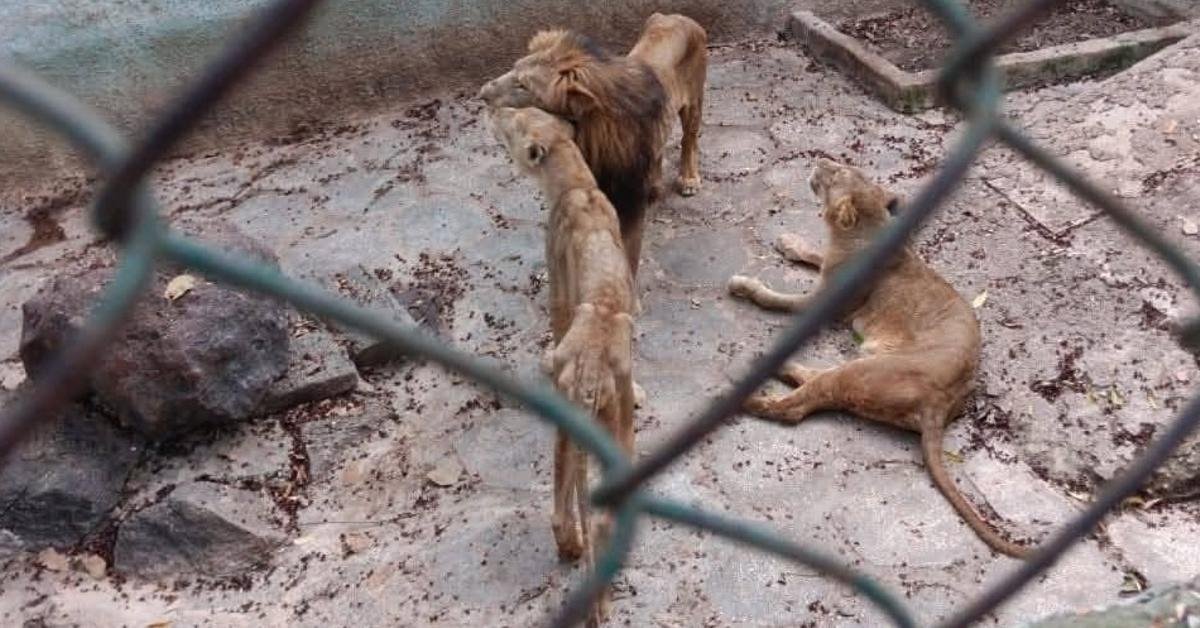
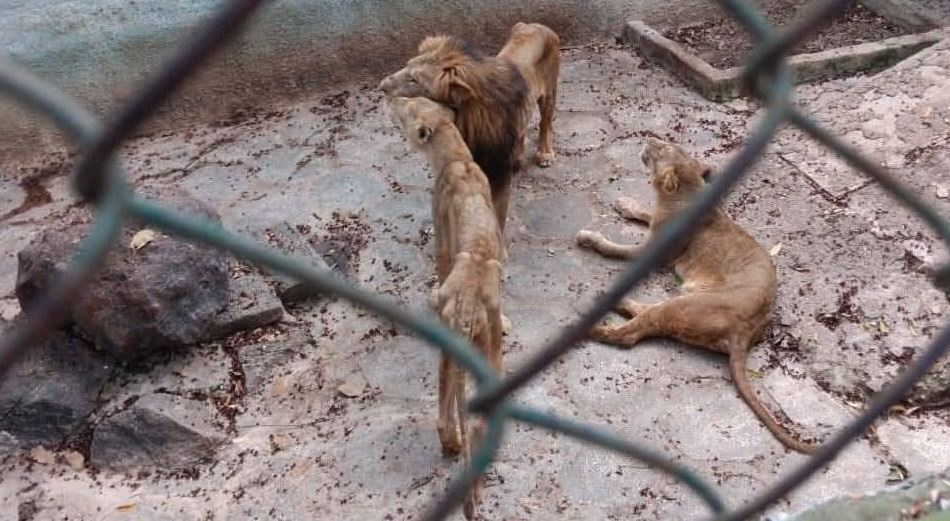
Havana/The images of the lions at the Camagüey zoo broke in a matter of hours the usual silence that surrounds the deterioration of these enclosures in Cuba. What they showed was difficult to put into perspective. The so-called kings of the jungle looked skeletal, with skin stuck to their bones, little mobility and a general appearance of exhaustion. The complaint began to circulate just three days ago and since then the case has become visible proof not only of the state of these felines, but also of the chronic neglect suffered by the country’s zoos.
The reaction of the Casino Campestre management was not to recognize the seriousness of the problem, but to entrench itself in the official defense. In a statement disseminated by local institutionsthe administration denied any trace of abandonment and malnutrition, described the complaints as “manipulation” and assured that the animals receive specialized care. But that response came after several citizens reported that they had tried to bring food on their own and were prevented from doing so with the argument that lions “don’t go hungry.”
The most revealing thing is that, after the scandal, there were visible changes within the facility. The most recent reports describe accelerated cleanings, emergency repairs, restricted areas and increased surveillance of those using mobile phones inside the zoo. There was, however, no transparent explanation about how long the lions had been in that state or who should be responsible for the deterioration of the facilities and the animals.
There was a time when the problem with lions in Cuban zoos was not, supposedly, a lack of food, but rather an excess of cubs.
There was a time when the problem with lions in Cuban zoos was not, supposedly, a lack of food, but rather an excess of cubs. In 2017, an EFE dispatch reported that the two main Havana zoos had recorded more than 500 births since the late 1980s, until they had collected 45 African lion specimens, an unusual number for this type of institutions.
That baby boom It even forced the application of reproductive control measures, first with hormonal contraceptives for females and later with vasectomies for males. Part of those animals came from a donation from Namibia signed in 2012 – a total of 146 animals were transferred, in an operation that the regime pompously called Noah’s Ark II–, while others descended from specimens given by Tanzania to Fidel Castro in the 70s. Seen from today, that heralded abundance contrasts fiercely with the current image of felines consumed by hunger.
In December 2025, the case of a lion from the Florida municipality zoo, also in Camagüey, had already been reported, which had supposedly not eaten for several days and was gnawing old bones inside its cage. Added to this is another precedent still remembered in the province, when in May 2021, three lions escaped from the Camagüey Performing Arts Council due to negligence before being captured. They are different episodes, but together they paint the same scene of precariousness, institutional neglect and reactive, not preventive, control.
The case of Camagüey also fits with a chain of complaints about the deterioration of zoos throughout the Island. In May 2024, this newspaper reported the situation at the Bartolomé Masó zoo, in Manzanillo, where the lions Gerardo and Karen appeared malnourished and with their skeleton visible under their fur. Each one needed about 10 kilos a day of meat, bones, organ meats, fish, chicken and meat waste, a diet that was already impossible to sustain. Gerardo was nine years old and had arrived from Kenya, while Karen was born in 2019 after a cesarean section performed on her mother. The problem was not only the lack of food, but also the secrecy surrounding the feeding of the animals.
A worker attributed several deaths to the lack of specific foods required by each species
In August 2025, this same deterioration was exposed at the National Zoo in Havana. The lions donated by Namibia appeared starving and a worker summarized the place’s survival logic with a harsh phrase: when an animal dies, they feed it to the others.
Much earlier, in October 2021, this newspaper described the reopening from the zoo on 26th Avenue in Havana, with a phrase that today could be applied to several parks in the country: “This looks more like a cemetery than a zoo.” At that time, emblematic species were already missing, including the rhinoceros, the boa and the Galapagos tortoise, and one worker attributed several deaths to the lack of the specific foods required by each species. To this picture would later be added new complaints about malnourished, sick animals and without enough water.
In the midst of the Camagüey crisis, news has also emerged that does not solve the problem, but does shift some of the attention. This April 5, the official newspaper Invader reported that the Ciego de Ávila zoo, in the midst of a resuscitation process, will receive two donated lions from Camagüey. The note presents the decision as part of the recovery of the Avilanian park and ensures that there is an agreement with agriculture and livestock entities to guarantee food for carnivores, described there as the most sensitive link in the system.