
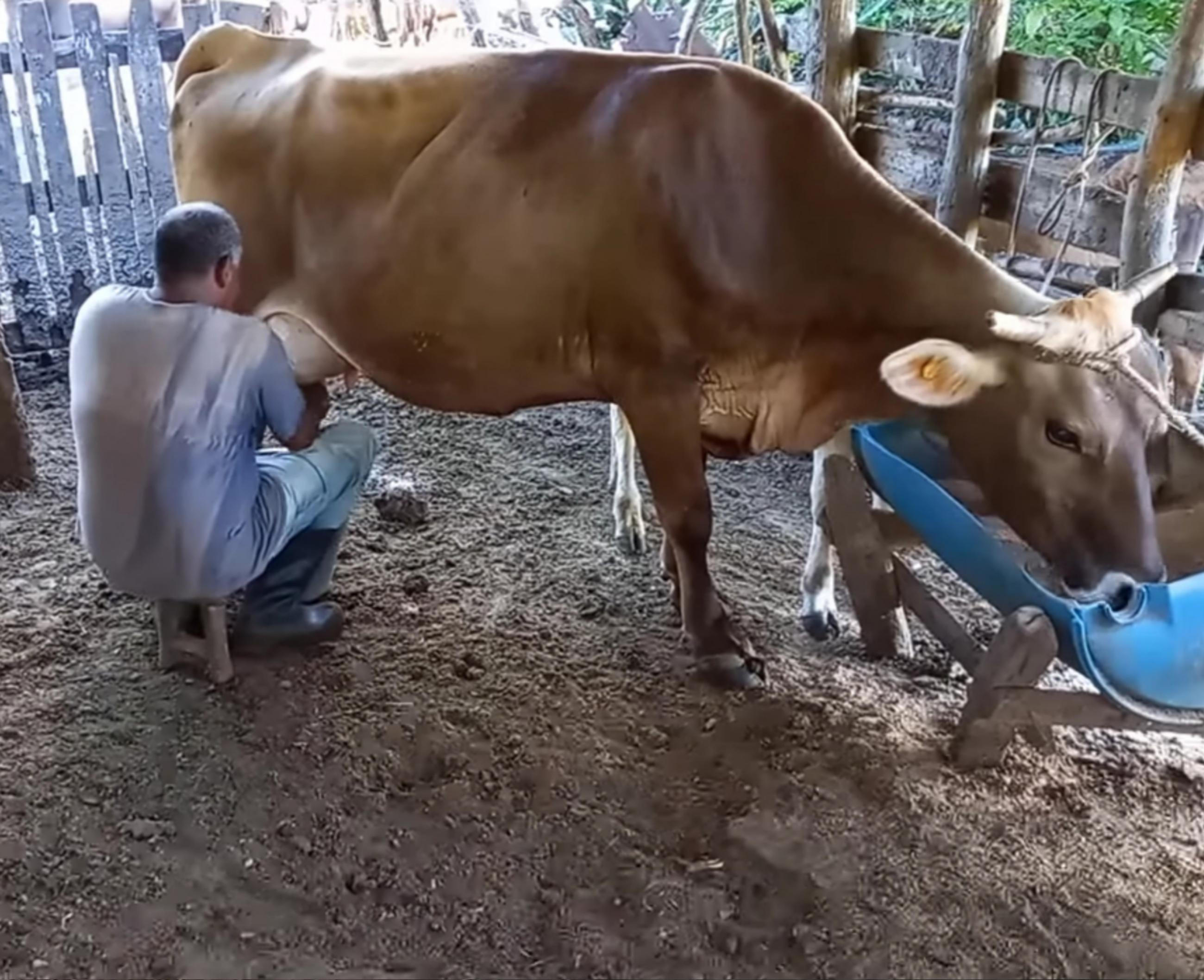
Madrid/The marketing of agricultural production will no longer be a monopoly of the state company Acopio, as it has been for 40 years. According to the regulations published this Thursday in the Official Gazetteproducers will have more freedom to sell directly in the national market, although the State reserves the most profitable items and maintains the management of exports.
The main novelty is, without a doubt, the recognition of MSMEs, cooperatives, self-employed workers and individual producers as possible intermediaries. Thus, Decree 143/2025 and Resolution 16/2026 consider that any economic actor can manage markets, rent state premises or sell merchandise, both wholesale and retail.
Acopio is, from now on, one more, although with considerably more infrastructure than any private company in the country. As such, you must be able to fulfill the obligations of the contract regardless of whether you have financial resources or not. In the event that it has logistical and financial problems, it is obliged, like everyone else, to communicate this to the producers with whom it had contracted, who are thus freed to market with other natural or legal persons. In accordance with this principle, the obligation for farmers to have no choice but to turn to the state company despite the eternal debts and non-payments ends.
Producers are now authorized to make direct sales to the national balance, tourism or mini-industries.
Producers are now authorized to make direct sales to the national balance, tourism, border sales in foreign currency, the national food processing industry, and mini-industries. On the other hand, exports have several peculiarities. Although the producer can choose the product and where to sell it, he must market it through intermediaries approved for this purpose, presumably due to their specialization.
In addition, there are a series of products that are exempt from this freedom of sale, which are strategic items for the country. The list currently consists of tobacco, charcoal, honey, cocoa and coffee, although the concept of “others” leaves the door open to include any that may be considered in the future.
The regulations include a significant change in the hiring committees, a figure that already existed but now, especially with the inclusion of private ones, represents the decentralization of the marketing system.
These groups, of a territorial nature, will be made up of a president – the Governor (at the provincial level) or the Mayor (at the municipal level) –, permanent members – representatives of the Delegation of Agriculture, state and private companies, cooperatives and producers – and guests – representatives of the Bank, Finance and Prices, the National Association of Small Farmers and the union of workers in the sector.
Their role is now decisive, compared to what they had before, almost more deliberative but without a final decision. The setting of prices for non-centralized products now depends on them and to do so they must have local cost and market behavior as a reference. Its functions also include deciding the order of priority of production – social consumption and state markets – preparing balance sheets and future estimates, as well as resolving conflicts. According to the latter, if the buyer of a product communicates that he does not have the funds to purchase what was contracted, they will be the ones to establish its new destination “without this meaning causing an increase in expenses for the producers or exonerating the non-compliance with the contract from liability,” he points out.
The new regulations include some economic control mechanisms, including the total banking of operations and the use of the SIPA computer system.
Another important figure is the public purchasing committees, in charge of supplying social consumption entities – hospitals, nursing homes and schools. These committees, which must be established in each center, are chaired by the head of the entity and have an odd team of their own personnel in charge of managing each acquisition.
The biggest change is that the state allocation ends and bidding and competition mechanisms are established. Each hospital, school or any of the entities must make a call where any economic actor – whether a state company, a cooperative, a MSME or an individual producer – can present its offer on equal terms. The committee must evaluate the proposals and select the supplier based on the best relationship between quality, price and delivery timeliness, issuing a formal opinion that culminates in a legal contract and is subject to control, theoretically to avoid cases of corruption or privilege.
The new regulations include some economic control mechanisms, including the total banking of operations and the use of the SIPA computer system to register contracts and movements, a possible problem due to the distrust that citizens feel towards the political and economic system.










![Tourism minister addresses Stonefield quarrying concerns [with audio]](https://agentially.org/wp-content/uploads/2026/04/Tourism-Minister-Denise-Charles-Pemberton-e1775575386429-120x86.jpeg)