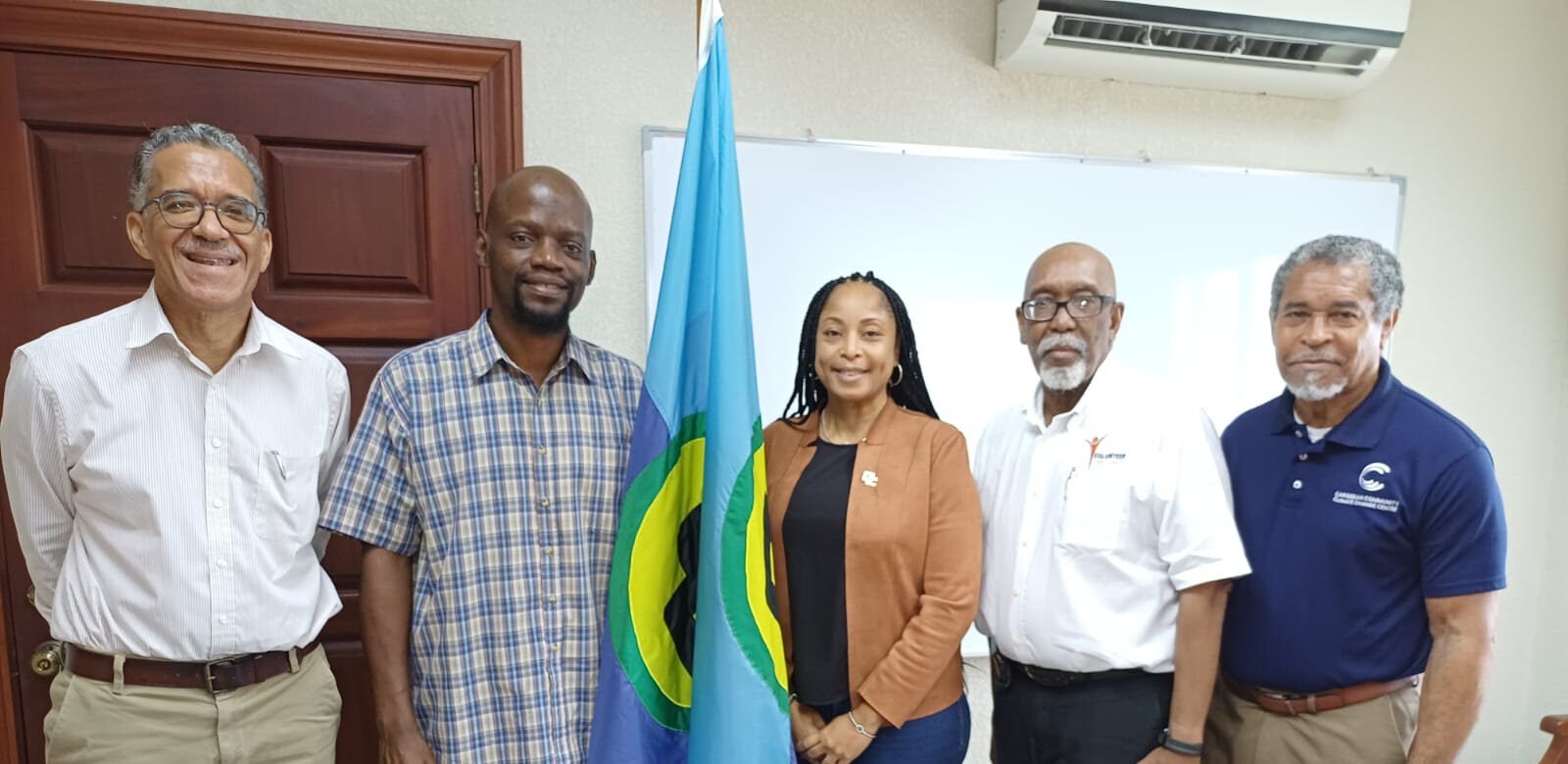

The Caribbean Regional Fisheries Mechanism (CRFM) and the Caribbean Community Climate Change Centre (CCCCC) are moving to strengthen their collaboration as they work to address the growing effects of climate change on the region’s oceans, fisheries and coastal communities.
CRFM shared via press release that representatives of the two organisations met on July 16, 2026, to explore ways
combining their expertise, resources and ongoing initiatives to better respond to some of the Caribbean’s most pressing environmental issues.
During the discussions, the CRFM provided an update on several regional projects aimed at helping member states build more resilient and sustainable fisheries. The initiatives include efforts to improve marine spatial planning, expand the use of renewable energy, strengthen the livelihoods of fishing communities and promote greater gender equality within the fisheries sector.
A key focus of the meeting was the ongoing challenge posed by sargassum seaweed, which continues to affect coastlines throughout the Caribbean.
While acknowledging the negative impacts of large sargassum influxes on tourism, fisheries and marine ecosystems, both organisations reportedly agreed that the seaweed could also present economic opportunities if it is safely processed into useful products using a circular economy approach. They also highlighted the need for additional research, stronger regional coordination and improved information sharing to support effective management of the issue.
The meeting also examined the growing role of Blue Carbon—the carbon naturally stored in coastal ecosystems such as mangroves and seagrass beds—which is increasingly recognised as an important tool in climate change mitigation.
According to the CRFM, discussions included the ongoing regional conversation about developing a Blue Carbon Policy to help Caribbean countries better protect and manage these valuable ecosystems.
Improving access to climate and marine data was another major topic on the agenda.
The organisations agreed that reliable data is critical for informed decision-making, stronger public policies and improved climate resilience. They also stressed that greater collaboration and more open sharing of information would benefit governments, researchers, fishers and coastal communities across the Caribbean.
Both the CRFM and the Caribbean Community Climate Change Centre said stronger partnerships will be essential to safeguarding the region’s marine resources and ensuring that future generations continue to benefit from healthy oceans and productive fisheries, said the CRFM.
As per the release, the partnership reflects a shared commitment to advancing climate-smart development while supporting resilient coastal communities, sustainable fisheries and healthy marine ecosystems throughout the Caribbean.