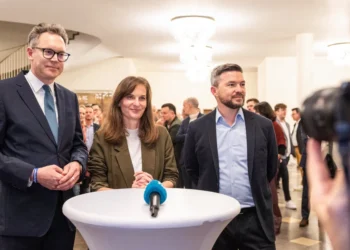
Minister of Tourism, Investments and Aviation Chester Cooper said yesterday that The Bahamas is positioning itself as a hub for sustainable, innovation-driven tourism, as he opened the UN Tourism Sustainable Island Innovation Forum at Margaritaville Beach Resort Nassau.
Addressing stakeholders, entrepreneurs and international partners, Cooper framed the forum as a critical platform to showcase Bahamian talent and advance solutions tailored to small island economies, especially given that the event also hosted the grand finale of the Bahamas Startup Challenge.
“The UN Tourism Sustainable Island Innovation and the grand finale of the Bahamas Startup Challenge is a timely and progressive gathering that brings global expertise, regional collaboration and Bahamian innovation into one shared space,” Cooper said.
He noted that the initiative reflects a collaboration between global and local partners aimed at driving innovation beyond tourism alone.
“I am proud to be able to execute this initiative along with our friends at UN tourism and our local initiative that we call Innovate242, which is designed to foster innovation not just in tourism but across all segments of our economy,” he said.
Cooper emphasized that the forum comes at a pivotal time for island destinations like The Bahamas, where economic sustainability and environmental vulnerability intersect.
He underscored that while tourism remains the country’s primary economic driver, it is also deeply intertwined with environmental preservation and national identity.
“Today’s forum represents a strategic partnership, as I mentioned, between Bahamas and UN tourism, built on a shared understanding that the future of tourism, particularly for island destinations, must be innovative, sustainable and resilient by design,” Cooper said.
He added: “For The Bahamas, tourism is the backbone of our economy, but it is also deeply connected to our environment, our communities, our national identity.”
According to Cooper, increasing external pressures, including climate change and global economic uncertainty, have driven the government’s push to rethink the tourism model.
“As a small island developing state, we are on the front lines of climate change, global economic shifts, and technological disruption,” Cooper said.
“These realities demand that we do more than recover. They demand that we reimagine how tourism works for our people and our Islands.
“This is precisely why the Bahamas sustainable islands challenge was conceived. It called on chapter startups on innovators to develop solutions and respond to our unique needs.”
Central to the forum was the spotlight on startup finalists, who presented solutions across areas such as marine conservation, community tourism and green technology.
Cooper stressed that the competition demonstrates the viability of homegrown innovation in addressing national challenges.
“What we are witnessing today is the culmination of this important vision. The finalists that you will see represent the creativity ingenuity and problem solving capacity that exists within The Bahamas and our broader innovation ecosystem across the regions,” he said.
Cooper said the competition reveals that sustainable tourism solutions for The Bahamas do not have to be imported.
“They can be designed here tested here, and scaled from here,” he said.
Cooper added that Bahamian participation dominated the competition, highlighting the depth of local talent.
He said 87 people participated in the Bahamas Startup Challenge.
“Our government is committed to building the enabling systems policy, finance and institutional support that allow good ideas to become commercially viable solutions and long-term engines of growth,” Cooper said.