Thursday, June 18, 2026
    The GeoStrategic Consensus
    No Result
    View All Result
    • Login
    • HOME
    • AMERICAS
      • Argentina
      • Brazil
      • Canada
      • Chile
      • Colombia
      • Costa Rica
      • Cuba
      • Dominican Republic
      • Ecuador
      • El Salvador
      • Greenland
      • Guatemala
      • Honduras
      • Mexico
      • Nicaragua
      • Panama
      • Paraguay
      • Peru
      • United States
      • Uruguay
      • Venezuela
    • ASIA-PACIFIC
      • Australia
      • Brunei Darussalam
      • Cambodia
      • China
      • Federated States of Micronesia
      • Fiji
      • Indonesia
      • Japan
      • Kiribati
      • Laos
      • Malaysia
      • Marshall Islands
      • Mongolia
      • Myanmar
      • Nauru
      • New Zealand
      • North Korea
      • Palau
      • Papua New Guinea
      • Philippines
      • Samoa
      • Singapore
      • Solomon Islands
      • South Korea
      • Taiwan
      • Thailand
      • Timor-Leste
      • Tonga
      • Tuvalu
      • Vanuatu
      • Vietnam
    • CARICOM
      • CARICOM – Non-English
        • Haiti
        • Suriname
      • CARICOM Associates
        • Anguilla
        • Bermuda
        • British-Virgin-Islands
        • Cayman-Islands
        • Curacao
        • Turks-and-Caicos
      • CARICOM English
        • Antigua and Barbuda
        • Barbados
        • Belize
        • Dominica
        • Grenada
        • Guyana
        • Jamaica
        • Montserrat
        • Saint Kitts and Nevis
        • Saint Lucia
        • Saint Vincent and the Grenadines
        • The Bahamas
        • Trinidad and Tobago
    • EURASIA
      • Armenia
      • Azerbaijan
      • Balarus
      • Georgia
      • Kazakhstan
      • Kyrgyzstan
      • Moldova
      • Russia
      • Tajikistan
      • Turkmenistan
      • Ukraine
      • Uzbekistan
    • EUROPE
      • Albania
      • Andorra
      • Austria
      • Bosnia and Herzegovina
      • Bulgaria
      • Croatia
      • Cyprus
      • Czech Republic
      • Denmark
      • Estonia
      • Finland
      • France
      • Germany
      • Greece
      • Holy See
      • Hungary
      • Iceland
      • Ireland
      • Italy
      • Kosovo
      • Latvia
      • Liechtenstein
      • Lithuania
      • Luxembourg
      • Malta
      • Monaco
      • Montenegro
      • Netherlands
      • North Macedonia
      • Norway
      • Poland
      • Portugal
      • Romania
      • San Marino
      • Serbia
      • Slovakia
      • Slovenia
      • Spain
      • Sweden
      • Switzerland
      • United Kingdom
    • MIDDLE EAST AND NORTH AFRICA
      • Algeria
      • Bahrain
      • Egypt
      • Iran
      • Iraq
      • Israel
      • Jordan
      • Kuwait
      • Lebanon
      • Lybia
      • Morocco
      • Oman
      • Palestinian Territories
      • Qatar
      • Saudi Arabia
      • Syria
      • Tunisia
      • Turkey
      • United Arab Emirates
      • Western Sahara
      • Yemen
    • SOUTH ASIA
      • Afghanistan
      • Bangladesh
      • Bhutan
      • India
      • Maldives
      • Nepal
      • Pakistan
      • Sri Lanka
    • SUB-SAHARAN AFRICA
      • Angola
      • Benin
      • Botswana
      • Burkina Faso
      • Burundi
      • Cabo Verde
      • Cameroon
      • Central African Republic
      • Chad
      • Comoros
      • Cote d’Ivoire
      • Democratic Republic of the Congo
      • Djibouti
      • Equatorial Guinea
      • Eritrea
      • Eswatini
      • Ethiopia
      • Gabon
      • Gambia
      • Ghana
      • Guinea
      • Guinea Bissau
      • Kenya
      • Lesotho
      • Liberia
      • Madagascar
      • Malawi
      • Mali
      • Mauritania
      • Mauritius
      • Mozambique
      • Namibia
      • Niger
      • Nigeria
      • Republic of the Congo
      • Rwanda
      • Sao Tome and Principe
      • Senegal
      • Seychelles
      • Sierra Leone
      • Somalia
      • South Africa
      • South Sudan
      • Sudan
      • Tanzania
      • Togo
      • Uganda
      • Zambia
      • Zimbabwe
    • HOME
    • AMERICAS
      • Argentina
      • Brazil
      • Canada
      • Chile
      • Colombia
      • Costa Rica
      • Cuba
      • Dominican Republic
      • Ecuador
      • El Salvador
      • Greenland
      • Guatemala
      • Honduras
      • Mexico
      • Nicaragua
      • Panama
      • Paraguay
      • Peru
      • United States
      • Uruguay
      • Venezuela
    • ASIA-PACIFIC
      • Australia
      • Brunei Darussalam
      • Cambodia
      • China
      • Federated States of Micronesia
      • Fiji
      • Indonesia
      • Japan
      • Kiribati
      • Laos
      • Malaysia
      • Marshall Islands
      • Mongolia
      • Myanmar
      • Nauru
      • New Zealand
      • North Korea
      • Palau
      • Papua New Guinea
      • Philippines
      • Samoa
      • Singapore
      • Solomon Islands
      • South Korea
      • Taiwan
      • Thailand
      • Timor-Leste
      • Tonga
      • Tuvalu
      • Vanuatu
      • Vietnam
    • CARICOM
      • CARICOM – Non-English
        • Haiti
        • Suriname
      • CARICOM Associates
        • Anguilla
        • Bermuda
        • British-Virgin-Islands
        • Cayman-Islands
        • Curacao
        • Turks-and-Caicos
      • CARICOM English
        • Antigua and Barbuda
        • Barbados
        • Belize
        • Dominica
        • Grenada
        • Guyana
        • Jamaica
        • Montserrat
        • Saint Kitts and Nevis
        • Saint Lucia
        • Saint Vincent and the Grenadines
        • The Bahamas
        • Trinidad and Tobago
    • EURASIA
      • Armenia
      • Azerbaijan
      • Balarus
      • Georgia
      • Kazakhstan
      • Kyrgyzstan
      • Moldova
      • Russia
      • Tajikistan
      • Turkmenistan
      • Ukraine
      • Uzbekistan
    • EUROPE
      • Albania
      • Andorra
      • Austria
      • Bosnia and Herzegovina
      • Bulgaria
      • Croatia
      • Cyprus
      • Czech Republic
      • Denmark
      • Estonia
      • Finland
      • France
      • Germany
      • Greece
      • Holy See
      • Hungary
      • Iceland
      • Ireland
      • Italy
      • Kosovo
      • Latvia
      • Liechtenstein
      • Lithuania
      • Luxembourg
      • Malta
      • Monaco
      • Montenegro
      • Netherlands
      • North Macedonia
      • Norway
      • Poland
      • Portugal
      • Romania
      • San Marino
      • Serbia
      • Slovakia
      • Slovenia
      • Spain
      • Sweden
      • Switzerland
      • United Kingdom
    • MIDDLE EAST AND NORTH AFRICA
      • Algeria
      • Bahrain
      • Egypt
      • Iran
      • Iraq
      • Israel
      • Jordan
      • Kuwait
      • Lebanon
      • Lybia
      • Morocco
      • Oman
      • Palestinian Territories
      • Qatar
      • Saudi Arabia
      • Syria
      • Tunisia
      • Turkey
      • United Arab Emirates
      • Western Sahara
      • Yemen
    • SOUTH ASIA
      • Afghanistan
      • Bangladesh
      • Bhutan
      • India
      • Maldives
      • Nepal
      • Pakistan
      • Sri Lanka
    • SUB-SAHARAN AFRICA
      • Angola
      • Benin
      • Botswana
      • Burkina Faso
      • Burundi
      • Cabo Verde
      • Cameroon
      • Central African Republic
      • Chad
      • Comoros
      • Cote d’Ivoire
      • Democratic Republic of the Congo
      • Djibouti
      • Equatorial Guinea
      • Eritrea
      • Eswatini
      • Ethiopia
      • Gabon
      • Gambia
      • Ghana
      • Guinea
      • Guinea Bissau
      • Kenya
      • Lesotho
      • Liberia
      • Madagascar
      • Malawi
      • Mali
      • Mauritania
      • Mauritius
      • Mozambique
      • Namibia
      • Niger
      • Nigeria
      • Republic of the Congo
      • Rwanda
      • Sao Tome and Principe
      • Senegal
      • Seychelles
      • Sierra Leone
      • Somalia
      • South Africa
      • South Sudan
      • Sudan
      • Tanzania
      • Togo
      • Uganda
      • Zambia
      • Zimbabwe
    No Result
    View All Result
    Agentially
    No Result
    View All Result
    Home MIDDLE EAST and NORTH AFRICA Iran

    Continuous ceasefire violations

    The Analyst by The Analyst
    June 18, 2026
    in Iran
    Continuous ceasefire violations


    On the one hand, Iranian officials, including Seyed Abbas Araghchi and Majid Takhtrovanchi, have emphasized the end of the war on all fronts, including Lebanon, and have announced that the second phase of negotiations will begin only after the conditions of the ceasefire have been established and the initial commitments have been implemented. On the other hand, a series of positions and actions over the past two days have raised the question of whether Washington and its regional allies really adhere to the spirit and provisions of the agreement or not.
    Lebanon; The first field of honesty test
    On the sidelines of the G7 summit, while defending the agreement reached, Donald Trump once again used literature that does not match the logic of ending the war. The American president clearly stated that the existing understanding is not yet the final text, and if he is not satisfied with the negotiation process or if the Iranian side does not show “proper behavior”, the United States will once again return to the option of bombing. This obvious threat is raised while basically the philosophy of forming an understanding for the end of the war was to abandon the language of force and transfer the differences to the diplomatic path.
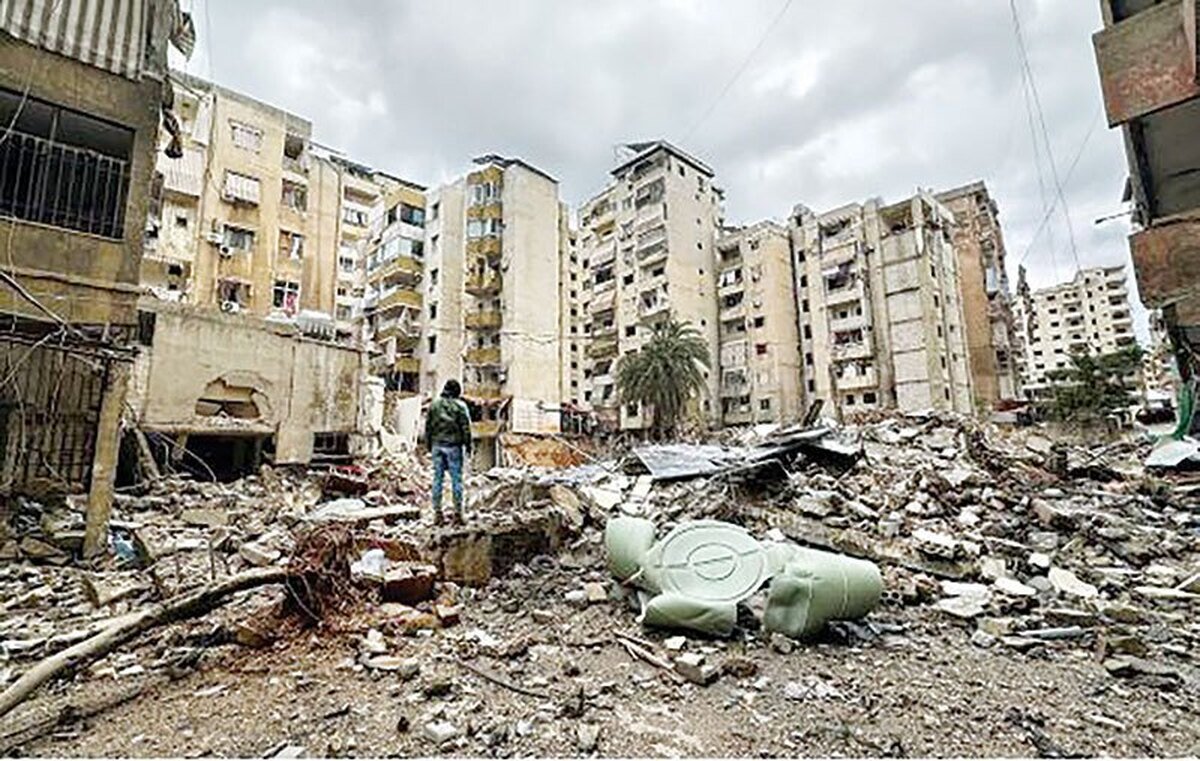
    At the same time, J.D. Vance, the vice president of the United States, has also tried to maintain a framework of pressure and threats in the atmosphere of the negotiations. The repeated emphasis that Iran will enjoy economic benefits only if the demands of the United States are fully implemented, and repeating the statement that Washington is ready to restore pressure, is far from the logic of a sustainable agreement, according to many observers. But the issue is not limited to the words of American officials. Worrying developments are taking place in the field as well. The central headquarters of Khatam al-Anbiya warned in a statement that the army of the Zionist regime violated the ceasefire 84 times in the last two days in southern Lebanon and continues its attacks and military actions. According to the same statement, if this process is not stopped, the armed forces of the Islamic Republic of Iran will give an appropriate and decisive response to these measures.
    The importance of this issue increases when we pay attention to Iran’s official positions on the nature of the understanding. From the very first days of the negotiations, Tehran emphasized that the end of the war with Iran is not separate from the end of the war on all fronts, especially in Lebanon. Araghchi also stated in his recent meeting with ambassadors that any new Israeli attack on Lebanon or continued occupation of Lebanese lands is considered a breach of understanding from the Islamic Republic of Iran’s point of view. However, in his statements, Trump has tried to make Israel’s attacks in Lebanon appear to be a minor issue and even claimed that the continuation of these conflicts will not necessarily affect the agreement between Iran and the United States.
    This is where one of the most important challenges of the coming days shows itself. The issue is not just a disagreement over a field event; Rather, the disagreement is about the definition itself.
    Negotiations under the shadow of threats do not remain stable
    The fact is that what is observed today is more than anything a reminder of one of the most important experiences of Iran’s foreign policy in recent decades; An experience called Barjam.
    During the JCPOA, the text of the agreement was one issue and the American version of the agreement was another issue. In the following years, it became clear that in many cases, Washington did not act based on what was written on paper, but based on its own interpretation of the agreement. The result was also clear; America gradually turned its narrative into the dominant narrative in the international space and from this path was able to create new pressures against Iran.
    Even today, signs of the formation of the same pattern can be seen. On the one hand, Iran emphasizes the end of the war, removing the threat and ending the conflict on all fronts, and on the other hand, while welcoming the understanding, Trump and Vance keep the option of a military attack on the table. These two narratives cannot be true at the same time.
    If the understanding of the end of the war is to have a real meaning and function, the first condition is to abandon the language of threats. Iran’s repeated threat to attack again, that too before the start of the new round of negotiations, is not only not compatible with the spirit of understanding, but basically questions the philosophy of two-stage negotiations. The war was supposed to end first and then more complex issues could be discussed in a calm atmosphere without military pressure. If the shadow of bombs and threats is supposed to remain over the negotiations, what is the difference between this situation and the era before the understanding?
    The danger of negotiating under the shadow of threats
    Another important point is that accepting such a trend can have dangerous consequences for the future. If the American side comes to the conclusion that the military threat is an effective tool to gain points in negotiations, it will be natural to repeat the same pattern in the future. In such a situation, a cycle is formed in which war, truce, and negotiation are not separate stages, but complementary tools for exerting pressure.
    From the point of view of Iran’s national interests, there is another danger. The continuation of negotiations under the shadow of threats provides the possibility for the other side to insinuate in the public opinion of the world that Iran agreed to the agreement not based on political and legal logic, but under military pressure. Such an image is not only inconsistent with the reality of recent developments, but can be the basis of new demands and more pressures in the future.
    This is why many analysts believe that before entering the second phase of negotiations, the full implementation of commitments related to the end of the war should be verified. Stopping the attacks in Lebanon, ending the occupation of the disputed areas, abandoning the literature of threats and practical adherence to the announced commitments are the minimum requirements that can show that the existing understanding is not just a political text, but there is a real will to end the crisis behind it.
    Otherwise, the process that was supposed to stabilize peace and reduce tension may turn into a path to reproduce the same crises that the region has paid a heavy price for in the past months.
    Now there are only a few hours left until the official signing of the agreement, but what will determine the fate of this agreement is not the signing ceremony in Switzerland, but the behavior of the parties in the days and weeks after. The understanding that was supposed to be the end point of the war is moving on the razor’s edge today; Where every new threat, every new attack and every attempt to impose a one-sided narrative can derail it. Therefore, perhaps the most important test of the agreement is not in the negotiation hall, but in the extent to which Washington and its allies adhere to the commitments they have accepted to end the war.


    READ ALSO

    Iran vs New Zealand game summary + video

    The footprints of two unknown wolves were found again in Iran + video


    Source link

    Related Posts

    Iran vs New Zealand game summary + video
    Iran

    Iran vs New Zealand game summary + video

    June 18, 2026
    The footprints of two unknown wolves were found again in Iran + video
    Iran

    The footprints of two unknown wolves were found again in Iran + video

    June 18, 2026
    Tomorrow’s weather condition / meteorological warning was issued for 8 provinces
    Iran

    Tomorrow’s weather condition / meteorological warning was issued for 8 provinces

    June 18, 2026
    The most victims of accidents were identified in Tehran
    Iran

    The most victims of accidents were identified in Tehran

    June 18, 2026
    Al-Qur’an radio supervisor and artificial intelligence consultant were appointed
    Iran

    Al-Qur’an radio supervisor and artificial intelligence consultant were appointed

    June 18, 2026
    Iran

    The air in Tehran was recorded in the acceptable range/ index of 79

    June 18, 2026
    Next Post
    Iran vs New Zealand game summary + video

    Iran vs New Zealand game summary + video

    POPULAR NEWS

    Markets are waiting for the determination of new interest rates

    Markets are waiting for the determination of new interest rates

    June 17, 2026
    Tageblatt.lu | Integration | Welcome to Luxembourg: Survey shows high level of solidarity among international residents

    Tageblatt.lu | Integration | Welcome to Luxembourg: Survey shows high level of solidarity among international residents

    June 17, 2026
    Second round results Peru 2026 Elections: ONPE official count in Ica and electoral flash live today, June 7 | Keiko Fujimori | Roberto Sánchez |

    Second round results Peru 2026 Elections: ONPE official count in Ica and electoral flash live today, June 7 | Keiko Fujimori | Roberto Sánchez |

    June 17, 2026
    The National Council hosts a lecture on crime, security threats, and the repercussions of drugs and immigration on society

    The National Council hosts a lecture on crime, security threats, and the repercussions of drugs and immigration on society

    June 17, 2026
    Trump says Pulte to remain as acting DNI, Clayton hearing canceled

    Trump says Pulte to remain as acting DNI, Clayton hearing canceled

    June 17, 2026

    EDITOR'S PICK

    Government reaffirms Vanuatu’s values amid debate over Pride Month promotion

    Government reaffirms Vanuatu’s values amid debate over Pride Month promotion

    June 17, 2026
    Jean-Paul Francis Botello

    Jean-Paul Francis Botello

    June 18, 2026

    He murdered 8 including Sangre Grande woman: Sentenced to life

    June 18, 2026
    Al-Riyadh newspaper | 1447 AH, the year of the Saudi global presence and the making of international balances

    Al-Riyadh newspaper | 1447 AH, the year of the Saudi global presence and the making of international balances

    June 18, 2026

    Recent Posts

    • Planning continues despite the DpL initiative
    • Tageblatt.lu | Peace negotiations | Framework agreement to end the Iran war will be signed on Friday in the Swiss Alps
    • Peace agreement officially signed by US and Iran
    • All pupils safely evacuated: Junglinster school faces extensive clean-up following toilet fire

      © 2026 Agentially - Navigating shifting sovereignties and global risk .

      Welcome Back!

      Login to your account below

      Forgotten Password?

      Retrieve your password

      Please enter your username or email address to reset your password.

      Log In
      No Result
      View All Result

        © 2026 Agentially - Navigating shifting sovereignties and global risk .

        This website uses cookies. By continuing to use this website you are giving consent to cookies being used. Visit our Privacy and Cookie Policy.