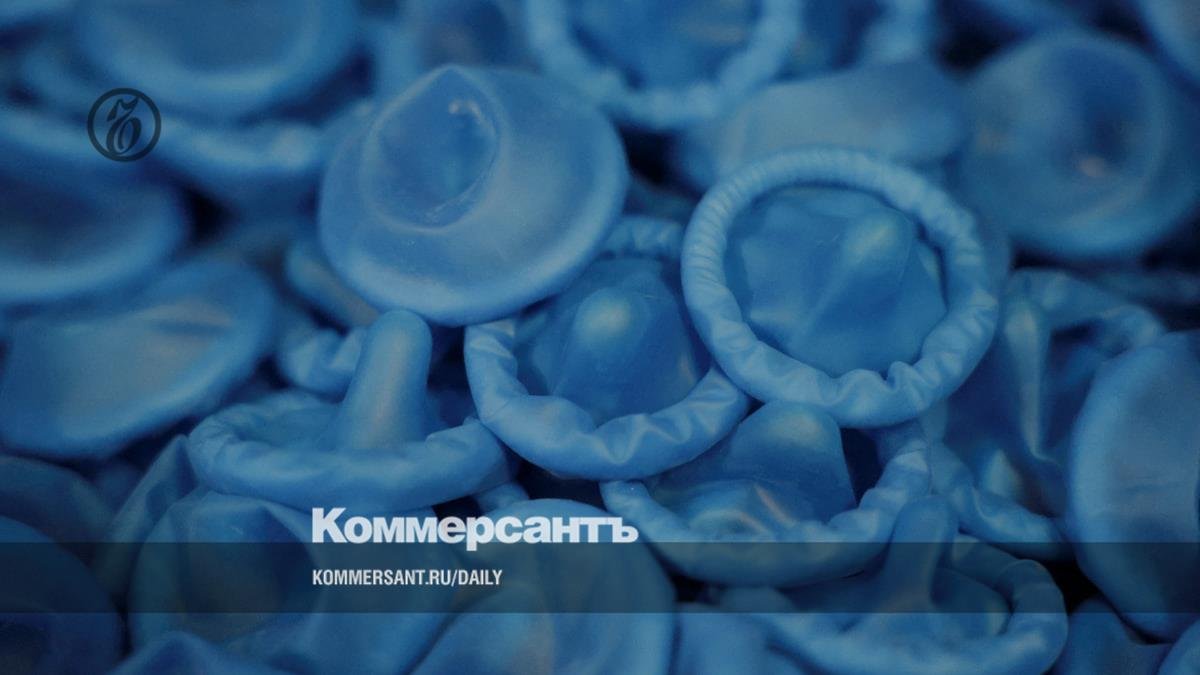
Due to rising producer costs, condoms began to rise in price in Russia. Based on the results of the first quarter, the average price of a pack in Russian pharmacies increased by 13.2% year-on-year, to 477 rubles; in non-specialized retail in April, the cost of condoms already exceeded 500 rubles. Malaysian Karex, which also produces Durex, claims that the increase in logistics and production costs due to the military conflict in the Middle East, which led to the closure of the Strait of Hormuz, has reached 30%.
The average bill for a pack of condoms in general in Russian retail increased sharply in April: if at the beginning of the month it was approximately 450 rubles, then by the middle of the month it reached 530 rubles. This follows from the data of the “Prodazhi.rf” service (works in partnership with the fiscal data operator “First OFD”). Large chains – X5 (Perekrestok, Pyaterochka, Chizhik), Magnit, Lenta – did not respond to Kommersant’s requests.
The average bill is also growing in pharmaceutical retail, where in January-March it grew by 13.2% year-on-year, and by 6.7% since the beginning of 2026, to 477 rubles. per package, calculated by “Kommersant” based on data from DSM Group. The indicator turned out to be higher than inflation, which, according to Rosstat, currently amounted to 3.16% in annual terms.
The rise in prices may be due to the situation on the global market.
Due to the war in Iran, which led to the closure of one of the important logistics arteries, the Strait of Hormuz, the Malaysian company Karex, which produces about a fifth of all condoms in the world, including under the Durex brand, recently announced a 30% increase in prices. This brand heads the top 5 condom brands sold in the Russian Federation; its share in January-March accounted for 39.8% of the total local market in monetary terms, DSM Group analysts calculated. Next comes Contex (38.2%).
According to Karex CEO Goh Mia Kiat, logistics and production costs have increased by 25-30% since the beginning of the Middle East conflict. The price hike is expected to happen over the next few months, but the reasons Mr. Guo outlined appear to have already affected the market.
At the same time, in Russia, the sale of condoms in pharmaceutical retail has been stagnating for a long time: at the end of 2025, physical sales increased by only 0.4%. This is due to the fact that consumers increasingly began to buy such products not in pharmacies, but in grocery retail, explains DSM Group CEO Sergei Shulyak. Online sales are also growing: on some marketplaces, sales volumes of such contraceptives in January-March increased by 16% in money and by 5% in physical terms year-on-year. In general, in the first quarter, Russian pharmacies sold 4.09 million packages of condoms for a total amount of 1.95 billion rubles, according to DSM Group data.
Previously, experts also explained the decline in natural condom sales in Russia by the fact that many couples began to switch from barrier contraception to hormonal (see “Kommersant” dated July 21, 2025). However, according to DSM Group, pharmacy sales of hormonal oral contraceptives (birth control pills) in packages in January-March increased by only 1.4% year-on-year, and at the end of 2025 decreased by 1.1%. In terms of money, however, sales volumes grew: by 9% in the first quarter of this year and by 7.3% for the entire 2025. In January-March of this year, pharmacies sold a total of 4.93 million packages of oral contraceptives for 8.62 billion rubles.
The reason for the stagnation of sales of contraceptives may be a decrease in interest in sex, suggests Sergei Shulyak.
This concerns the young audience, which manufacturers of such goods have traditionally relied on. According to the results of a study by the Gedeon Richter company and the NAFI analytical center, which was conducted in 2024, 22% of Russian citizens surveyed between the ages of 18 and 23 reported a complete absence of sex life. A similar trend is observed in other countries. For example, in the United States, according to the General Social Survey for 2024, the proportion of respondents aged 18–29 years who have not had sex for more than a year was 24%. Compared to 2010, the figure has doubled.