According to El Comercio sources, at least four groups have expressed interest in heading 13 of the main commissions: nine in the Chamber of Deputies and four in Senators.
The first parliamentary body will have a total of 16 working groups, while the second will have only seven.

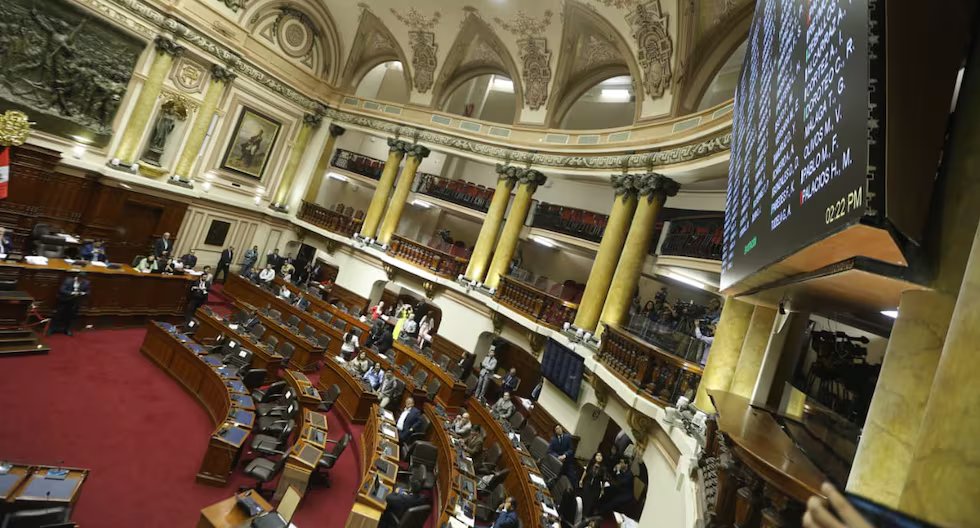
(Photo: Fernando Sangama / @photo.gec)
The majority of banks consulted expect to close agreements in the next two weeks, before the installation of the annual period of sessions, scheduled for July 27; the approval of the commission table, on August 4; and the election of their presidencies, on the 10th of that month.
According to the representation of each bench, the distribution of the 16 commissions in the Chamber of Deputies would be as follows: Popular Force (5), Together for Peru (4), Good Government Party (2), Popular Renewal (2), Civic Works Party (2) and Now Nation (1).
In the Chamber of Senators, meanwhile, the distribution would be: Fuerza Popular (3), Together for Peru (2), Renovación Popular (1) and Good Government Party (1).
Presidencies targeted by the main political forces
According to sources of The Commercethe groups interested in heading some working groups are: Fuerza Popular, Renovación Popular, Juntos por el Perú and Partido Cívico Obras. Now Nación, meanwhile, does not have a defined group.
A source from the Fujimori party indicated that in the Chamber of Deputies – which will be made up of 41 representatives – they will seek to preside over the Constitution, Regulations and Foreign Relations Commission; National Defense and Internal Order; and Agrarian Development.
He maintained that this group will also aspire to occupy the presidencies of Constitution, Regulations and Foreign Relations; and Economy, in the Senate.
Furthermore, he will try to preside over the Bicameral Budget and General Account Commission of the Republic, which will be made up of deputies and senators.
From the Popular Renewal sector, another four groups would be chosen. A source from the ‘celestial’ circle pointed out that all the interest in the Chamber of Deputies is currently in National Defense and Internal Order; Justice and Human Rights; Housing and Education.
And in the Senate, they will try to occupy the board of directors of Justice and Human Rights, National Defense and Internal Order; and Health.
consulted by The CommerceErnesto Zunini, deputy elected by Together for Peru, indicated that within his group there is still debate about which groups they will try to preside over.
However, he said that the group’s parliamentary priorities are focused “on citizen security, eliminating pro-crime laws, reversing the weakening of democratic institutions, justice, fiscal deficit, abandoned works and prevention of the El Niño Phenomenon.”
In accordance with the Regulations of the Chamber of Deputies, these issues could be addressed in the committees of Defense and Internal Order; Constitution, Regulations and Foreign Relations Commission; Justice and Human Rights; the Bicameral Budget Commission; and Housing.
Meanwhile, a source assured that Together for Peru would aspire to occupy the presidency of Energy and Mines; and the Modernization of State Management and Comptroller’s Office, in the Lower House.
Other committee presidencies
From the Civic Obras Party, the elected representative Jenny Samanez indicated that she would aspire to the Education commissions; and Transport, but everything will depend on the meetings that the political group establishes this Friday.
In dialogue with Jaime Delgado, from Ahora Nación, he said that his party will define in the following days the commission that they will seek to preside over. At the moment they are only meeting, but they hope to make appointments with the rest of the groups, including Fuerza Popular and Renovación Popular.
When consulted by El Comercio, he said that he personally would like his party to have the presidency of the Commission for Consumer Defense and Regulation of Public Services; However, he made it clear that it is a personal proposal.
His group only has one commission in the lower house and none in the Senate.
It should be noted that the Chamber of Deputies will have 16 commissions while the Senators commission will only have seven.
The Chamber of Deputies It will be made up of the Constitution, Regulations and Foreign Relations commissions; National Defense and Internal Order; Agrarian Development; Consumer Defense and Regulation of Public Services; Modernization of State Management and Comptroller’s Office; and Economics, Banking, Finance and Financial Intelligence.
It will also have the Education, Culture and Sports commissions; Energy and Mines; Justice and Human Rights; Social Inclusion, Family, Women and Andean, Amazonian and Afro-Peruvian Peoples; Production, Foreign Trade and Tourism; Environment and Sustainability; and Health.
The list is completed by the Labor and Social Security commissions; Infrastructure, Housing and Transportation; and Science, Technological Innovation and Digital Society.
For its part, the Senate Chamber It will be made up of the Constitution, Regulations and Foreign Relations commissions; National Defense and Internal Order; and Productive Development, Energy and Mines, Infrastructure and Work.
Likewise, it will have the Economy, Environment and Consumer Defense commissions; Health, Education, Culture, Women and Social and Digital Development; State Management and Comptroller’s Office; and Justice and Human Rights.
Inspection work
Asked about the new composition of the commissions in the bicameral Parliament, former senior Congress official César Delgado Guembes maintained that all working groups will have oversight powers, unlike what happened in the previous Parliament.
In that sense, he assured that this work will not fall solely on the Commission for Modernization of State Management and Comptroller’s Office, which would fulfill a role similar to that of the previous Supervision and Comptroller’s Commission.
For his part, the former senior congressional official José Cevasco explained that, although some commissions of the Chamber of Deputies and the Senate will share the same name, this will not imply a duplication of functions.
“Just because they have the same names does not mean that they will deal with the same topics. Let us not forget that the commissions of both chambers are going to work on their own autonomy. Under no circumstances will there be duplication of functions,” he said.
Likewise, he pointed out that Parliament chose to unify commissions with the aim of reducing expenses. He added that each working group will be able to exercise oversight and control functions without the need for a large commission dedicated exclusively to that task.
Along these lines, he recalled that, when the Oversight Commission was created, the purpose was to “unify investigations and control of public spending.”