
All views and claims expressed in this article belong solely to the author.
Dominica is an island rich in music. Pound for pound, square mile for square, few places on earth have produced as much popular or dance music as Dominica. Cadence-Lypso, which germinated with Exile One and Grammacks—with Black Affairs and Midnight Groovers coming on strong—are solid exhibits in any exposition on the fact that we are a people gifted in music. From flute, shack-shack, accordion and the lapeau cabrit (goat skin), Dominicans as a people have long resided in a unique music heaven.
What I seek to do here is to capture the 1970s/1980s era of disco fever on Dominica as I remembered it.
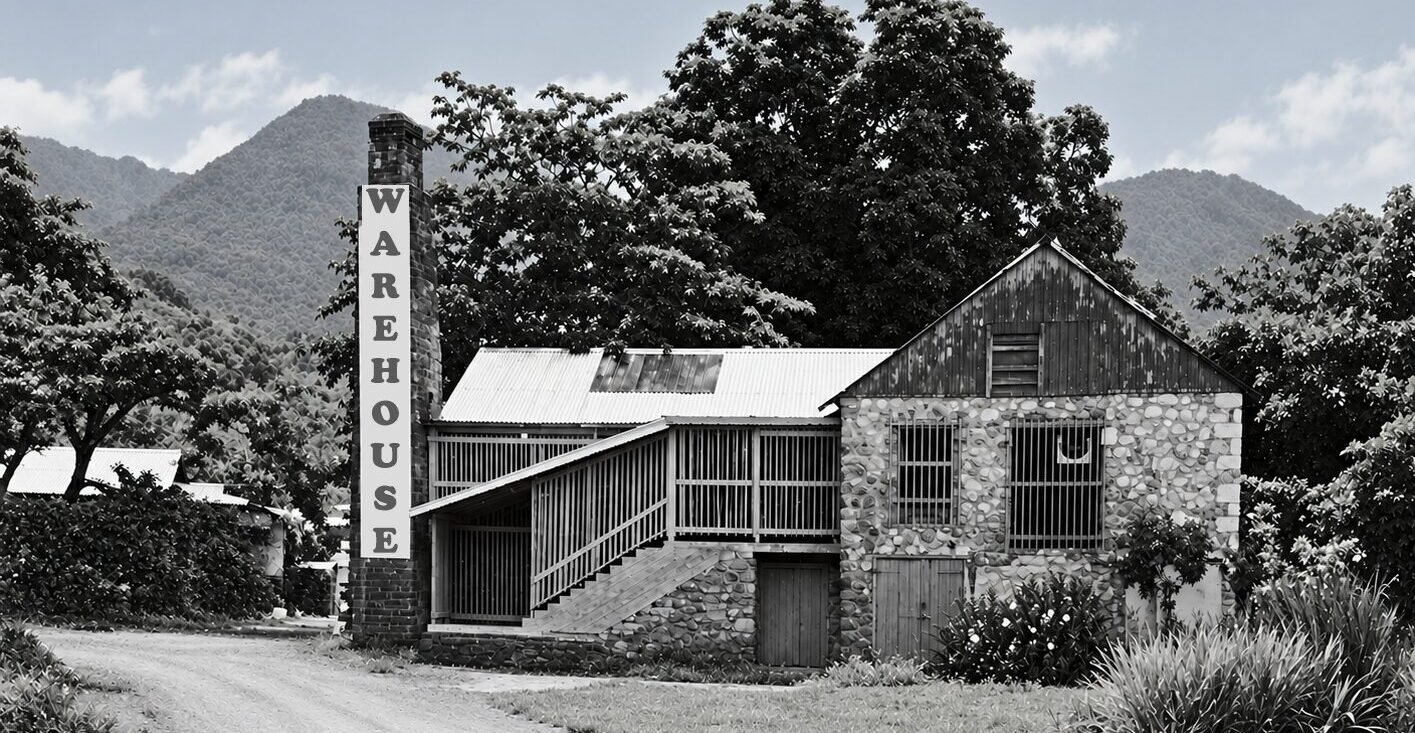
Call it nostalgia if you will, but we must capture via the written word moments in the life of a small island nation so that it becomes crystallized in memory—not as history exactly, but as feeling. The summer of 1981 on the island of Dominica was one such moment. Along that strip of road leading to Massacre village, not far from Canefield Airport, where the Caribbean Sea lay silver and trembling under a moonlit sky, an old sugar mill had been reborn. Cleve Royer, proprietor and presiding deity, sat twelve feet above the dance floor in his wooden perch, headphones clamped over his ears, spinning records that would become the soundtrack of a generation.
This was Warehouse Disco.
The music was already in our heads
But the story does not begin at Warehouse Disco. It begins earlier—in the living rooms of Dominica’s middle-class homes, where families with gramophones and turntables gathered around the record player as though it were a hearth. And it begins on Cork Street in Roseau, Dominica’s capital, at Cee Bee’s Bookstore and Record Shop.

Cee Bee’s was owned by Hesketh Casimir—a man whose relationship with music ran so deep it had shaped the island’s cultural life across decades. As a young man, Casimir had led the Casimir Brothers Orchestra, one of the most celebrated ensembles Dominica produced in the 1930s. In that same era, the island’s ears were also graced by the Christian Family Quartet—Henckell, Lemuel, Wendell, and Ruby Christian—performing on two violins, one mandolin, and one guitar, their strings weaving a sound so divine it seemed to belong to both the earthly and the celestial. Hesketh Casimir carried all of that musical heritage within him when he later became the superb musical director of the Music Lovers Government Band, and it informed every record he chose to stock on the shelves of his Cork Street shop.

And what shelves they were. Cee Bee’s stocked everything. On its shelves you might find the classical masters—Bach’s intricate counterpoint, Beethoven’s thunderous symphonies, Tchaikovsky’s swooning romanticism—sitting companionably alongside the latest Top Forty American pop singles. The Jackson Five. The full flowering of the Motown sound. Country and western records for the families who had developed a taste for that distinctly American genre of heartache and wide-open spaces. Calypso records by the Mighty Sparrow, whose sharp tongue and irresistible rhythms made him the conscience and wit of the entire Caribbean. Reggae from Jamaica, soca from Trinidad, the full breadth of what the region was producing.
But Cee Bee’s was more than a record shop. It opened up the world. On its racks stood Time and Newsweek, Ebony and Jet—windows onto the wider world of ideas and Black achievement and international affairs that no classroom textbook could have provided. Comic books and romance novels jostled alongside popular fiction on the shelves. And there, in their discreet plastic sleeves—sealed firmly against the curious eyes of the island’s young ones who were not yet ripe and ready for such things—stood the Playboy magazines. Dominica was, after all, a very Catholic country, and Cee Bee’s respected the proprieties while quietly acknowledging that the world contained more than the proprieties acknowledged. The plastic sleeves were a kind of social contract: the big people’s business would remain the big people’s business, but it was there, present and accounted for, when the time came.

Families would carefully select their forty-fives and their LP albums from Cee Bee’s, carrying them home from Cork Street like treasures. A household with a good turntable and a well-curated record collection held a certain social prestige. Children grew up hearing Mozart in the same afternoon as Marley, Beethoven giving way to Byron Lee and the Dragonaires, Sparrow’s calypsoes following a Tennessee waltz. It was an education no curriculum could have designed—a fusion, absorbed without effort, of the local, the regional, and the international, layered into the hearts and nervous systems of an entire generation.
And at August Monday, Easter Sunday, and Christmas Eve dances, local super bands such as the mighty Swings Stars, Belles Combo, De Boys and Dem, and, before that, the Gaylord Powers Union, had already nourished our heads and hearts in the spirit of dance music.
By the time those young people walked through the doors of Warehouse Disco, the music was not new to them. It lived in their bodies already—the rhythms of the Caribbean inscribed alongside the harmonies of Europe and the grooves of Motown America. Hesketh Casimir, in his Cork Street shop, had been the first curator. Cleve Royer simply gave back to the people, amplified and communal, what Cee Bee’s and their parents’ living rooms had already planted deep within them.
The discos of Dominica
Not all roads led to Warehouse, nor was it the dance spot on our island.
We had a disco history. There had been dance spots such as The Green Lantern, Manicou, Palm Grove, Grotto, and The Cave—but that was before my time. Although Grotto did exert some pull right before the independence of our island in 1978.
Before the young and the upwardly mobile made their pilgrimage to the old Warehouse sugar mill by Massacre Road, there was Nite Box Disco in Pottersville, the establishment closest to Roseau, owned and operated by Frederick Joseph—a man who would later become one of the capital’s most beloved characters under the affectionate title of Juice Man, presiding over his juice stand with the same entrepreneurial flair he had once brought to the dance floor. Nite Box served its purpose and served it well, giving Roseau’s young people a place to discover the pleasures of dancing to amplified music under colored lights.
But Warehouse was different. Warehouse drew the young and the coming-of-age as moths to a flame—something about its setting, its distance from the city, its proprietor’s gifts, and perhaps the romance of that old stone sugar mill beside the moonlit sea conspired to make it the preeminent destination. To go to Warehouse was to make an occasion of the evening, to commit to the night fully, to declare yourself part of something.
The golden generation
They came dressed for the occasion. The young men wore tight Jordache jeans—that coveted American denim that announced you had either traveled abroad or had someone who loved you enough to send it—paired with Italian leather boots, the ones with the small zipper running up the side, boots that clicked against the old stone floor of the repurposed mill. Around their necks, little gold chains caught the light. The young women came in their finest, perfumed against the tropical heat, ready to be held close under the spell of Cleve’s carefully chosen records.
These were the golden generation—those who had entered secondary school around 1972, the children of parents who had weathered the vicissitudes of World War Two and bent every ambition toward giving their sons and daughters an education. They had sat in the classrooms of the Dominica Grammar School, Saint Mary’s Academy, the Convent High School, Wesley High School, the Portsmouth Secondary School, the Clifton Dupigny Technical College, and the new Sixth Form College. They were now young civil servants, returning university students fresh from Miami, St. Mary’s University in Halifax, Scotia, or the University of the West Indies, full of new music and new ideas, coming home to an island whose beauty they were only beginning to fully appreciate.
And on Friday and Saturday nights, word traveled. Up in Portsmouth, on the other side of the island’s dramatic mountainous spine, the students and young people of the north heard the call. They made the journey—winding through the forested interior, past the rivers and ravines of that impossibly green island—to join the communion at Warehouse Disco. That they came at all, across the length of Dominica’s rugged terrain, spoke to the singular magnetism of what Cleve Royer had created in that old sugar mill by the sea. We were all pilgrims, ascending together on the staircase of musical delight.
The musical kaleidoscope
What Cleve conjured in that old stone mill was nothing less than a musical United Nations—a kaleidoscope of rhythm and feeling that could only have existed on a small Caribbean island in that particular moment in history.
Michael Jackson’s “Off the Wall”—released just two years earlier in 1979—reigned supreme. “Don’t Stop ‘Til You Get Enough” and “Rock With You” pulled bodies onto the floor with an almost gravitational authority. Jackson was at that luminous moment before megastardom fully consumed him, still somehow intimate, still someone you felt you personally knew. His voice had been in our homes since we were children—those Motown singles our parents brought home from Cee Bee’s on Cork Street—and now here he was, returned to us transformed, magnificent, irresistible.
But Cleve was too good a DJ to stay in one place. Donna Summer’s voice would rise next, hot and insistent, the Queen of Disco demanding the floor’s full devotion. Then Roberta Flack, cool and aching, slowing everything to a tender sway. The Eagles’ “Hotel California”—that strange, cinematic American dream of a song—floated through the warm night air with its guitar arpeggios that seemed to mirror the moonlit surface of the Caribbean just beyond the road.
And then, because this was Dominica and not Miami, because these dancers carried the full inheritance of the Caribbean in their hips and hearts, the music would shift. Bob Marley and the Wailers would fill the old sugar mill with a righteous, rolling rhythm. Gregory Isaacs, the Cool Ruler, followed with his honeyed lover’s rock, “Night Nurse” drawing couples into each other’s arms with quiet urgency. The Mighty Sparrow arrived with his wit and fire—his voice as familiar to us as a family member’s, his records worn smooth from countless plays on our parents’ turntables. Byron Lee and the Dragonaires brought the soca, and the dancing changed character entirely, hips unlocking, feet finding a different conversation with the floor.
Cadence-Lypso: The sound from the bowels of our Eden
And then came the moment—always the moment—when Cleve reached for the records that belonged to no one else but us.
Cadence-Lypso was Dominica’s own. Born from the creative genius of Gordon Henderson and Exile One, it was a sound that fused the rhythmic architecture of Caribbean cadence with the lyrical fire of calypso, producing something that was unmistakably, irreducibly Dominican. When “Moi Twavay Pour Ayen” rose from the speakers of the old sugar mill, something shifted on the dance floor—a collective recognition, a homecoming. This was not music that had traveled across the Atlantic or up from New York. This music had come from the same thickly forested volcanic island on which everyone in that room had been born, and it knew their names.
Jeff Joseph and Grammacks followed with the song “Soucouyant”—that sly, delicious invocation of the island’s folklore, the bloodsucking shape-shifter of Dominican legend now immortalized in rhythm and song, the supernatural made danceable, the island’s deep imaginative life pulsing through the bass line. You could feel the forest in that song, the night, the ancient Creole stories told on verandahs by grandmothers who had learned them from their grandmothers.
Chubby and the Midnight Groovers brought “Milk and Honey”—sweet, irresistible, a song that seemed to pour over the dancers like something warm and nourishing, the very title a benediction, a promise of abundance rising from the bowels of our island Eden.
And then Cleve opened the borders wider still, reaching into the broader Creole world to which Dominica belonged. Haiti’s Tabou Combo arrived with “Mabouya” and “Baissez Ba”—that extraordinary Port-au-Prince band whose compas rhythms had electrified dance floors across the Caribbean and its diaspora, the lizard and the low-down bringing a joyous Haitian fire to the old Dominican sugar mill. From Guadeloupe came Les Aiglons with Cuisse La, their famous song sending a current of pure Francophone Caribbean delight through the crowd, the shared Creole inheritance of these island people made audible and irresistible.
This was the music that could not have been purchased on any American chart. It rose instead from the same geological deep as the island itself—from the volcanic soil, the river valleys, the Creole tongue, the African memory, the French colonial shadow, the community of small island nations arrayed like green jewels across the Caribbean Sea. When these songs played, the dancers were not imitating a foreign culture. They were dancing to themselves, in their own language, on their own ground, and the joy of it was particular and profound and could not be replicated anywhere else on earth.
The island at night
Outside the Warehouse, Dominica kept its own counsel. The cool mountain breeze descended the sides of the thickly forested volcanic peaks, carrying the green scent of the island’s impossible earthy abundance—Dominica, the Nature Isle, so densely wooded that Columbus reportedly said you could describe it to the Spanish monarchs simply by crumpling a piece of paper and placing it on a table. Along the coastal road near Massacre, the concrete bungalows of Canefield glowed warmly. The Caribbean Sea lay quiet and vast, its surface a pool of silver radiance even at midnight, the moon’s light doing what no electric light could replicate.
Inside, the bodies moved. Lovers pressed together in the slow songs, boys summoning courage, girls granting or withholding it in the ancient negotiation of the dance floor. The returning students from Miami brought new moves, new slang, new records they pressed into Cleve’s hands. The Portsmouth contingent brought their own energy—the particular exuberance of people who had traveled far for their pleasure and intended to make every moment count. What emerged on that floor was neither purely American nor purely Caribbean—it was something new, a synthesis born of the island’s particular position in the world, receiving signals from everywhere and transforming them into something local and alive.

What it meant
Disco, for all its American and European origins, landed differently on a small Caribbean island newly independent—Dominica had only achieved independence in 1978. To dance in 1981 was in some sense to celebrate survival: the island had been ravaged by Hurricane David in 1979 and Hurricane Allen the following year. The young people on that floor had known catastrophe and had watched their island begin to rebuild. The gaiety was therefore not shallow—it was earned.
And yet it was also simply joy. The particular joy of being young and beautiful on a beautiful island, of wearing your finest on a warm night, of hearing a song you love played at exactly the right volume, of catching someone’s eye across a crowded floor, of belonging—fully and without question—to a place and a moment and a generation. Whether you had come from across the street in Canefield or across the mountains from Portsmouth, the floor welcomed you equally, and the music made no distinctions.
Cleve Royer, up in his perch, understood this. Every record he dropped was a choice, a gift to the people below him. Michael Jackson and Bob Marley, Donna Summer and the Mighty Sparrow, “Hotel California” and “Night Nurse”, Gordon Henderson and Tabou Combo and Les Aiglons—he held them all in his hands and offered them to the Dominica night, and the night received them gladly. The old sugar mill by Massacre Road, which had once ground the labor of enslaved hands into colonial profit, was made new again by music and by dancing and by love. And as we closed our eyes, we felt lifted into another world by the familiar melodies, fused into sweet island breezes that often caressed our faces with the nectar of tropical flowers hanging near. It was a world of memory serenaded by the lullaby of our gently crashing waves on the foam-flecked beaches of an island childhood now at adolescence and beyond.
We ascended together on that staircase of musical delight—the whole golden generation of a small, fierce, forested island, carrying in our hearts everything Hesketh Casimir’s Cork Street shop had given us, everything the Christian Family Quartet’s divine strings and the Casimir Brothers Orchestra had planted in the island’s soul long before we were born, everything Gordon Henderson had conjured from the particular genius of Dominican music—and for those long, sweet hours, there was nowhere else on earth worth being.