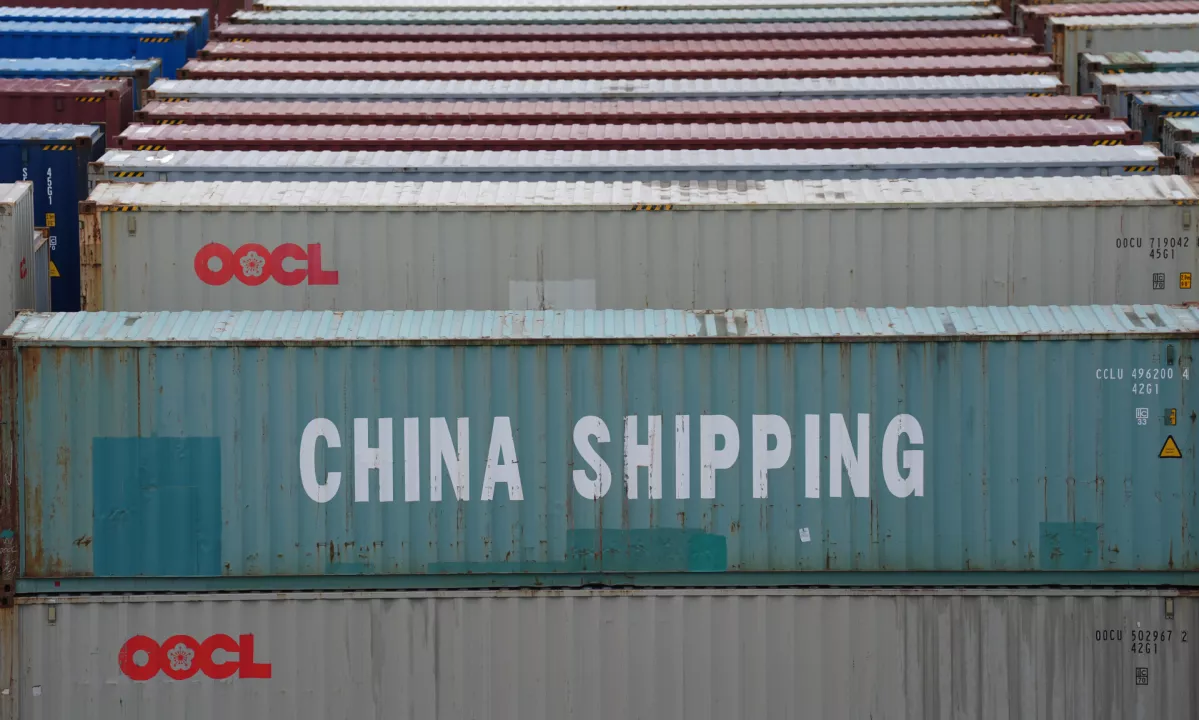
Beijing is threatening countermeasures to protect the interests of Chinese companies. Photo: dpa
China threatens the EU with countermeasures over proposals for preferential treatment of European goods
The Chinese authorities reacted sharply to the proposal for a legal basis presented in March, which would allow for preferential treatment of certain European goods when spending public money in the EU. In Beijing, they see it as an obstacle to investment and discrimination against companies from third countries. They threaten countermeasures if their concerns are not heeded.
According to China’s belief, the proposals contain serious obstacles to investment and represent institutional discrimination against Chinese investors in some key sectors, such as battery manufacturing or energy storage devices, electric vehicles and photovoltaic technology and acquisition of strategic raw materials. They should also represent a violation of international agreements and be directed against fair competition.
The Chinese Ministry of Commerce wrote that their concerns and proposals for changes or deletion of the most controversial parts of the proposal was sent to Brussels last Friday. If the commission and the two legislators in the EU – the Council of the EU and the European Parliament – ignore them, Beijing is threatening countermeasures to protect the interests of Chinese companies.
The European Commission approved the proposal in early March as part of efforts to strengthen the competitiveness of the EU economy. According to the proposal of this act on the industrial accelerator, when spending public money, priority would be given to those goods that were manufactured in the EU member states.
In public procurement, according to the proposal of the European Commission, goods manufactured in third countries to which the EU has commitments under the World Trade Organization (WTO) public procurement agreement and free trade agreements would also be treated as “made in the Union”. In total, there are about 40 countries, of which about half are part of the WTO agreement.
If the commission found that a third country does not allow European companies access to public funds, it could close access to the European market for that country.
According to the proposal, the “made in the Union” principle would be limited to key industrial sectors, namely the production of cement, aluminum and technologies with net zero emissions, such as batteries, solar panels, wind farms, heat pumps, as well as nuclear technologies.
At the same time, the Industrial Accelerator Act complements the package of legislation on support for the European automotive sector and foresees the application of the “made in the Union” principle in this area as well.
According to the proposal, electric vehicles will have to be assembled in the EU, their batteries will have to include at least three components manufactured in the EU or by trusted partners. This will also apply to 70 percent of the remaining parts. Three years after entry into force, the provisions will be tightened.
The draft act also includes special conditions for foreign direct investments worth more than 100 million euros in strategic sectors such as batteries and electric vehicles.