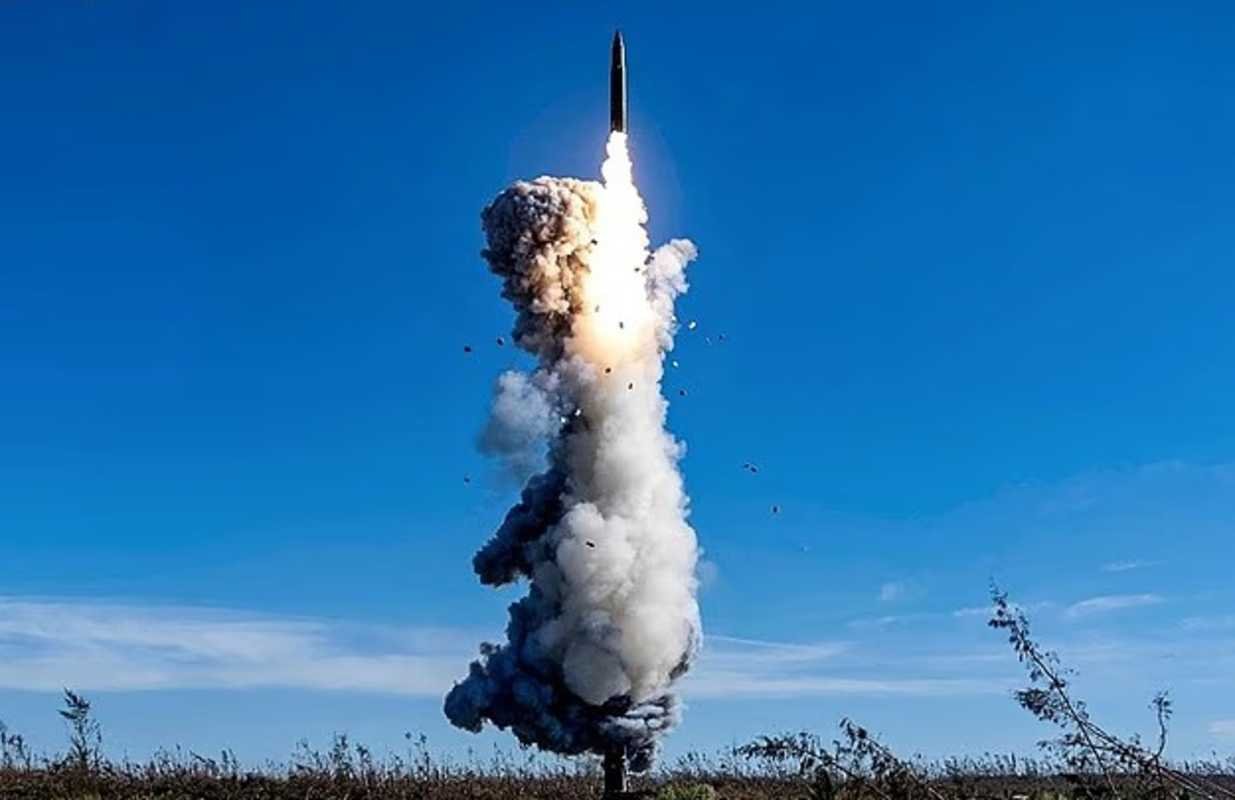
China’s launch of a nuclear-capable long-range missile into the Pacific has sharpened concerns over Australia’s exposure to strategic weapons, after a defence analyst warned the missile could reach major cities including Brisbane and Sydney.
The missile, fitted with a dummy warhead, was launched on Monday as part of what Chinese state media described as a “military training program”.
It landed in a designated area between Nauru and Tuvalu, placing the test deep inside a region where Australia has been trying to strengthen diplomatic and defence ties.
Beijing briefed governments ahead of the launch and rejected suggestions the exercise was aimed at any country.
“It is in accordance with international law and practice and is not directed against any specific country or target,” Xinhua reported.
But Michael Shoebridge, director of defence and security think tank Strategic Analysis Australia, said the test should not be treated as routine by Canberra.
“It looks like a 10,000km-range submarine-launched ballistic missile,” he said, adding that this type of technology has been developed in China since 2018.
“It can reach literally from Beijing to Brisbane with a bit to spare. It could make it to Sydney and it is nuclear capable.”
Mr Shoebridge said the launch was another sign of China’s expanding military reach in the Pacific, and should be viewed seriously by Prime Minister Anthony Albanese as Australia pushes to lock in new regional security arrangements.
“There are two reasons for that concern,” Mr Shoebridge told the Daily Mail.
“First, it comes after the Chinese People’s Liberation Army Navy did a live firing exercise between Australia and New Zealand last year, interrupting peaceful airline flights.
“China is expanding the reach of its security forces, notably its military, and as it grows its military power, it’s expanding to have a global reach.
“Secondly, the Australian Defence Force has no capability to protect itself, let alone the Australian population or regional partners, from this kind of missile threat.
“So the prime minister has an urgent air and missile defence gap that he needs to close.”
The timing has also raised questions in Canberra. A source told The Australian the launch was a response to Mr Albanese and Fijian Prime Minister Sitiveni Rabuka signing the Ocean of Peace Alliance.
The agreement includes mutual defence obligations, stating that an armed attack on any party in the Pacific “would be dangerous to each other’s peace and security as well as the security of the Pacific”.
It also leaves the door open for other Pacific nations to join.
However, Mr Shoebridge warned that regional defence agreements risk losing force if Australia cannot counter long-range missile threats.
“Clearly having no defensive capability at all against those missiles that can reach Australia and South Pacific nations, that makes regional security deals a little bit empty,”
“If you can’t respond to a threat, then you’re subject to that threat.” he said.
Mr Shoebridge said the South Pacific remains strategically valuable to Beijing because of its mineral resources, fishing grounds and its position between Australia and the United States.
“It’s a key piece of ocean connecting Australia and America so, as part of a push to reduce the power of American alliances, it makes sense for China to be invested,” he said.
Australia already has mutual defence arrangements with the United States, New Zealand and Papua New Guinea, including the PukPuk Treaty, which comes into effect on Wednesday.
Mr Albanese said the missile test was destabilising and confirmed Australia had raised its concerns with Beijing.
“We don’t want to see any action that is destabilising or which undermines the peace, security and stability of the Pacific and the region,” he told reporters in the Solomon Islands on Tuesday.
“There is no doubt that this is a provocative act by China, which does destabilise the region and therefore we will put forward our strong view.” he said.
The launch adds a harder military edge to the contest for influence in the Pacific, where Australia has spent recent years trying to deepen partnerships and prevent Beijing from gaining a stronger security foothold.
For Canberra, the warning is blunt: regional diplomacy may be advancing, but Australia’s missile defence posture remains exposed to weapons now being demonstrated much closer to home.