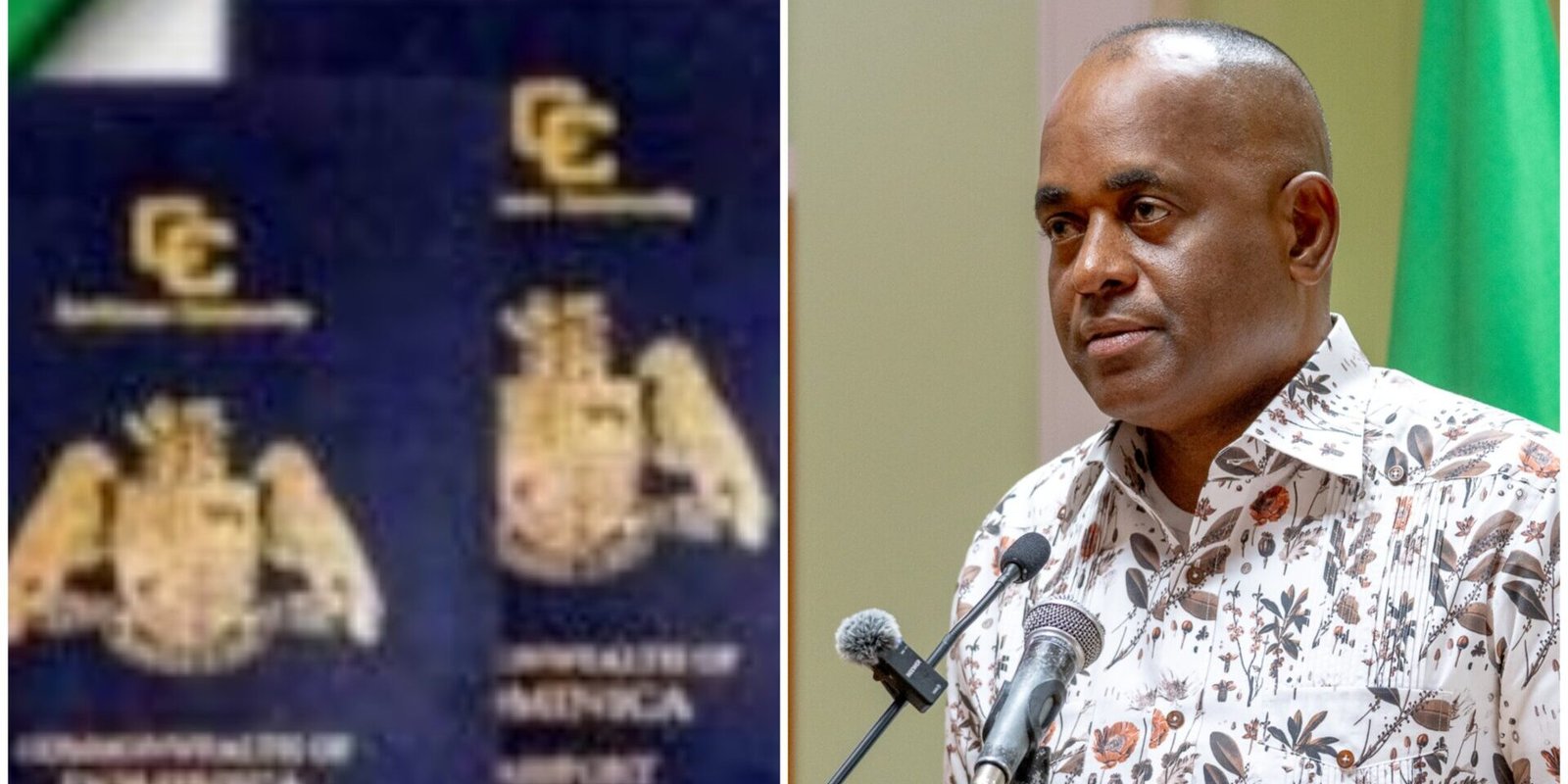
 Prime Minister Roosevelt Skerrit has described Dominica’s Citizenship by Investment (CBI) Programme as one of the country’s most significant engines of development, saying it has financed critical infrastructure and helped the island recover from natural disasters without placing an additional tax burden on citizens.
Speaking during a recent press conference, Skerrit said the programme has played a pivotal role in Dominica’s progress over the past three decades.
“The CBI Programme has been one of the most important drivers of Dominica’s development over the past 3 decades,” he said. “It has financed resilient housing, schools, health facilities, roads, bridges, climate-resilient projects and has been a critical source of financing after many natural disasters and external shocks,” stated Skerrit.
The Prime Minister said CBI revenues have also supported investments aimed at expanding the country’s economy, saying, “…it has also assisted in the construction of a very important economic drivers, in tourism renewable energy, in agriculture and the list goes on.”
According to Skerrit, the programme has enabled the government to fund major development projects through alternative sources of financing rather than relying on increased taxation.
He also argued that Dominica has continued to strengthen the programme as international standards governing investment migration evolve.
“As international standards continue to evolve, Dominica has consistently strengthened the program through enhanced due diligence, stronger governance, greater transparency, close cooperation with international law enforcement and more rigorous vetting procedures, including the decision to establish the Regional Regulatory Authority,” he noted.
Skerrit said the legislation establishing the Regional Regulatory Authority has already been enacted in Dominica and is expected to come into force later this month.
The authority is intended to provide a harmonized regulatory framework for Citizenship by Investment programmes across participating Eastern Caribbean countries, strengthening oversight and promoting common standards throughout the region.
The move follows the review of the first draft of legislation to establish a Regional Regulator for Caribbean Citizenship by Investment programmes during the Seventh Meeting of Eastern Caribbean Currency Union (ECCU) Attorneys General and Chief Parliamentary Counsel, held in Anguilla from May 7 to 9, 2025.
The discussions brought together the legal and regulatory leaders of the five Organisation of Eastern Caribbean States (OECS) member states that operate CBI programmes, Dominica, Antigua and Barbuda, Grenada, St Lucia, and St Kitts and Nevis, to advance the creation of a unified regional regulatory body.
Skerrit’s comments come as Caribbean governments report continued work toward strengthening the governance, transparency and international credibility of their Citizenship by Investment programmes through closer regional cooperation and enhanced regulatory standards.