Donald Trump thanked him for the supposed support China’s in negotiations with Iran. It was also said from Pakistan, where representatives of Tehran and Washington met, that Beijing had contributed to the talks. Official China remained silent. People obviously enjoy the image of a peacemaking force without risk. Beijing presents itself as the guardian of order and maintains demonstrative proximity to Pakistan. Semi-officially, however, the power apparatus is rowing back.
Claims that China has persuaded Iran to agree to a ceasefire are “completely one-sided,” wrote state media blog Yuyuan Tantian. This creates a narrative that Iran is listening to China, “thus shifting responsibility for the ceasefire negotiations to China and arbitrarily adding China to the list of parties to the conflict.”
China wants nothing less. In public, China maintains the appearance of diplomatic efforts and portrays itself as an anchor of global stability – in contrast to the USA, whose reputation is declining in international opinion polls. However, there is no active mediation by Beijing. Also, in order not to fail yourself: a second round of negotiations in Islamabad did not take place at the weekend.
Thirty phone calls from Wang Yi
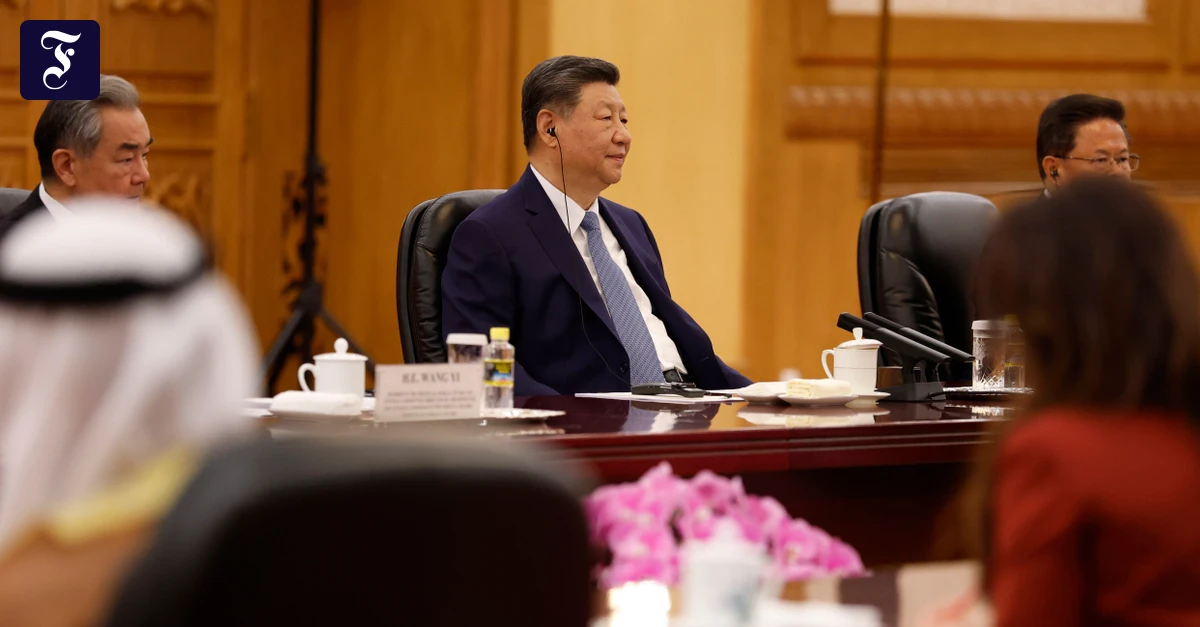
Foreign Minister Wang Yi Recently, he made thirty telephone calls to officials in the Middle East. He also received the foreign minister of the Chinese partner country Pakistan. Islamabad is currently the venue for talks between America and Iran. Head of State Xi Jinping also welcomed the Emirati Crown Prince in Beijing and spoke by telephone with the Saudi Crown Prince. For the first time, Xi called for the Strait of Hormuz to be opened. Many see this as a sign that the Chinese also see the situation as more urgent.
However, there is still no sign of China’s real role as a mediator. So-called four- and five-point plans presented by China remain vague and without operational steps. Instead, Beijing is choosing to wait and see.
“China is against war and also against the blockade of the Strait of Hormuz,” said Hu Bo, a professor of international politics and naval specialist at Peking University. This is a major concern for Beijing. “At the same time, China’s scope for influence is limited, and further developments depend on the restraint of the warring parties involved.” China would hardly have anything to counter the USA militarily in the region anyway. Hu calls the current phase of negotiations between Iran and the US “garbage time,” a phase without much movement. “Western states overestimate China’s influence on Iran,” he says in an interview with the FAZ
Arabic-Persian balance
In any case, it is “unlikely” that China will carry out direct military interventions. “China has consistently taken a cautious stance on wars,” Hu says. In addition, “Iran’s attitude towards China is not always friendly and in some cases even appears arrogant.” From Beijing’s perspective, Iran cannot be completely trusted. China also wants to maintain a balance between its partner country Iran and the Arab partner states in the Gulf, which are even more economically important for Beijing.
Iran is not the most important supplier of China’s energy imports from the Middle East. China has larger and deeper interests in the Gulf states, particularly Saudi Arabia and the United Arab Emirates. Iran remains a tactical partner, while the Arab Gulf states remain strategically more important. Not only as an energy supplier, but also because of their investments in modernizing their innovation and technology infrastructure. Xi called on Arab states to “take their future into their own hands.” A subtle call to rethink relations with the systemic enemy USA.
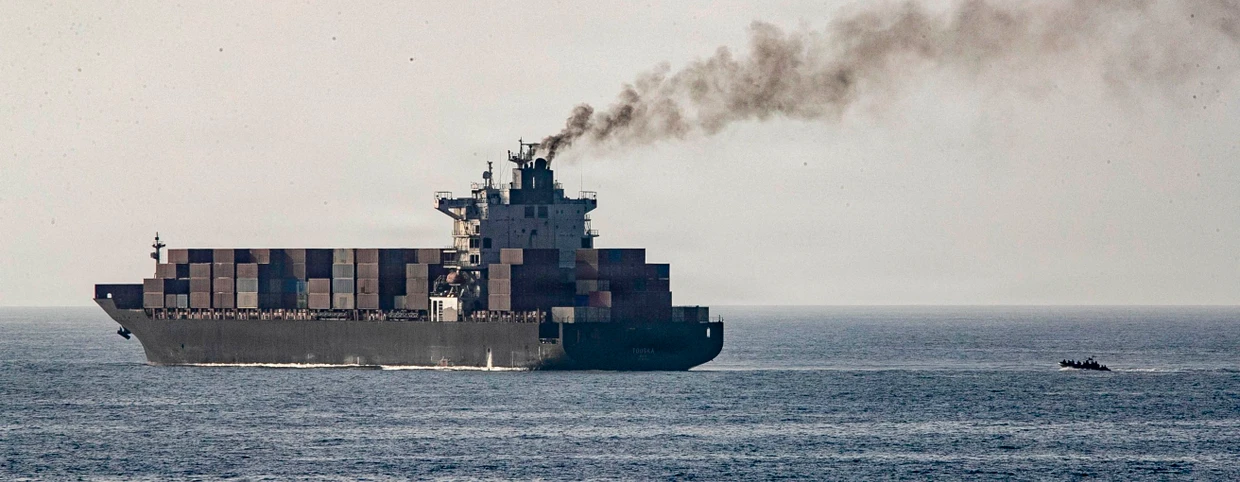
According to US reports, the Iranian ship Touska, which was recently captured by American special forces in the Arabian Sea, probably came from the chemical port in Zhuhai, eastern China. Chemicals are loaded there that could also be used as precursors for rocket fuel. American President Donald Trump said a week ago that they had found “a gift from China” on board “that was not very pleasant.”
The post-war order in view
The Foreign Office in Beijing rejected this as a “false association and speculation”. Hu Bo also says: “During the war, China is unlikely to send military aid to Iran.” But he adds: “After the war, however, there is a possibility of this.” In addition, China could win contracts to build infrastructure after the war.
For decades, China has helped expand Iran’s missile program. The United Nations (UN) imposed sanctions on Iran’s nuclear and missile program in 2006 with Beijing’s approval. Officially, Beijing no longer concluded any arms agreements. Still, according to American and Israeli sources, Chinese companies continued to supply basic chemicals and dual-use technologies that can also be used to build drones and missiles.
There are now reports that private Chinese satellite providers with connections to the People’s Liberation Army have made satellites available to the Iranians. Hu Bo also thinks this is nonsense. In the age of commercial space travel, it is easy to obtain privately sold satellite data.
Observers believe it is unlikely that China will provide extensive arms support that would provoke both the Arab Gulf states and the USA. Beijing has an interest in stable relations with Washington, as Trump is expected in Beijing in mid-May.
Without open sea routes, China’s export model collapses
China does not want to be clearly on the same side in the Iran war. An unpredictable Trump commanding the world’s most powerful armed forces is also creating unease in Beijing. A classic concern for the People’s Republic is strategic (trade) bottlenecks, which do not only exist in the Strait of Hormuz. Theoretically, they could also threaten in the South China Sea or the Strait of Malacca in East Asia, through which forty percent of world trade flows. Without open trade routes, China’s export model collapses.
In a gesture of kindness, Beijing announced over the weekend that it would send two pandas to an American zoo. Washington, on the other hand, imposed new economic sanctions on a major Chinese oil refinery in Dalian and on more than three dozen shipping companies and tankers involved in the transport of Iranian oil.
Beijing wants to stay out of the Iran war as much as possible – and at the same time maintain the image of a responsible great power. While the USA is currently acting as a revisionist power, Beijing is pushing for a less American-centric world in a more subtle way.