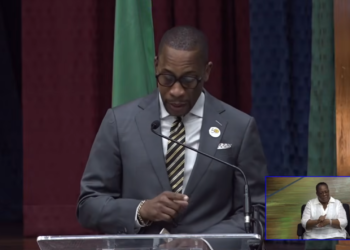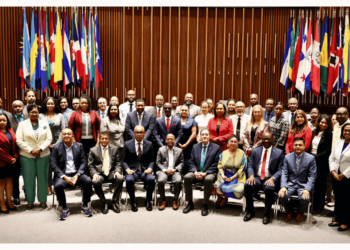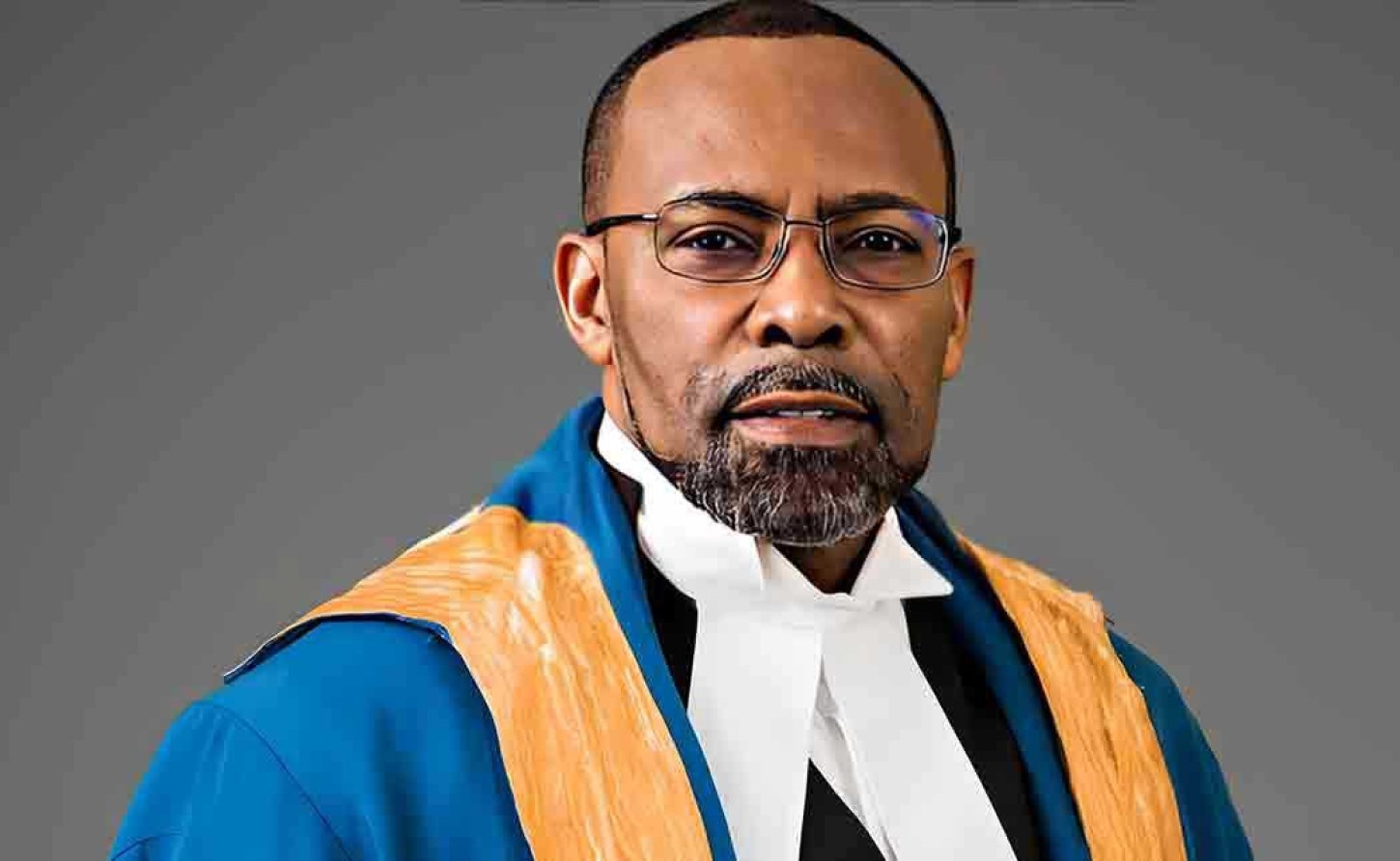

Caribbean Court of Justice President Justice Winston Anderson has issued a detailed public statement responding to a series of allegations reportedly raised by other CCJ judges. According to Kaiteurnews the remarks come after reports suggested internal instability within the regional court, breaches of judicial protocol, and claims that court panels were arranged to secure predetermined outcomes.
In his Friday statement, Anderson said the reports have caused “concern, anxiety and profound sadness” in the CCJ and across the region. He strongly criticised what he described as the unauthorised leaking of confidential internal deliberations and correspondence, calling the publication “wholly unacceptable” and arguing it undermines a core principle on which independent judiciaries rely. He added that the leaks have weakened “public trust and confidence in the third branch.”
A central part of the controversy, according to Anderson, concerns judicial attire. He confirmed that he removed a colleague from a panel hearing a preliminary application in the July case of D’Almada v Trinidad and Tobago after the judge insisted on wearing national dress rather than the court’s customary robes or business attire during proceedings.
Anderson said that when the CCJ was established, its founders intended that judges would continue observing the longstanding Caribbean practice of wearing robes during hearings. He noted that the Rules of Court do not expressly address attire for hearings conducted “in chambers,” but he said that over time a consistent regional approach developed. He explained that judges—particularly in interlocutory and chambers matters—began wearing bench jackets, and later business suits or similar attire when not in robes.
He further stated that in June he raised the issue privately with the judge but was unable to obtain agreement to follow what he called the court’s “established practice” on dress. Anderson said the decision to remove the judge from the specific panel was “based solely upon the issue of judicial attire,” and not connected to legal views, participation in deliberations, or any other aspect of the judge’s work.
Anderson said he has since moved to formalise a judicial dress code, which he placed before the Regional Judicial and Legal Services Commission in June, while acknowledging he “may have approached the matter… too strongly.”
The CCJ President also rejected suggestions that he manipulated panel composition to influence case outcomes. He described such claims as “wholly untrue” and said the shift from an attire dispute to allegations of panel “fixing” was “irresponsible, intellectually dishonest, injudicious and quite simply, malevolent.”
Read full response from CCJ President
Media-Release-Statement-by-the-CCJ-President-August-2026-3 (1) (1)