- If a nation can be asked to explain and prove what it is and who it is, then we are talking about a dangerous precedent. That is why the message from Skopje was much more than a diplomatic statement. It was a warning. A warning that the credibility of the European project is not measured by declarations and speeches, but by principles. Principles that must apply equally to all. And for the big ones. And for the little ones. And for the powerful. And for those who have been waiting for decades in front of the European door. Brussels may not respond to Cavusoglu’s words. He may choose to remain silent. But silence will be the strongest confirmation that the problem exists. Because the biggest inconvenience for European politics today is not that someone criticizes it. It’s just that criticism can be more and more difficult to refute with arguments. And when the facts start to sound like an accusation, then the one who utters them is no longer a problem. But those to whom they refer
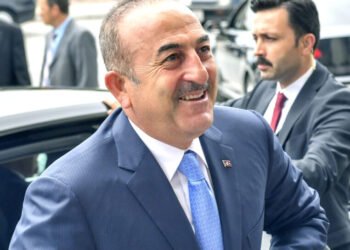
Sometimes it takes an outsider to speak the truth that everyone knows and few dare to speak publicly. This is exactly what happened in Skopje. At the “Dialogue for Unity and Peace 2026” conference, former Turkish Foreign Minister Mevlut Cavusoglu did not make a diplomatic speech. It did not offer carefully packaged phrases about a European perspective, regional stability or good neighborliness. Instead, he uttered a few sentences that sounded like a political slap to Europe’s power centers.
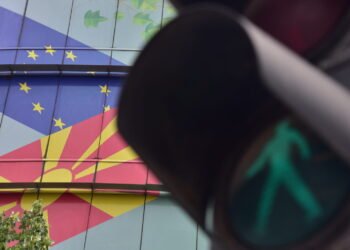
“Macedonia was asked to change its flag, then its name, and now it is asked to accept that it is not Macedonian.” The entire tragedy of the Macedonian European integration path was gathered in one sentence. And the most painful thing is that no one can say that it is not true. Macedonia changed its flag. Macedonia changed its name. Macedonia made concessions that have not been seen in modern European political history.
But instead of the end of the conditions, new demands followed. Instead of opening doors, new thresholds followed. Instead of acknowledging the compromises, there was a new debate about who we are, what language we speak, what history we have and whether we even have the right to our own national self-awareness. This is no longer a question of European standards. It is not about the rule of law. It is not about fighting corruption. It is not about reforms. It is about something much deeper and much more dangerous – about the right of a people to be what it is.
That’s why Çavuşoğlu’s words caused so much attention. They did not come from a Macedonian politician.
They did not come from any opposition leader. They did not come from an analyst or a university professor. They came from a man who for years was at the top of international diplomacy, a former head of Turkish diplomacy and a high representative of one of the most important countries in NATO. That is why his statement has a weight that Brussels will hardly be able to ignore. Because when criticism comes from outside, it can no longer be declared as “local nationalism”, “emotional reaction” or “Balkan frustration”. It becomes a political fact. And the fact is unpleasant. The European Union has been claiming for years that it is a community built on the principles of dignity, equality and respect for diversity. But the case of Macedonia opens up an essential question: Do those principles apply to everyone equally? Or are there nations of the first and nations of the second order? Because if a state can be asked to change its name in order to progress towards the Union, then we are talking about a precedent. If a nation can be asked to renegotiate its history, then we are talking about a precedent. If a nation can be asked to explain and prove what it is and who it is, then we are talking about a dangerous precedent.
That is why the message from Skopje was much more than a diplomatic statement. It was a warning. A warning that the credibility of the European project is not measured by declarations and speeches, but by principles. Principles that must apply equally to all. And for the big ones. And for the little ones. And for the powerful. And for those who have been waiting for decades in front of the European door. Brussels may not respond to Cavusoglu’s words. He may choose to remain silent. But silence will be the strongest confirmation that the problem exists. Because the biggest inconvenience for European politics today is not that someone criticizes it. It’s just that criticism can be more and more difficult to refute with arguments. And when the facts start to sound like an accusation, then the one who utters them is no longer a problem. But those to whom they refer.