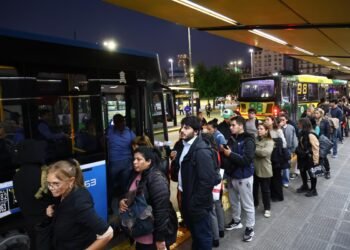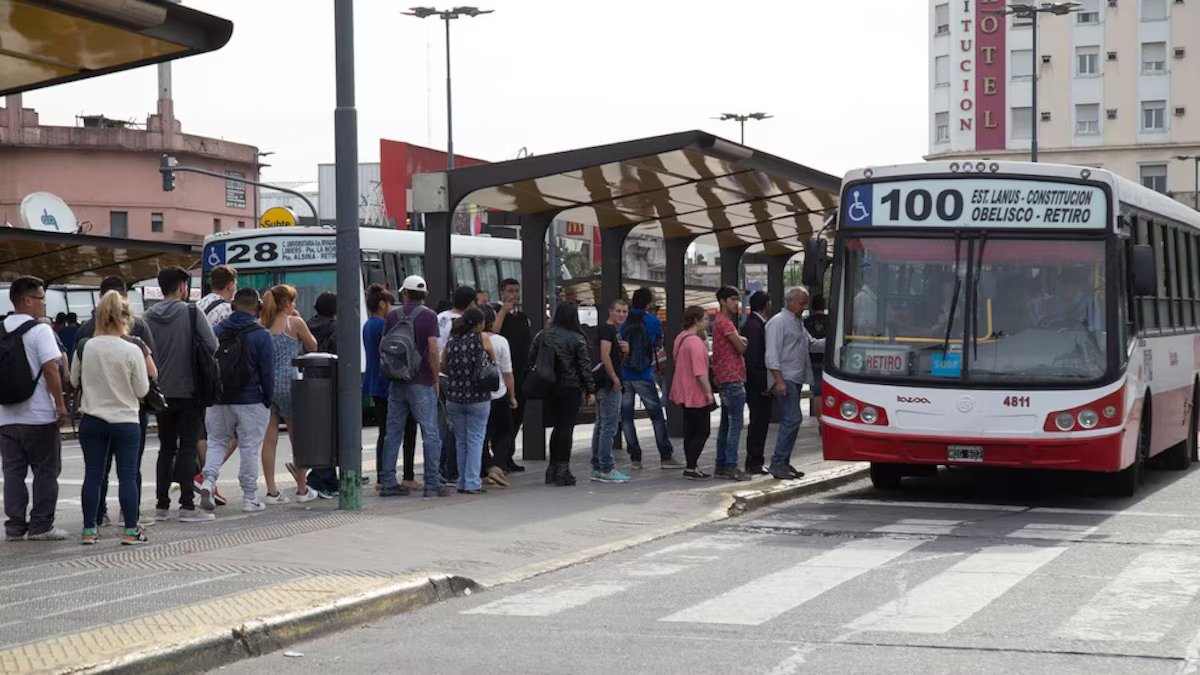
Urban transport companies warned this Tuesday that service could be paralyzed on Wednesday due to the skyrocketing of the price of diesel, the lack of fuel supply and the alleged delay in payments from the National and Buenos Aires Governments. With a reduction in frequency that reaches up to 20% in the Metropolitan Area of Buenos Aires (AMBA), since the beginning of this week, long lines at bus stops.
“As fuel prices rise so much, the issue becomes unviable. Companies today do not have to pay salaries tomorrow“he said this Tuesday Marcelo Pasciutodirector of the Business Chamber of Urban Transport of Buenos Aires (Cetuba) and director of the Dota Group.
In dialogue with Futurerockconsidered: “Whether transportation works tomorrow depends on delivering diesel, on banks overdrafting and on the union collaborating; if not Tomorrow I don’t know what company he will work for. “It’s going to be very complicated.”
“Salaries are owed for the last quarter of 2025 onwards. There is an increase in fuel of 42% with the issue of the war in the Middle East. There were two oil companies, Shell and Axion, that have not delivered fuel since the National Government said it was going to freeze it because they have no values,” Pasciuto explained.
The wholesale price of diesel is 8% to 10% more expensive than the price at service stations. Until before the escalation of the conflict in the Middle East, the wholesale price was up to 15% cheaper than retail.
The businessman explained that currently some companies operate with 20% fewer frequencies and some even with 40%. “I notice a big service chaos. There is a long line to take the bus, people cannot travel,” he lamented.
“The dialogue that exists with the National Government is via WhatsApp; There have been no meetings for a long time. The first months there were meetings, but then there was no management. With the Province it is the same, I don’t know if it is due to lack of resources. They said they will pay on the 13th ‘if they can’…It’s very complicated. Here, If there is no fuel, the buses cannot operate”, he remarked.
The situation is different with the Buenos Aires administration. Sources consulted by LA NACION explained: “CABA is excluded, not only does it pay a higher technical ratebut it has already clarified to the companies that it will cover the increase in diesel. He also credited the funds yesterday at noon so that they can pay salaries.”
According to data recorded by THE NATIONthe use of the collective fell 12% in the last year in the AMBA, which is equivalent to approximately 1.1 million fewer daily passengers.
The causes have to do, on the one hand, with the fact that the sectors that historically generate demand for public transport – such as industry, construction and commerce – show no signs of recovery. Added to that is the deterioration of service, with increasingly spaced frequencies. A third factor is the rates, that in the last year rose above inflation.
In the last four years, 3,000 buses stopped circulating in the AMBA: the park went from 18,500 to 15,500 units. The reduction in subsidies, which was not compensated to the same extent by tariff increases, generated less income for companies and forced this contraction. Today, the subsidy represents 63% of the companies’ income, when in December 2023 it was 91%.
Within the province, furthermore, 50% of the total AMBA buses circulate, with 9,000 units. They are the ones with a number of 200 or more, which only circulate in the Buenos Aires suburbs.