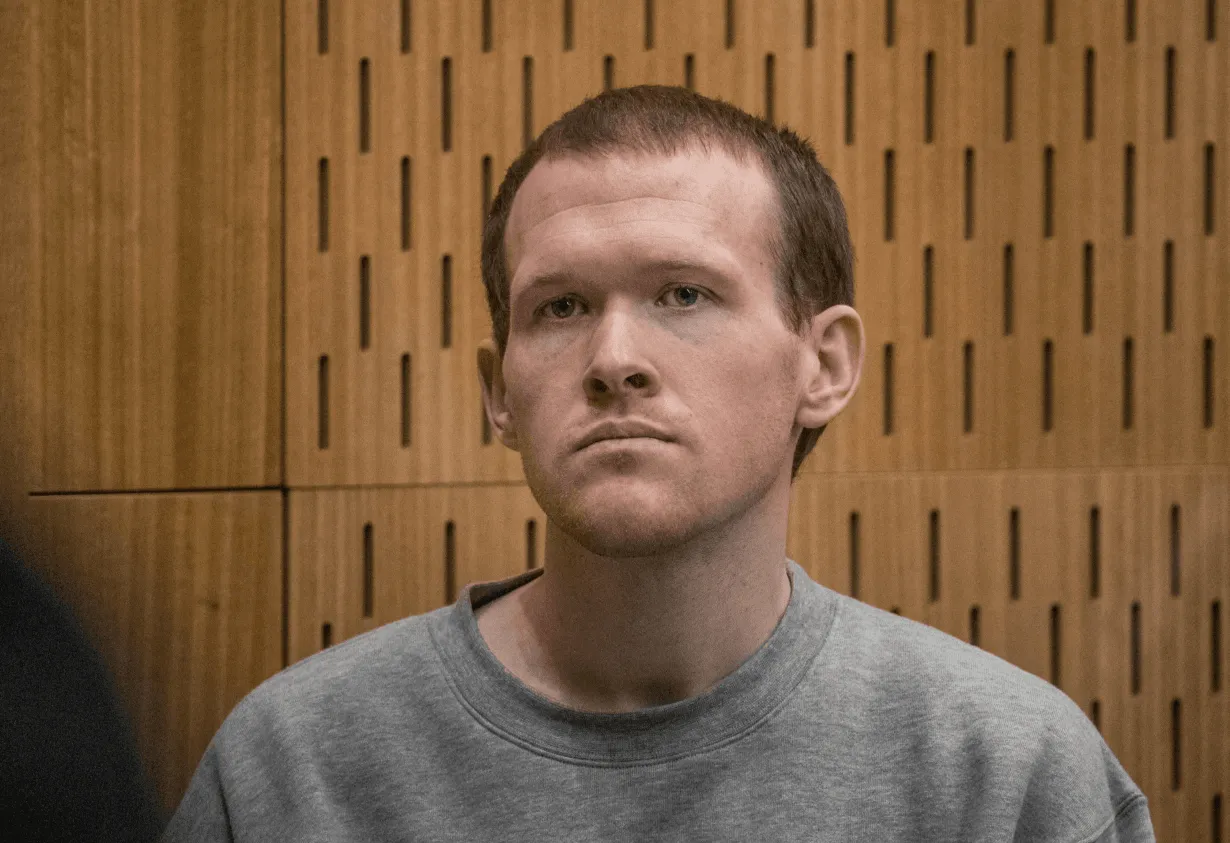
New Zealand’s Court of Appeal rejected the appeal of Brenton Tarrant, the white supremacist who killed 51 people in Christchurch in March 2019 in attacks on two mosques. Tarrant, 35, is serving a sentence of life in prison without the possibility of parole, and the three-judge panel ruled unanimously that the arguments he presented in the appeal were “completely without merit.”
During a seven-day hearing in February, Tarrant claimed he was incapable of making rational decisions at the time he pleaded guilty, saying prison conditions were “torturous and inhumane”. In addition, he contested the amount of the sentence. The trial panel did not accept his statements, judging them to be inconsistent and unsupported testimonies. The judges concluded that Tarrant “was not in any way coerced or pressured” when he pleaded guilty, and that he “did not present any defensible basis or any defense known to the law.” The facts of the crimes committed were assessed as “beyond any doubt.”

Aya al-Umari, who lost her older brother Hussein in the attack, expressed relief at the court’s decision. “I am glad and relieved that justice has been served again. I was convinced that there were no solid grounds for the appeal, and today’s decision confirms that,” al-Umari said. She also referred to the difficulties that the appeals process brought again and again to the families of the survivors: “Things like this process take you right back to those moments of fragility.” However, she emphasized that today’s outcome “gives her security and comfort that the correct procedures were followed.”
Tarrant was born in the Australian state of New South Wales, and moved to New Zealand in 2017. According to prosecutors, that’s when he started planning attacks on the Muslim community. He was active on Internet forums, and shortly before the attack he published a 74-page racist “manifesto”. The attacks on the Al Noor Mosque and the Linwood Islamic Center, which were partially broadcast live, shocked the world.
The massacre triggered significant legal changes in New Zealand.
Within a month, parliament voted overwhelmingly to ban military-style semi-automatic weapons, as well as ban parts that can be used to make such weapons. The government has offered monetary compensation to owners of weapons that have become illegal under the new law through a buyback program.