The subway is increasingly a reality for Bogota residentsnot only because of the progress of the first line, which this weekend with the new cut could be around 77 percent, but because the project of extension to 100th street keep walking.
In fact, a public hearing will be held this Thursday afternoon in which the multinational China Harbor Engineering Company Ltd. (CHEC) will present its proposal to the city and whose value was estimated at around 3.4 billion pesos in the district development plan.
READ ALSO
It is a step ordered by law in the process to define the viability or not of a development project. Public Private Association of private initiative (APP – IP) and in which it will be made known to the entire city.
Until now the project is known to the Bogotá Metro Company (EMB) and the Mayor’s Office, and five of the 10 necessary phases have been completed. It was presented to the mayor in October 2024 and has already passed the pre-feasibility, EMB and District PPP Committee review stages. The originator received the endorsement last year to move to the feasibility phase and prepared the feasibility studieswhich were presented last December.
Citizens, third parties and authorities can participate in this Thursday’s hearing at the Dann Carlton Hotel. competent interested parties, as Leonidas Narváez, manager of the Metro Company, explained to EL TIEMPO.
Extension of the first line of the Bogotá metro. 93rd Street Station Photo:Private file
This newspaper had access to exclusive information about the proposal to extend the first subway line to 100th Streetthat is, extend it along 3.2 km to the north.
The Chinese multinational’s project, according to experts, is aligned with national and international standards and meets the comfort and safety parameters for passengers.
If feasibility is considered, the initiative would have a preconstruction phase of 18 months, 42 month construction (includes 6 months of testing, certification and commissioning phase), operation and maintenance of 288 months and a final reversal of 6 months. The total term would be 354 months (29.5 years).
READ ALSO
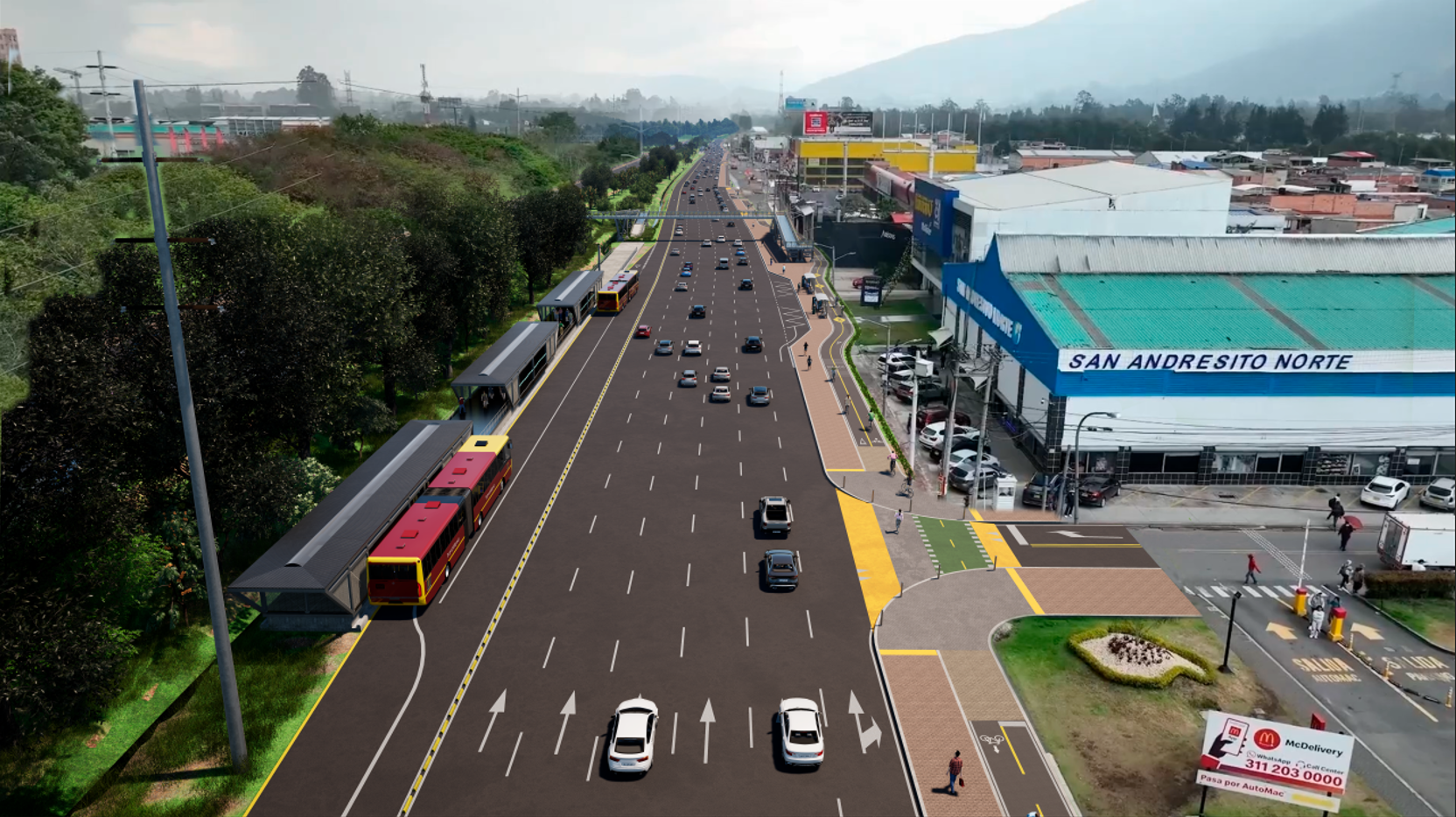
The proposal will improve the connectivity of the city’s mass transportation system, since it is integrated with the TransMilenio trunk on 68th Avenue (currently under construction) and the Regiotram del Norte (approved in October 2025).
The project also prioritizes the mobility of pedestrians and bicycle users and improves safety with lighting and elimination of “blind spots” under the subway.
Key details of the subway extension project to 106th Street
According to the private initiative APP, the viaduct that runs along Caracas Avenue and reaches 82nd Street today will continue towards 106th Street. Thus, the limit of the so-called maneuver queue (the termination point of the viaduct) would be moved from Los Héroes to 114th Street.
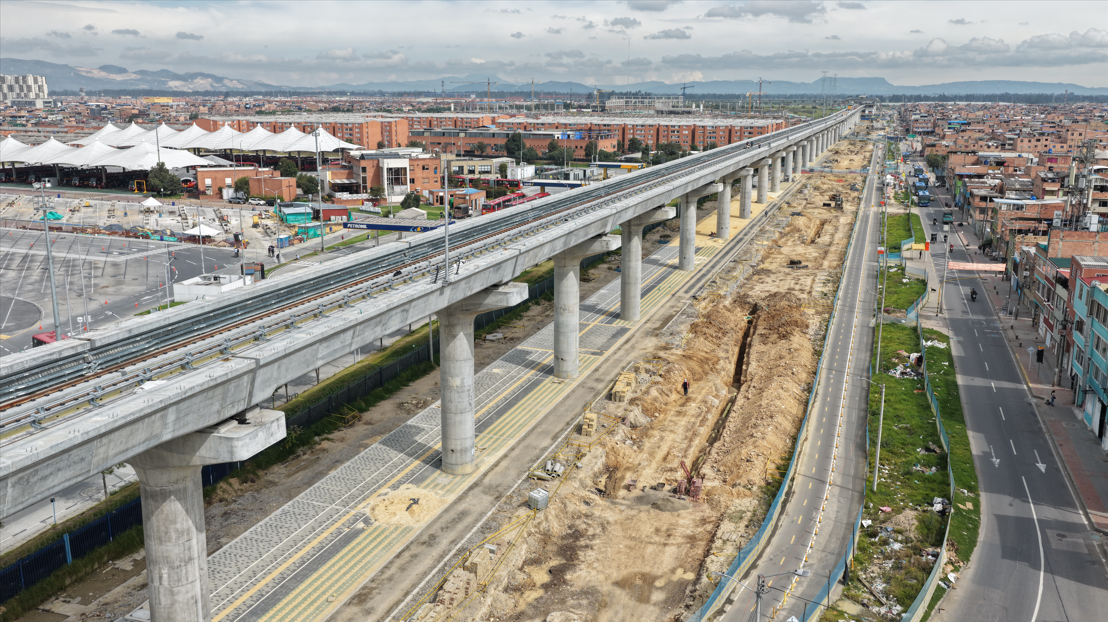
The Line 1 viaduct under construction is 23.9 km long, between the workshop patio, in Bosa, and 82nd Street, in Chapinero, and runs through the separator of Villavicencio, Primero de Mayo and Caracas avenues. It has 16 stations.
On 82nd Street, according to the project known by EL TIEMPO, The elevated structure makes a kind of S after leaving Los Héroes, to move from the central separator of Caracas towards the separator between the center lane of the North Highway and the parallel road, on the western side.
Extension of the first line of the Bogotá metro. 106th Street Station Photo:Private file
At that point it also begins to rise with a slope of less than 1 percent. The initiative proposes that the structure through which the trains will run will go from a height of about 13 meters – as it currently is – to 20 meters on average.
The purpose of this elevation, according to experts consulted by this newspaper, is to allow passage over the bridges on the North Highway with streets 94, mainly, and 100, so that these structures would not have to be demolished and rebuilt. This was one of the challenges facing the possibility of extending the first line north of Bogotá.
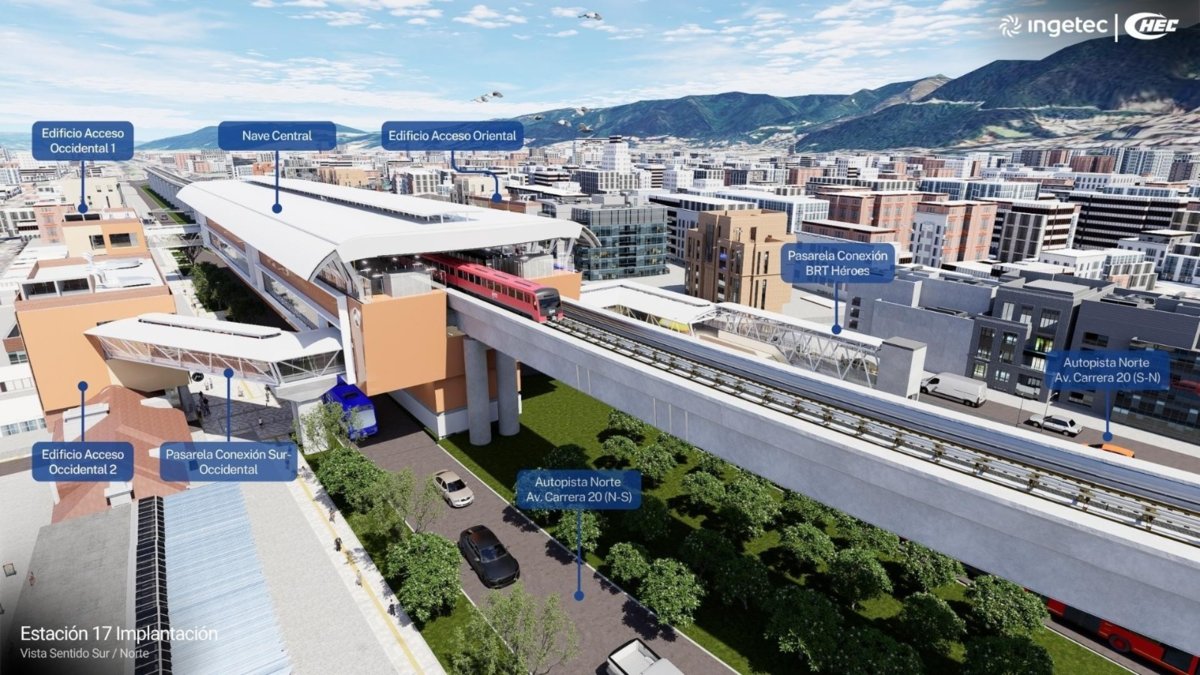
The Chinese firm’s project also establishes three stations that will be added to the 16 that section 1 has, under construction. They would be located on streets 82 (station 17), 93 (station 18) and 102 (station 19). They will be mezzanine type and will be on the axis of the layout. Unlike the line 1 project, which is advancing at 75.50 percent, the entrance buildings would not be large structures on the sides, but rather small constructions in accordance with the height and local architecture. The stairs and elevators would be there, to then pass, through walkways, to the mezzanine stations, where the payment and boarding areas would be (upper level).
According to documents about the project known to this newspaper, the stations will not impact vehicular entry into homes nor will they generate road closures.
The project also estimates that the extension to 106th Street will have 10 percent additional passengers. That means an increase of between 60,000 and 80,000 people for the current line 1which could have 600,000 passengers per day.
There would be an additional fleet of trains with a metro extension
The extension also means that eight additional trains will be needed -for a total of 48 wagons-, which will be added to the fleet of 30 trains initially planned for the section between Bosa and Chapinero. These equipment will be electric and with the latest automation technology. The design speed will be 90 km/h and the commercial speed will be 43 km/h.
The extension of metro line 1 will have direct connections with TransMilenio buses, through walkways, with the stations of Los Héroes and streets 85 and 106. And indirect connections with the BRT system on the North Highway with Calle 100 (trunk av. 68 68) and with the future Zipaquirá Train (Regiotram del Norte), which will travel in that area through the NQS.
The evaluation of the proposal of the Chinese multinational, which is the majority partner in the Metro Línea 1 (ML1) consortium, in charge of the first line of the Bogotá metro, will be headed by a consultancy that will be selected in a tender carried out by the Bogotá Metro Company. “That is a legal obligation and the resources with which we contract are provided by the originator of the private initiative,” Narávez said in response to this newspaper.
If the CHEC initiative is viable, what follows now is a bidding process in which other proponents may compete. If the bid is won by a bidder other than the Chinese multinational, the bidder must recognize the costs incurred by the originator.
According to the law, In the case of a private initiative PPP, the Capital District may contribute a maximum of 30 percent of the value of the project.the rest will be borne by the winning bidder, whose return will be obtained through rates and the commercial use of the extension spaces.
In this case, the mayor’s office of Carlos Fernando Galán must contract the project in its last year. That is the deadline established in the initiative’s schedule. If the entire process continues as expected, in five years the city could have an additional section of the first line that will benefit more Bogota residents.
GUILLERMO REINOSO RODRÍGUEZ
Bogotá Editor
In X: @guirei24