Havana/No Cuban is surprised to learn that the Antonio Guiteras thermoelectric plant is leaving the national electrical system (SEN). “And when did it come in, I didn’t find out?” a Cuban asked this Friday after learning about the new breakage. The Matanzas unit was disconnected at 6:58 in the morning, just four days after synchronizing and when it was generating around 180 megawatts.
Until the time of writing this note, the authorities have not explained the cause of the new breakdown or the expected time frame to return the plant to the system. With this incident, Guiteras has accumulated at least 17 outings so far this year. The previous one, announced on June 24had been caused by a loss of water in the old boiler.
The brief published information on the plant’s Facebook page was received with a mixture of fatigue, indignation and sarcasm. “She never came in, let’s tell ourselves the truth,” wrote user Frank Manolo Gallardo. “The never-ending story,” added Yeudis Fernández. For Luansy Lima, the explanation was simpler: “Of course, rest on the weekends.”
“Let me guess… A leak in the boiler. Guiteras is a sieve,” said Marta Beatriz Parra ironically. “It is no longer known if he was entering or leaving,” added Soyuz Maray Gómez. Others summarized the uselessness of official reports for those who continue to endure endless blackouts: “In any case, we don’t know if it comes in or goes out, there is never light.”
The plant has not received capital maintenance since 2010 and has been in operation for more than 38 years
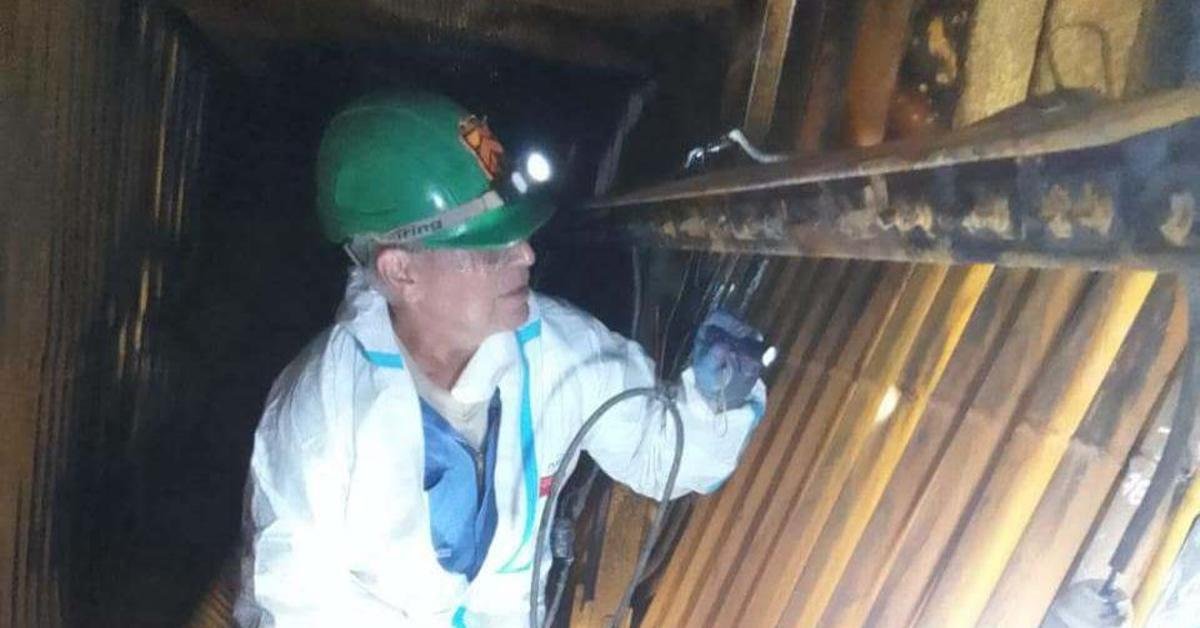
The ridicule, however, is not directed against the plant workers, forced to return again and again to the bowels of a deteriorated facility. In May, more than 300 people worked shifts of up to 14 hours during a 90-hour repair. The welders had to intervene inside the boiler, at temperatures of up to 60 degrees and in areas located about 150 meters high.
“Inside the boiler the heat is infernal,” Norberto Padrón Ramos, a supervisor and welder with 38 years of experience, acknowledged at the time. The worker also warned about the gases, exhaustion and the accumulated consequences of these interventions: “It is a job that takes its toll on you in the long run.”
own official press He described the technicians welding “at full speed, with time against us,” eating and drinking coffee at the foot of the boiler so as not to interrupt work. But behind that work epic lies enormous pressure. Each breakdown of the Guiteras aggravates the blackouts, the banging of pots and pans, and the protests. The regime knows this, which is why it mobilizes ministers and Party leaders and makes the operators directly responsible for returning in a few days a machine that needs months of work.
For decades, the Cuban State postponed capital repairs, let thermoelectric plants age and replaced systematic investment with emergency patches
The plant has not received capital maintenance since 2010 and has been in operation for more than 38 years. Between January and May alone, it was out of service for 293 hours due to defects in the economizer, one of the areas of the boiler that has suffered the most breakdowns.
Guiteras departures also pose a risk to the stability of the entire network. It does not mean that each breakdown will necessarily cause a national blackout, but the sudden loss of one of the largest generation blocks can trigger a drop in frequency that the weakened Cuban system does not always have reserves to compensate. On September 10, 2025, an unforeseen shutdown of the plant caused the complete collapse of the SEN. In March of this year, another disconnection left two-thirds of the country without service.
For decades, the Cuban State postponed capital repairslet thermoelectric plants age and replaced systematic investment with emergency patches. Beyond the perennial excuse of the embargo and sanctions, it was never about a lack of resources, but rather a political decision about where to spend them.
“Please don’t turn it on anymore, make it new,” asked one of the commentators. The phrase, written as a relief, summarizes a technical and political conclusion: Guiteras does not need another miracle from its workers, but rather a deep repair and an investment that the Government decided to dedicate for years to hotels that are empty today.