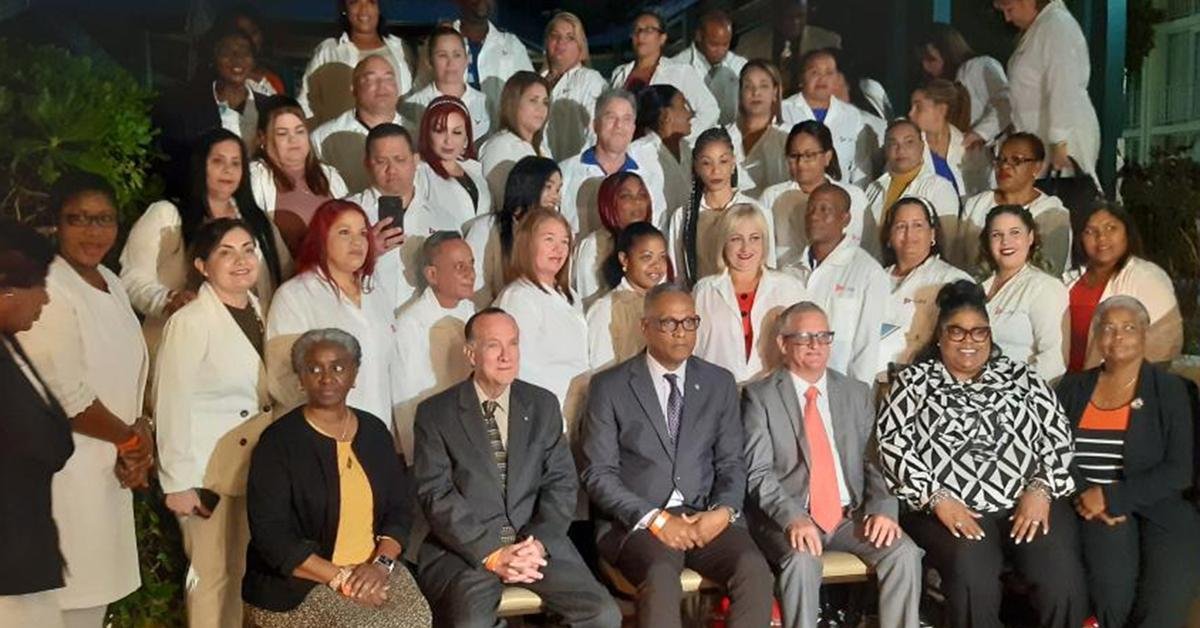
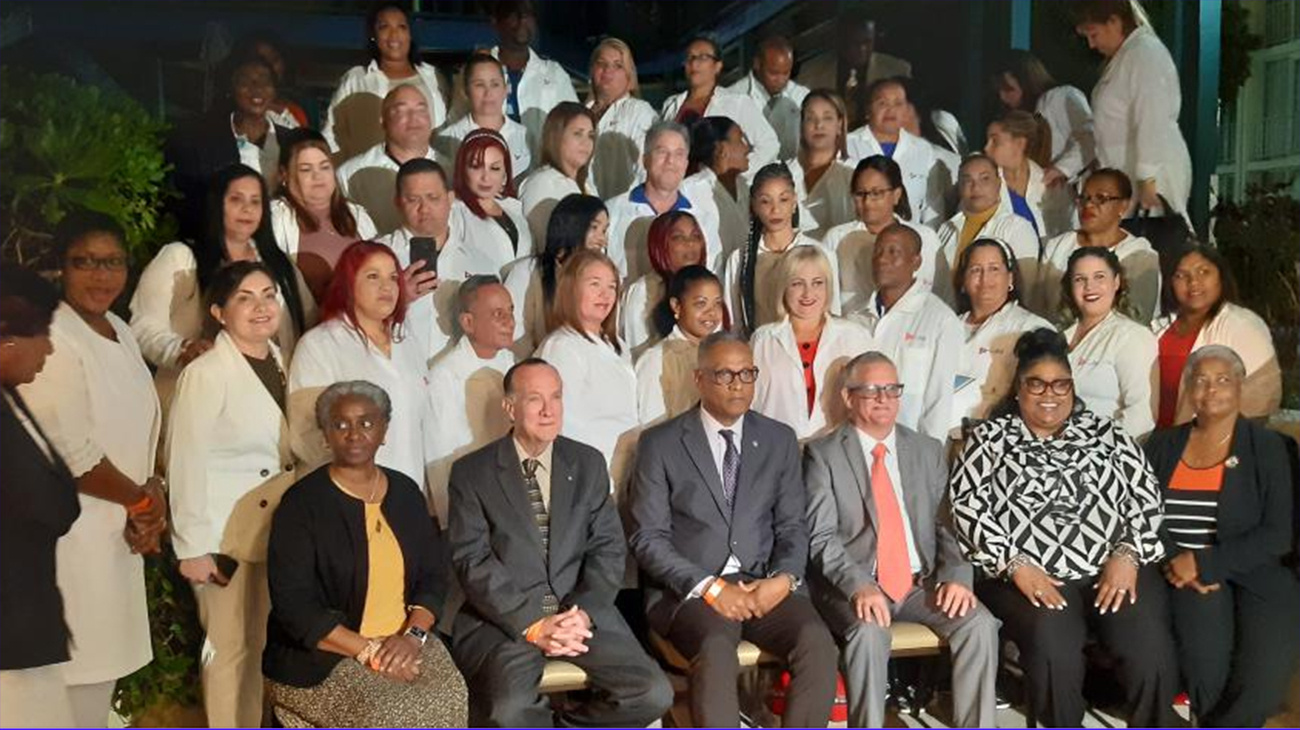
Havana/The Bahamas Minister of Health, Michael Darville, confirmed that “there are only three Cuban doctors in the Commonwealth of the Bahamas.” The rest, of a group of 35 specialists, are “electrocardiography, laboratory and radiology technicians” who were incorporated to reinforce diagnostic and health care services in the Family Islands.
The specialists are three ophthalmologists, on a mission for which the Bahamas paid the Island salaries of between 5,000 and 12,000 dollars per month. The others are three nurses, ten biomedical engineers, eight laboratory technicians and 11 X-ray technicians.
Darville told the network Eyewitness News Bahamas that are in the final phase of negotiations with Washington, after the United States denounced that Havana’s medical missions constitute a form of forced labor and restricted visas for officials from foreign countries. That forced the Bahamas to cancel a new agreement in June last year for the arrival of more health workers.
Bahamas seeks to sign Cuban health workers through direct contracts
This Wednesday, Vice Minister of Foreign Affairs Carlos Fernández de Cossío reiterated the pressure that the United States exerts on governments in various parts of the world to “end bilateral health care programs.”
According to the diplomat, President Donald Trump and his Secretary of State, Marco Rubio, “pursue the suffocation and humiliation of the people, as well as the fall – unsuccessfully worked for by themselves and their predecessors – of the Revolution.”
The Bahamas seeks to sign Cuban health workers through direct contracts. The Bahamian Prime Minister, Philip Davis, told the US authorities that he had no evidence that “forced labor was occurring in our country with doctors.”
However, Archivo Cuba denounced that the specialists who were in the Bahamas only received between 8% and 16% of the money paid into the regime’s coffers, that is, 990 or 1,200 dollars per month, depending on their position.
Cuba, just as it did with Honduras and Boliviasent electricians, telecommunications technicians and economists among the Cuban doctors. These personnel were paid as health specialists, as reported last February by the Honduran vice minister of the Ministry of Health (Sesal), Ángel Eduardo Midence.
Another country that finalized agreements with the Island is Guatemala. In February he ended the relationship that began in 1998 after the impact of Hurricane Mitch. A relationship that drained Guatemalan finances with payments of 7,000 quetzales, about 900 dollars a month for each doctor and nearly three million quetzales a month, 389,000 dollars, for the total number of specialists.
In April the first 161 arrived in Cuba of the 412 health workers who were in the Central American country, for which they paid the regime $4,513,872 annually. The flights have continued, in June two arrivals of the ATR-4500 aircraft to Havana were recorded.