
Listen to this article
Estimated 5 minutes
The audio version of this article is generated by AI-based technology. Mispronunciations can occur. We are working with our partners to continually review and improve the results.
There were more than 400 municipal elections in Ontario Monday, so naturally the results were all over the map.
From an anti-incumbent wave that hit many politicians, including one of Canada’s longest-serving mayors, to several big cities that brought back almost every incumbent, here are some of the key headlines and takeaways from last night.
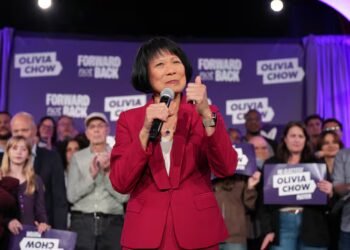
Chow wins easily in Toronto
After polling had suggested a “statistical dead heat,” Toronto’s incumbent Mayor Olivia Chow defeated challenger Brad Bradford with relative ease.
Political strategist Blue Knox, who served as former mayor John Tory’s director of communications, said the Chow campaign struck a nerve with Torontonians by going after Bradford’s pledge to create a public utility company to handle the city’s water and wastewater. Chow said it would mean the city losing control of an asset and opening the door to privatization.
“Canadians like for their public institutions to stay public,” Knox said.
Chow will oversee a progressive, new-look council with several of her key allies elected, putting her in a strong position to pursue her agenda.
Mississauga’s first male mayor since 1978
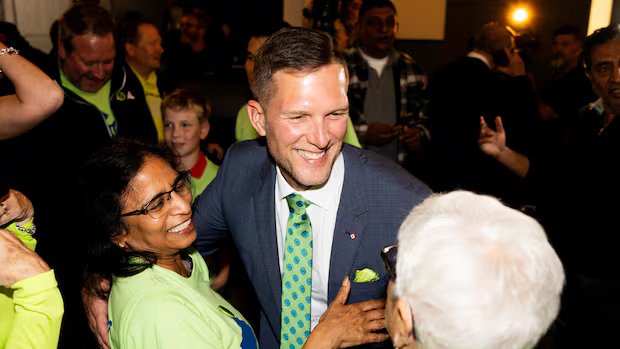
Polling at only 12 per cent as recently as August, Alvin Tedjo climbed from those depths to the Mississauga mayor’s chair, defeating incumbent Carolyn Parrish and former mayor Bonnie Crombie.
Tedjo is just the fourth person to hold the job in nearly half a century, marking a significant generational shift in a city long led by political veterans. He’s also the first man to hold the job since 1978.

Breaking news: Alvin Tedjo has won the 2026 Mississauga mayoral election. Tedjo was elected as Ward 2 councillor in 2022, and gained attention after being the only mayoral candidate endorsed by the Peel police union. He secured the election following concessions from his rivals.
Horwath out in Hamilton
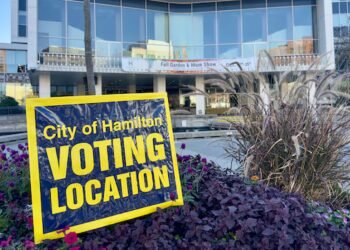
Since amalgamation in 2000, Hamilton’s incumbent mayors have lost their seats more often than they keep them, and that held true on Monday. Andrea Horwath, the former Ontario New Democratic Party leader and former Hamilton Centre MPP, was unable to secure a second term.
The new mayor is Keanin Loomis, former president and CEO of the Canadian Institute of Steel Construction and former head of Hamilton’s Chamber of Commerce, who will be joined by eight new councillors in a strong vote for change in the city.
Milton’s 46-year mayor ousted
At least two dozen incumbent mayors lost their seats Monday, including nine who had served their cities for more than a decade.
Gordon Krantz, Canada’s longest-serving mayor of a major municipality, had been in charge of Milton council since 1980. He lost handily to councillor George Minakakis.
And in Sarnia, the area’s Chamber of Commerce CEO Carrie McEachran defeated mayor Mike Bradley, who had held the chair since 1988.
Other long-time mayors who lost include Oakville’s Rob Burton (20 years) and Niagara Falls’ Jim Diodati (16 years).
Some larger cities stay the course
The winds of change did not sweep away everyone in Ontario.
Ottawa, Brampton, London and Kitchener were among the communities that kept their mayors and most of their councils.
Zack Taylor, an associate professor of political science at Western University in London, said limited information about candidates can make it harder for challengers to gain traction. Taylor described the London campaign as relatively quiet compared with some previous election cycles.
“It could just be that [London Mayor] Josh Morgan benefited from incumbency and also not really having any kind of scandals occur,” Taylor said.

Mark Sutcliffe gives a victory speech after being re-elected as mayor of Ottawa on Monday. (Keito Newman/The Canadian Press)
A good night for women
Niagara Falls, Port Colborne and North Bay each elected their first female mayors, Ottawa’s council has more women than men for the first time since the 2001 amalgamation, and the community of Merrickville-Wolford elected an all-female council.
At her victory party, Niagara Falls mayor-elect Lori Lococo downplayed the accomplishment.
“I always hope that people vote for people based on their experience and skills, not because of their gender,” she said.
Women made up 32 per cent of the candidates province-wide.

Maggie Horsfield has won the election in North Bay, Ont., making her the first woman mayor in the city’s history. She spoke with reporters at her election night event.
Taxes, homelessness were key issues
Taxes were a running theme across many municipalities.
Tedjo in Mississauga promised a two-year tax freeze; Loomis in Hamilton promised to get taxes “under control”; and Windsor’s new mayor Fred Francis promised to hold the line on taxes.
Other popular discussion points during the campaign were homelessness, encampments and community safety. These were key issues in places like Windsor, Thunder Bay and Oshawa.
Thunder Bay councillor-elect Julie-Ann Colquhoun said she wants to “help build a community where people feel safe … and people experiencing homelessness are supported with an understanding of the complexities they face.”