We’ll start with a fact. A number. Frontex, the European border guard service, must grow from fewer than three thousand to thirty thousand people. That is as many as work in the entire European Commission.
For those who still thought that the migration discussion would die down after the Migration Pact: you ain’t seen nothing yet. Now it’s just beginning.
Last week, the possibility of creating detention centers for rejected asylum seekers outside the EU was approved by the European Parliament definitively sealed. The same week, a group of twenty EU countries called for such centres, or return hubs, to be funded with EU money. finance.
On to this week. On Tuesday, officials from fifteen countries and the European Commission talked with the Talibanto see whether that regime can take back Afghans who have been rejected. A Dutch cabinet delegation traveled to Damascus on Wednesday agreements on deportations to do with the new Syrian government.
Getting on with it seems to be the motto. A much-needed moral discussion is rightly taking place about all these new steps. But now that they are coming, it is also good to test them against reality, regardless of that judgment. Because the foundation under many of these deportation plans – and specifically the deals with migration countries and the return hubs – is… quite shaky.
Not strictly against
It was clearly written down this week by a group of experts, lawyers and politicians. You think: they probably don’t like migration deals. But this report, by the Migration Advisory Council and the International Affairs Advisory Council, is not strictly against it at all. Collaborating with countries where migrants come from and travel through is necessary if you want to slow down and direct migration.
However, they see: Europe, and especially the Netherlands, still looks very closely at these types of agreements. “While the Netherlands opts for ‘broad’ partnerships on paper, in practice it has so far mainly focused on return and combating irregular migration.” In other words: what’s in it for them? Hardly any attention is paid to setting up legal routes for migration or investing in the local economy.
Then Brussels. The European Commission is already distributing billions to partner countries – such as Egypt, Tunisia and Lebanon. And so far, migration rates appear to be declining. At the same time, it is uncertain how committed these countries really are to implementation. The deals also enable the leaders of these countries to exert pressure: the EU desperately needs them.
There are more interesting nuances in the report. Promoting the economy elsewhere is useful, but can actually stimulate migration (people have more money to venture out). And with 300 million young people entering the labor market in the Middle East and North Africa over the next 25 years, legal labor migration routes can’t solve everything.
Lots of fanfare, little effect
A completely different publication, and from a different angle, appeared a little while ago. The subject is also more specific: the case of Australia, beloved by proponents of a very harsh migration policy because the Australian government has locked up asylum seekers in detention centers on remote islands in recent decades – and for the same reason abhorred by opponents of such policies.
In recent years, the number of asylum seekers arriving irregularly in Australia has fallen to zero. Strangely enough, these detention centres, reminiscent of the return hubs envisioned by some EU leaders, appear not the main cause of this decline. They were miserable and became infamous in the media, but they had no major effect on arrivals.
The decline only followed the moments when the Australian Coast Guard deployed pushbacks or turnbacks: pushing boats back to their departure point, Indonesia. It is one of the reasons that the Migration Pact is not only criticized for being too harsh. Another camp of skeptics believes it does not go far enough, because a perilous crossing to Europe still offers the best chance of staying in the EU.
In the EU, pushbacks are officially banned – and highly controversial. But you don’t have to be pro-pushback to learn lessons from this episode. The deterrent effect of detention centers, no matter how horrific, is unproven. The appeal remains great.
As long as it remains possible to come to Europe, people will continue to do so, the Australian example suggests. Only when the route is cut off does that incentive disappear. Migrants no longer die on their way to Australia: no one tries anymore. (Under current policies, three thousand people die in the Mediterranean every year.)
Since then, Australia has been taking in more refugees through the United Nations resettlement program. You wonder whether most European proponents of return hubs are also interested in this.
Policy with a face
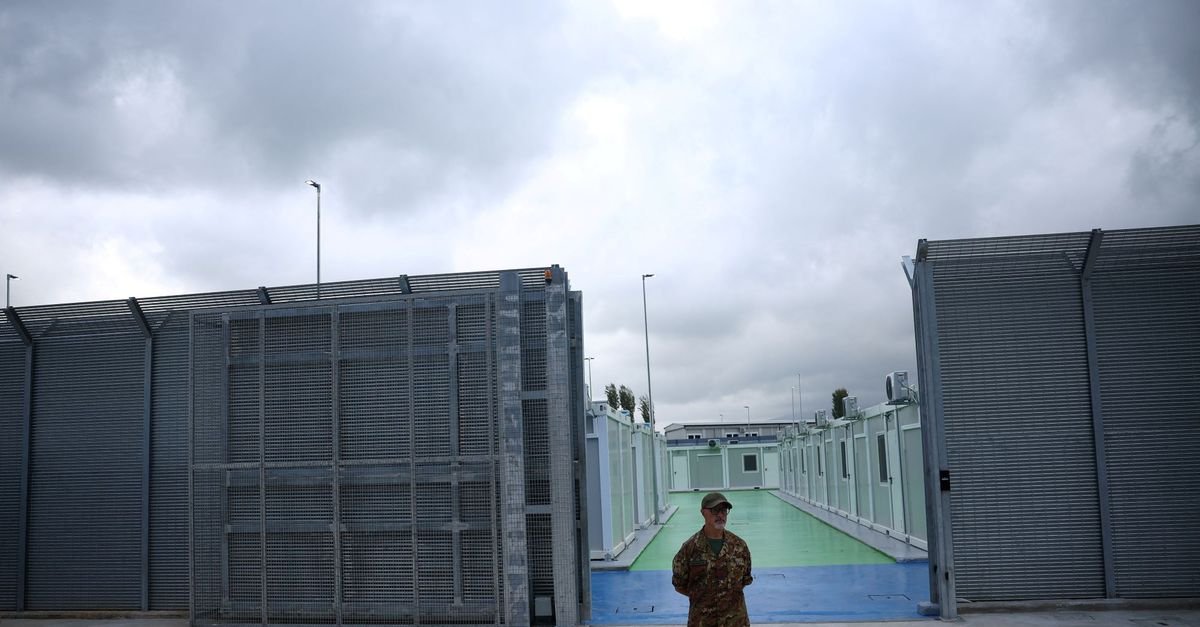
European leaders now want to move on. Danish Prime Minister Mette Frederiksen not only wants to build return hubs, but also the entire asylum procedure outsourcing to other countries outside Europe. Italy is already doing something like this on a small scale in Albania. Does that have a deterrent effect? Again: uncertain.
Because: even in such a scenario, asylum seekers must first report to Denmark before they end up in a pinball machine that sends them from an asylum hub in country X to a return hub in country Y – if they do not disappear under the radar and into illegality after arrival.
One other factor seems relevant in all this. Migration policy is popular with voters as long as it is abstract. When the consequences are depicted, the horror grows. See the ICE raids in Minneapolis, or the sad stories of rejected asylum seekers who do not want or cannot return: victims of policy with a face.
This is different for migrants who remain invisible because they never get on a boat, because they are stuck outside Europe or because they drown in the Mediterranean Sea and remain anonymous forever. Our discussion about migration is also determined by who is or is not included.
Now that almost all of Europe is looking for tougher action, and leaders are showering each other with hubs, deals and plans, a little sense of reality and factuality wouldn’t hurt. The question is whether there is room for it.
Also read
The new European migration pact: these are all the changes (and the pitfalls)
:format(webp)/s3/static.nrc.nl/wp-content/uploads/2026/06/10125052/110626BUI_2033915634_migratie3.jpg)