Preparations for the upcoming wildfire season are underway as the snow melts in Manitoba, but some mayors in the province’s north say they need more help.
Last year’s wildfire season was Manitoba’s worst in 30 years, killing two people, forcing over 32,000 to flee their communities and burning 2.1 million hectares of land throughout the spring and summer.
Flin Flon Mayor George Fontaine says residents aren’t raising concerns about wildfires yet, since there’s still snow on the ground.
But this winter, the northwestern Manitoba city of roughly 5,000 — which was forced to evacuate due to wildfires last year — didn’t get as much snow as it did last year “by a long shot,” he said.
“So if we were dry last year, I suspect we’ll be even drier this year.”
The city has worked on a number of contingency plans to prepare for this year’s wildfire season, which includes “everything from being able to fight it differently to evacuation plans,” Fontaine said.
It’s also waiting to receive more firefighting equipment, he said.
“Hopefully, we’ll have more of those resources available by the time we’re at the dry stage.”
Although some cabins and homes outside the city burned last year, and the nearby community of Denare Beach, Sask., was devastated, Flin Flon still stood after being encircled by flames.
The city is now making plans with nearby communities to ensure a more cohesive response, Fontaine said.
“We’re working with Saskatchewan [so] we could treat this more as a one-unit thing.”
Above average fire risks predicted
The fire risk is expected to be above or well above average across much of Canada this year, including Manitoba, according to research scientist Yan Boulanger.
Those projections draw from Environment and Climate Change Canada seasonal forecasts, including factors like temperature, precipitation, relative humidity and wind speed, said Boulanger, who works with the Canadian Forest Service — a branch of Natural Resources Canada.
“Even though we are projecting above average fire weather conditions, that doesn’t mean that it will translate into higher fire activity,” he said.
Prediction maps from Natural Resources Canada show no fire risk in Manitoba this month.
But in May, the department forecasts much of southern Manitoba will be at an above average risk of fires.
In June, most of the province is expected to be at an above, or well above, fire risk.
Much of northern Manitoba will remain either at an above, or well above, average risk in July.
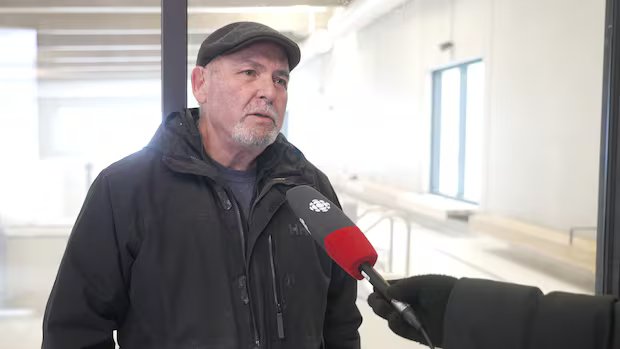
The mayor of the northwestern Manitoba town of Lynn Lake says last year, one issue his community faced was a lack of firefighting equipment and people to use it.
Because the northern fire season typically starts later, resources can be drawn to the south when fires start there early in the season, said Brandon Dulewich.
Lynn Lake is in the process of securing a new fire truck and other firefighting equipment, thanks to a provincial grant it recently received, he said.
“Going into this season … I hope the province has taken the necessary steps throughout the winter months here to stock up on additional pumps and additional forestry hoses, because that was definitely a barrier for us last year.”
Manitoba Natural Resources Minister Ian Bushie says the province has been working all winter to recruit staff, organize training and plan for this year’s wildfire season.
Some crews have already been hired to prepare for any early spring fires, he said. The province is still posting full-time and seasonal staff positions, and will start training emergency firefighters for casual hire next month, said Bushie.
His department has cut the vacancy rate of its full-time staff complement since last year, from 20 per cent to 10 per cent, he said.
The province is working with municipalities and First Nations leaders to ensure they have the tools that they need, and they have been told they can reach out to his department or Northern Relations for additional equipment, said Bushie.
‘A guessing game’
Lynn Lake, a town of nearly 600, was evacuated last spring after a wildfire that eventually grew to over 85,000 hectares came within five kilometres of the town.
Dulewich said the province told him it’s working on a report on that fire, which Manitoba Conservation investigators have alleged started on May 7 after a burn pile reignited at a mining site about 7.5 kilometres northeast of Lynn Lake.
“The findings of that report would definitely give us some insight on how to go into it this year,” said Dulewich. “Without it, it’s … just kind of a guessing game.”
Lynn Lake is trying its best to prepare for the upcoming wildfire season, he said.
The town’s local fire department wasn’t trained to fight wildland fires and got hands-on experience last year, but could use more training, said Dulewich.
He’d also like to see the province change how it offers training to small volunteer fire departments like Lynn Lake’s. Getting time off work for training, which can take weeks, is something “a lot of our local members can’t do,” Dulewich said.
Last year’s wildfires affected the mental health of Lynn Lake residents, the mayor said, and he’s worried about this year.
“We lost our summer last year, [because] the evacuation started at the end of May and people didn’t come back till September,” he said.
“If we have another tough summer, it’s going to weigh on people heavily.”