
Listen to this article
Estimated 5 minutes
The audio version of this article is generated by AI-based technology. Mispronunciations can occur. We are working with our partners to continually review and improve the results.
Ontario’s highest court has ruled a part-time dog walker who was bitten on the job cannot sue her clients for damages because, under provincial law, she’s considered to have been the “owner” of the animal at the time.
Amanda Nigro was bitten as she tried to put rubber booties on a boxer named Forrest Gump at her clients’ home more than four years ago. She sued the dog’s full-time owners, but two courts have now determined that, under Ontario’s Dog Owners’ Liability Act (DOLA), it was she who “owned” the dog in that moment — and since you can’t sue yourself, her case was dismissed.
“There can be no doubt that the appellant was an owner of Forrest for purposes of the DOLA,” read the Ontario Court of Appeal decision posted online Thursday.
“As was found by the motion judge, she was unquestionably the person in a position to control the behaviour of the dogs at the critical time.”
The case hinged on the legal definition of “owner” under a law in Ontario, which says liability for a bite or an attack can go well beyond the person whose name is on the ownership paperwork: it can be anyone who was in possession of the pet at the moment in question, from dog walkers to dog groomers to friends and family, and beyond.
Nigro’s lawyer and a longtime animal law expert say the higher court’s ruling should serve as a cautionary tale to anyone who cares for another person’s pet in Ontario, even if only for a few minutes, that they can be treated as an owner and lose the right to sue.
“Based on these two decisions, the public needs to be very careful when they’re looking after or hanging out with somebody else’s dog,” said Shane Katz, who represented Nigro.
“It’s opening up a whole new class of owners and exposing way more people to potential liability. And they probably don’t even realize it.”
Dog-walker worked with dog for months without issue
Nigro started working for Forrest Gump’s owners, Michael and Amanda Luciano, as a part-time dog walker in November 2021, the ruling said. Nigro had a key to the couple’s house in Oshawa, Ont., and went over to walk the boxer roughly three times a week. The dog didn’t have a history of aggression, court heard.
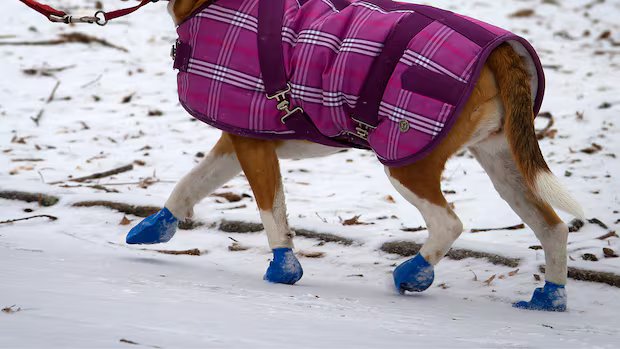
That March, Amanda Luciano texted Nigro to tell her Forrest Gump would need to wear booties for any walks in the snow to protect an infected paw.

Nigro tried to put the booties on the dog for the first time to let him out into the snowy, muddy backyard on March 24, 2022.
“As she approached Forrest with the booties in one hand, the dog lunged at her, bit into her left arm and started shaking it. After [she] managed to get her arm loose, Forrest continued to attack her, biting her on various parts of her body,” the ruling said. “[Nigro] sustained injuries to her abdomen, left upper thigh, and both arms.”
Nigro was severely injured and sued the Lucianos for $1 million in damages. The Lucianos’ lawyer did not respond to a request for comment but, in court, the couple argued they could not be held liable under DOLA because it was Nigro who was in control of the dog when she was bitten.
The issue of “ownership” under DOLA had been tested in Ontario Superior Court before, in the case of a woman who was bitten by her boyfriend’s Great Dane, Zeus, after she took the dog out for a walk in 2013. She lost her lawsuit because she, too, was deemed to have been the “owner” at the time.
In bringing Nigro’s case to court, Katz argued his client’s circumstances were different because she was alone in the Lucianos’ home and following their instructions to put booties on Forrest Gump when she was bitten.
The Superior Court and the appeal court justices all rejected that argument.
“The DOLA seeks to promote responsibility and accountability in those who are best able to prevent dog bites and attacks, wherever they occur. It would defeat this legislative objective if someone meeting the definition of owner could escape liability merely because they were in someone else’s home at the time of the incident,” the higher court’s decision read.
Lawyer Victoria Shroff, who has specialized in animal law for more than 25 years, says DOLA is a relatively unique statute in Canada that establishes what she described as “leash liability.”
Echoing Katz, she says there are now two cases establishing a “fairly broad” definition of the term “owner” — which she thinks will surprise many people who work in the field.
“Everybody who works in this field in Ontario should be reviewing their contracts — today,” she said.