The National Association of Young Entrepreneurs (ANJE) recognized that the country has made significant progress in the diversification of the generation matrix; however, it noted that there is still a way to go to overcome structural challenges that persist.
In a meeting titled “Progress, challenges and vision of the electricity sector of the Dominican Republic”, organized by its Economy and Energy Commission (CEE), the president of ANJE, Boris De León Reyes, highlighted the relevance of promoting spaces for articulation between the public and private sectors to jointly address the challenges of the electricity system.
“Having an efficient, sustainable and competitive energy sector is essential to strengthen the business climate and guarantee the country’s economic growth. We recognize the significant progress that has been made in the diversification of our generation matrix. However, we know that we still have a way to go to overcome structural challenges that have persisted for decades,” said De León Reyes.
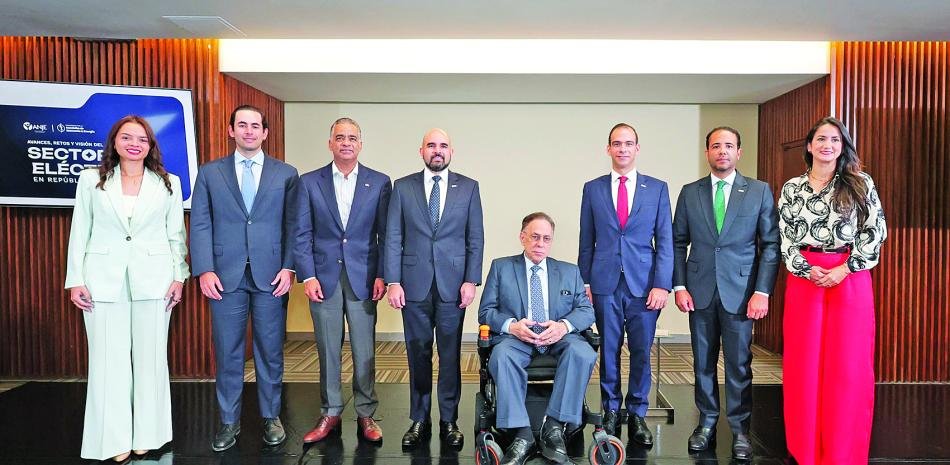
The meeting was attended by the businessman and current executive president of the Unified Council of Electricity Distribution Companies (CUED), Celso Marranzini, and the Minister of Energy and Mines, Joel Santos.
The event provided a space for technical analysis and multi-sector dialogue between representatives of the business community and authorities of the electrical system, with the objective of examining recent advances, structural challenges and the strategic vision for development.
During his speech, Celso Marranzini presented the presentation “Actions 2025 and Loss Reduction Plan 2026”, in which he explained the main lines of action for the improvement of the national electricity system. Among the topics addressed, the implementation of new substations, the modernization of distribution networks, as well as the strengthening of the commercial and technological management of the EDEs stood out.
“We must promote with the authorities a National Energy Policy that allows technical continuity in the different entities and bodies of the electricity sector,” said Marranzini.
The Minister of Energy and Mines, Joel Santos, took the floor at the end of the event and praised the progress of the sector and the importance of coordinated work in the electrical cabinet, as well as the need to modernize the electricity law that dates back to 2001, when the generation matrix was very different and the generation of direct petroleum derivatives predominated by 88% and today it is barely 10%.
The meeting brought together business leaders, technicians from the energy sector and members of the association, reaffirming ANJE’s mission of being a catalyst for young business thinking and promoting proposals that contribute to the institutional strengthening, competitiveness and sustainability of the country.