The Arab Iron and Steel Union, in a classification that reflects the changes in the heavy industry map in the Arab region, places Algeria in third place in the Arab world in terms of the operational capabilities of the iron and steel industry. This classification comes based on data monitoring the total production capacity of 8.7 million tons annually, ahead of many countries, and after Egypt, which tops the list with 15.6 million tons, and Saudi Arabia, which came second with 12 million tons.
What is striking about this concentration is not only the size of the production capacity, but also the competitive advantage that is unique to the Algerian industry at the regional level, as it relies 100% on modern electric arc furnaces (EAF) in steel production, which makes it one of the cleanest heavy industries and the most compatible with global environmental trends.
Production capacity: 8.7 million tons, led by the Tosyali, Ballara and Al-Hajar trio
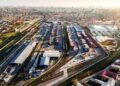
The production capacity of 8.7 million tons annually is distributed among a number of major industrial complexes that form the backbone of the steel sector in Algeria, starting with the “Tosyali Algeria” complex in the Batioua region in Oran, whose total production capacity is estimated at about 3 million tons annually of rebar and wire coils, relying on advanced electric smelting units, and culminating recently in the launch of a huge project for the direct reduction of iron with a capacity of up to an additional 2.5 million tons, which will enhance industrial integration and reduce the bill. Importing raw materials.
The Algerian-Qatari iron and steel complex “Bellara” in Jijel Province is a major player, with its current production capacity reaching about 2.5 million tons of liquid steel and long-rolled products, with ambitious expansion plans aimed at doubling production by adding new rolling mill units and a direct iron project, which will place it among the largest integrated factories in Africa.
As for the historic “Cedar El Hajjar” complex in the state of Annaba, which is undergoing an extensive rehabilitation and modernization process, it contributes a capacity of up to one million tons annually, after converting its production lines to rely on electric arc furnaces and continuous casting techniques, which practically ended the era of reliance on traditional blast furnaces that are dense with carbon emissions.
The production system is complemented by a number of private rolling and forming factories spread across different regions, which have contributed to raising the country’s overall capacity to reach this advanced rank in the Arab world.
A competitive advantage for the Algerian product through the green industry in global markets
The technological superiority of Algerian iron and steel is not limited to the volume of production, but rather extends to the pattern of production itself. Algeria’s total reliance on modern electric arc furnaces gives it the dual advantage of significantly reducing carbon emissions compared to basic oxygen furnaces, which still account for 66% of global capacity, in addition to operational flexibility that allows it to adapt to fluctuations in scrap and energy markets.
This characteristic gains exceptional importance in light of the new European trade trends, most notably the Carbon Border Adjustment Mechanism (CBAM), which imposes fees on carbon-intensive industrial products starting from 2026. Thanks to being a producer of green steel, Algerian exports of rebar and wire coils are finding increasing acceptance in European markets that already import part of the production, in addition to the markets of West and North Africa.
Export ambitions outside of hydrocarbons… Steel is at the forefront of promising sectors
It is no secret that the growth of steel production capabilities directly intersects with Algeria’s strategy to diversify exports outside the hydrocarbon sector. In recent years, the country has transformed from a net importer of construction iron to an active exporter, with iron and steel exports recording steady growth to exceed the one million tons annually, with a value approaching one billion dollars, a number that is likely to rise as expansion projects enter into full operation.
Algeria’s geographical location gives it a logistical advantage in accessing both European and African markets, in addition to the availability of energy at competitive prices that make the cost of production in electric arc furnaces lower compared to producers who rely on liquefied gas or imported coal. According to data from the Arab Iron and Steel Union, Algeria currently stands out among only three Arab countries leading “direct iron” projects with an additional capacity estimated at about 5 million tons annually, which will deepen its production integration and raise its export competitiveness.
On the other hand, the Ghar Jbeilat mine project in the state of Tindouf, which is considered one of the largest iron ore reserves in the world, stands out as a driving factor. Although the commercial exploitation of the mine is still in its early stages, its inclusion in the sector’s road map aims to reduce dependence on imported iron scrap and reducing materials, and secure local production inputs that support the value chain and protect producers from global price fluctuations.
Fluctuations in iron and steel prices in the international market
In the fourth week of May 2026, the crude and scrap markets recorded a state of fluctuation. The prices of scrap iron exported to Turkey fell to $410 per ton, and Australian iron ore concentration fell by 62% to $106, while the prices of pellet and finished products fluctuated. This volatile context enhances the economic feasibility of local extraction and direct reduction projects, and makes ownership of raw materials a strategic weapon in the export equation.
Economic analysts point out that the entry of the Tosyali complex to produce reduced iron locally, along with a similar project in the Balara complex, will reduce the import bill for raw materials for the steel industry by more than $1.5 billion annually, and will open the door to exporting surplus spongy iron to neighboring markets.
Algeria’s ranking among the top three in the Arab world in terms of steel production capabilities has implications that go beyond numbers. It reflects a structural transformation in the national heavy industry, supported by political will and huge investments in clean technology and logistical infrastructure. While the global steel sector remains in a state of transformation towards reducing emissions, Algeria stands in a position that qualifies it to be a major regional provider of green steel, benefiting from its production capacity estimated at 8.7 million tons annually, and its integrated industrial system led by giant companies such as Tosyali, Bellara, and Cedar El Haggar, amid promising prospects for transforming Gara Jbeilat crude into a new artery for the national economy.
According to the organization, the steel industry in the Arab countries recorded an exceptional outcome during the year 2025, represented by achieving a total production of about 43.7 million tons during the period from January to December, recording a remarkable growth of 7.2% compared to 2024. This positive performance reinforced the strong performance shown by the Gulf and North Africa regions.
In the Gulf region, total production rose to 21.6 million tons with a growth of 9.5%, led by the Kingdom of Saudi Arabia, which topped production with 10.8 million tons and an annual growth of 12.3%. As for North Africa; Production reached 18.7 million tons, an increase of 6%, as Egypt maintained the lead with 10.65 million tons, while Algeria achieved a qualitative leap with a growth of 17.9%, producing 5.33 million tons.