Al-Zaman interviewed the public relations official for the Bohra sect at the Fayz Hosseini Association in Karbala
One and a half million people are distributed among 40 countries
We serve visitors to Karbala due to the sanctity of the city
Karbala – Raja Hamid Rashid
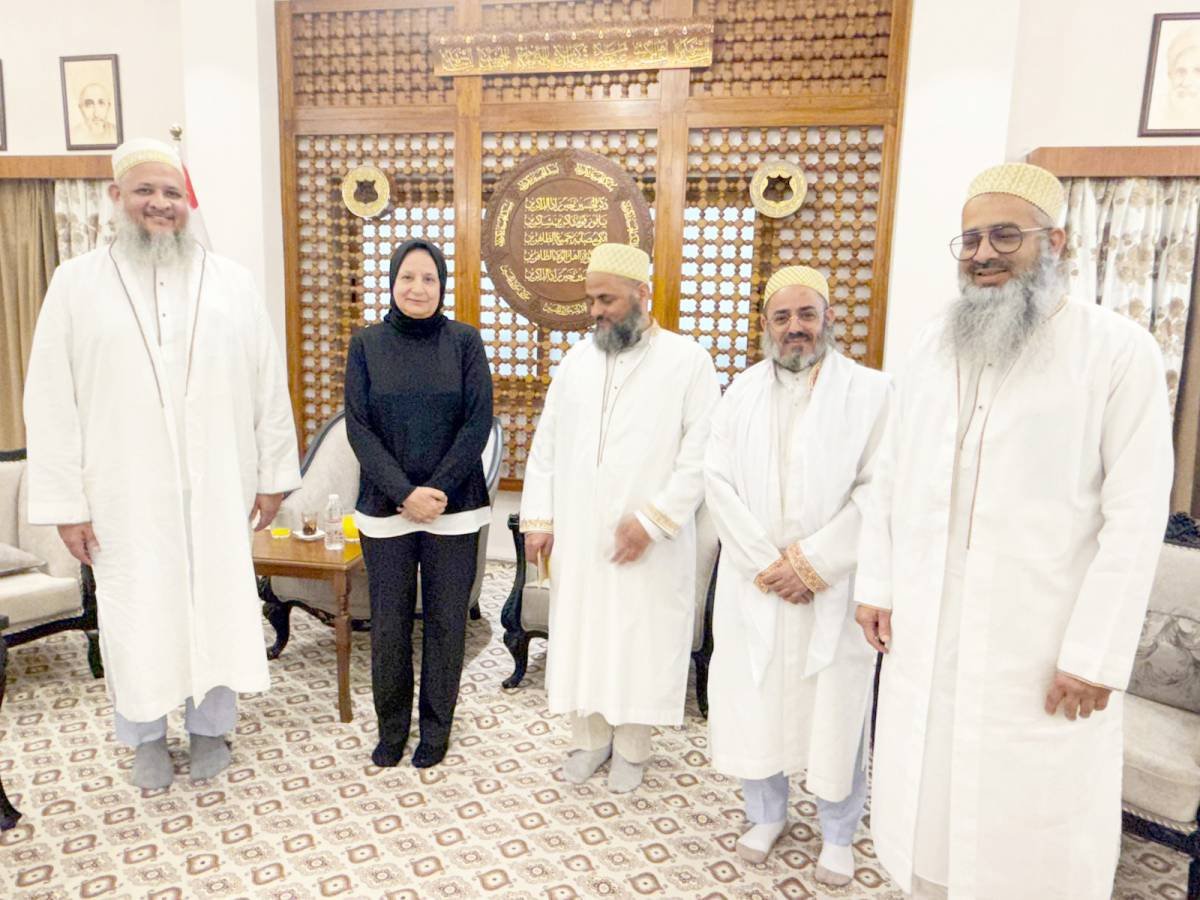
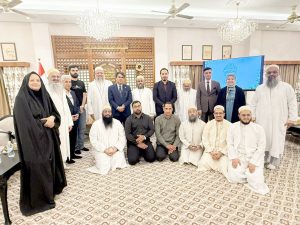
During my visit to the holy city of Karbala, accompanied by a delegation from the Masarat Foundation for Cultural and Media Development, and meeting with representatives from the Bohra sect, I discussed the historical and cultural presence of the sect in Iraq, and highlighted its religious specificity and the most prominent features of its social role. The meeting also reflected its vision based on the values of coexistence and tolerance, and its readiness to strengthen bridges of communication, which confirms the importance of the religious and cultural diversity that Karbala embraces.
To learn more about the details of this sect, I met Sheikh Muhammad Thabet in Karbala, where he gave a comprehensive explanation of its history and the most prominent features of its religious and cultural identity, and we had this dialogue.
For those who do not know the Bohra community, how do you introduce yourselves in simple terms?
When did the presence of Bohras begin in Karbala specifically, and what is the reason for you choosing the city?
The Ismaili Bohra sect is one of the Shiite sects in Islam. It believes in God Almighty and the message of the Prophet Muhammad, may God’s prayers and peace be upon him and his family, and adheres to the teachings of Islam in accordance with the approach that the Noble Prophet guided him to in his noble hadith: “I am leaving among you the two weighty matters, the Book of God and my descendants, my family.” Based on this, the sect is keen to adhere to the Holy Qur’an and the approach of the People of the House, peace be upon them, preserving its religious rituals and cultural identity.
Positive coexistence
At the same time, it is open to the various societies in which it lives, and seeks positive coexistence and effective contribution to community service, in a spirit of cooperation and mutual respect, combining religious authenticity and civilizational presence.
We have been in Iraq, specifically in Karbala, for more than a hundred years, and the choice of the city of Karbala was not the result of coincidence, but rather came from its profound religious and humanitarian status. It is a land that embraces the shrine of the master of martyrs, our Lord Imam Hussein bin Ali, peace be upon him, and it represents a global symbol of the values that we believe in, of sacrifice, justice, and service to humanity.
Karbala is also a living center for social and economic activity, receiving millions of visitors annually, which provides a suitable environment for work and serving the various segments of society. Hence, our presence there was an extension of our mission of giving, contributing to the development of society, and positive coexistence with a diverse environment that combines spirituality and daily life.
Approximately how many members of the sect are there in Iraq and the world?
– From one million to one million and two hundred people distributed over more than 40 countries. In Iraq, there are approximately 300 people.
What distinguishes the Dawoodi Bohras from the rest of the Islamic sects in jurisprudence and worship?
The Bohra sect is distinguished by its clear specificity in jurisprudence and worship, which stems from its reliance on the heritage of the Ahl al-Bayt, peace be upon them, as transmitted through the imams of the Fatimid doctrine, and under the supervision of its religious leadership represented by the “Da’i al-Mutlaq.”
In jurisprudence, the Bohras rely on their sources derived from the Book of God Almighty, the Holy Qur’an, and from the Sunnah of the Greatest Messenger, Master of the Prophets, Muhammad, the Messenger of God, may God’s prayers and peace be upon him and his family, and it has a distinct jurisprudential system, with a great focus on organization and discipline in transactions and rulings.
As for worship, it is characterized by a character of precision and regularity, as prayers are performed on time, and rituals are held within an organized group framework, with special attention to cleanliness, uniform dress during worship, and commemoration of religious occasions in a manner that combines the spiritual dimension and social order.
An important aspect also stands out for them, which is the link between worship and behavior, as religious commitment is viewed as an integrated system that includes morality, community service, and discipline in daily life, which gives their experience a practical character in addition to its devotional dimension.
We hear about “the absolute preacher”, who is he, and what is his role among the Bohras?
– The absolute preacher is not just a cleric, but rather he is the head of the Bohra religious system. He combines spiritual, legislative and organizational leadership, and is considered the only approved authority within the sect in religious affairs.
What are the most important religious occasions that Bohras celebrate in Karbala during the year?
The Bohras in Karbala celebrate a number of religious occasions throughout the year, and they are distinguished by a special organization and a clear collective spirit. Among the most prominent are:
Group breakfast
- Commemorating Ashura and Arbaeen, the martyrdom of Imam Hussein, peace be upon him, where condolence gatherings are held and the meanings of sacrifice and reform are remembered, and it is considered one of the most important occasions for them.
- The blessed month of Ramadan, including fasting, prayers, and the celebration of the Nights of Destiny, with great interest in holding communal breakfast tables.
- Eid al-Fitr and Eid al-Adha, where prayers are performed and social solidarity is strengthened.
- The anniversary of the noble birth of the Prophet Muhammad, may God bless him and his family and grant them peace, in which gatherings of remembrance and praise are held.
- The occasions of the Prophet’s family, peace be upon them, such as the births and deaths of imams, where religious councils and lectures are organized.
In Karbala in particular, these events take on a deeper dimension due to the sanctity of the place. Spirituality combines with community service, and the role of the sect is highlighted in organizing events and contributing to serving visitors.
What is the nature of your Al-Faydi Association in Karbala, and what activities are held there? How do you describe your relationship with the people of Karbala and the rest of the religious components there?
The association is a non-governmental charitable organization concerned with serving visitors from the sect throughout the year, through an integrated system that accompanies the visitor at the various stages of his journey. It prepares a precise timetable for the visit, starting from the time the visitor leaves his country until his return, ensuring a smooth and organized trip for him. The association’s services include coordinating travel arrangements, providing appropriate housing, and preparing meals, in addition to providing specialized guides who accompany visitors and contribute to their religious and organizational guidance.
In order to provide them with a comfortable and safe visiting experience that reflects the spirit of care and attention.
Our relationship with the people of Karbala is linked to a good and deep-rooted relationship that has extended over more than a hundred years of coexistence. This relationship arose on the basis of mutual respect, until it became part of the city’s social fabric. We constantly strengthen it through joint work and community service in a spirit of brotherhood and openness.
Is there cooperation or joint projects between you and the holy shrines or local institutions?
– Currently, there are no joint projects, but the association provides donations for various matters, especially at the holy shrines.
What are the most prominent challenges you faced as a religious minority in a city with a specific sectarian character?
Due to misunderstanding and lack of access to sources that do justice to the sect’s beliefs and present its history accurately, some positions or problems may emerge from time to time. However, these cases remain limited and scattered, and do not represent a real or widespread impact on the general level.
How do Bohras view Imam Hussein and the status of Karbala religiously?
– The Bohras view Imam Hussein bin Ali as an eternal symbol of reform and sacrifice for the sake of truth, and an imam from the Imams of the Prophet’s family, peace be upon them, who embody the authentic values of Islam. For them, the Karbala incident represents a living school from which the meanings of steadfastness, justice, and supporting the oppressed are derived. Therefore, its memory has a great status that is commemorated through gatherings, worship, and contemplation of its moral and human lessons. As for Karbala, it has a high religious and spiritual status, as it embraces the shrine of Imam Hussein, peace be upon him, and is considered a destination for visits and drawing closer to God. The Bohras believe that visiting it is not just a ritual, but rather a profound faith experience that renews the connection to the values for which the Imam was martyred, and strengthens the spirit of belonging to the People of the House, peace be upon them, within a framework of reverence, organization, and service to visitors.
12- Bohras are known to be interested in trade and organized charitable work. How is this applied in Karbala?
The Bohra merchants settling in Karbala excel in trading luxury goods such as incense, perfumes, precious stones, and fine fabrics. Their goods are often imported from India or Yemen.
During the fortieth visit, a special team is allocated to charitable work in organizing the visit
Cleaning campaigns: Bohra youth in Karbala, especially after the end of the million visits, are known for carrying out organized cleaning campaigns for the streets surrounding the shrines, wearing their white uniforms, a behavior that aims to present a civilized image of the sect.
- What is the “Qard Al-Hassan” system used by the Bohras, and is it used in Iraq?
A good loan is a soft, non-usurious loan offered to those in need or those wishing to meet their various needs, such as establishing a business, getting married, paying off debts, traveling, or other life requirements.
This loan is distinguished by the fact that it is granted without any interest or additional profits, provided that it is repaid within a specific period of time, estimated at two years from the date of receipt, in order to achieve the principle of facilitation and support, and enhance the values of social solidarity and humanitarian assistance among members of society. It is practiced in Iraq.
14- How do you preserve your children’s religious and cultural identity in a different environment?
Modern scientific progress, with its rapid technological renaissance, has left a profound impact on human life everywhere, and this impact continues to grow day after day. Muslims were not immune to these transformations. They were clearly affected by it, which had both positive and negative aspects. One of the most prominent of these negatives is that, in many cases, they almost distorted the features of Islamic identity and weakened cultural specificity, to the point that some of them began to tend to abandon aspects of Islamic culture and its etiquette, and replace them with aspects of Western civilization in dress, behavior, customs, and language, and this is a visible matter that is not hidden from anyone.
However, the picture was not the same for everyone, as the Bohra community emerged as a different model in this context, as its members increased their adherence to their Islamic rituals and religious morals in the midst of this civilizational challenge. They realized with deep awareness that complacency in these values would lead to the erosion of their entity and the loss of their identity, so they preserved their heritage with a living spirit, not with a spirit of stagnation and isolation.
Their position was not limited to mere adherence, but they went beyond it to a higher stage, as they made good use of the achievements of the modern era, combining the authenticity of religion with the spirit of innovation, and selecting from the data of civilization what is compatible with their principles and philosophy. They were an example of the conscious balance between stability and development, as they adhered to their solid roots and enriched their lives with science and modern knowledge.
This vision has resulted in remarkable excellence in the fields of education, as their children obtained advanced degrees in various sciences and arts, and specialized in the fields of technology and languages, making this a solid foundation for building a dignified and balanced life. Their achievements did not stop at their own borders, but rather their impact extended to include the societies in which they lived, and they contributed to their renaissance and progress, despite the different environments and their lack of harmony with their religious specificity.
Thus, they provided a living role model, proving that preserving identity does not conflict with conscious openness, and that adherence to authenticity can go hand in hand with keeping up with the times, thus setting a good example for Muslims in various parts of the world.
15- What is the role of women in Bohra society?
The role of women in Bohra society is considered a pivotal and balanced role, combining adherence to religious values and active participation in various areas of life, which reflects the vision of this society in building human beings, both men and women.
Women in the Bohra sect are raised from a young age to adhere to the teachings and etiquette of religion, and are concerned with preserving cultural and social identity. They are an essential element in transmitting values and traditions to generations, through their role within the family, where they contribute to raising children with a solid religious and moral upbringing.
At the same time, her role is not limited to the family framework, but extends to the fields of education and work, as women in this society have a clear interest in seeking knowledge, so they seek to obtain higher degrees and participate in modern specializations, such as medicine, education, technology, and others, in a way that enhances their status and contributes to serving their society.
It also participates in social and charitable activities, being part of initiatives that aim to serve members of the sect and the broader community, whether through volunteer work or organizational programs concerned with family and women’s affairs.
One of the most prominent features of her role is also her commitment to her modest appearance that expresses her identity, which is a symbol of belonging and pride in cultural privacy, without being an obstacle to her giving or presence in public life.
Thus, women in the Bohra community appear as a model of conscious women who combine authenticity and modernity. It preserves identity, participates in construction, and is an active element in the renaissance and stability of its society.
16- Are there any Bahri families who have lived in Karbala for decades? What is the oldest document or witness to your existence?
The association is considered the oldest for nearly a century and has been performing its work in serving visitors.
17- How did the political events that Iraq went through affect the existence of the Bohra sect?
The sect maintained its existence and continuity by focusing on service and religious work, avoiding involvement in political tensions, and taking care to build positive relations with the local community, which helped it continue within a framework of coexistence and stability.
18- What are the most common misconceptions about Bohras that you would like to correct?
The most common misconception and misconception about Bohras is that, as it is said, they do not bathe from impurity, but rather wash part of the body. To correct this misinformation, ablution from impurity among Bohras is essentially the same as among other Muslims: the intention of purity and covering the entire body with water.
Before making judgments, it is better to refer to reliable sources, not to what people say.
Repeating these suspicions without evidence is merely misleading and does not serve the truth and does not reflect scientific understanding.
20- Is it possible for people from other sects to join the Bohra sect, and is it possible to marry from other sects?
The Bohra sect did not embarrass, force, or compel anyone to join its sect, or tempt anyone to embrace its approach and follow its path.
Regarding marriage outside the sect: From a general legal standpoint in Islam, marriage between Muslims is permissible, but within the Bohra community, marriage within the sect is mostly encouraged to maintain religious and social cohesion, and therefore there may be restrictions or regulatory requirements that make marriage outside the sect less common.