Friday and Saturday 19/20 Dhu al-Hijjah 1447 AH – 5/6 June 2026 AD
Increases efficiency and enhances operational sustainability of seasonal facilities
Logistics supports the readiness of the holy sites

Fast movement to adjust the emotional components
The holy sites are alive in Mina, Arafat, and Muzdalifah, these days, with the end of the Hajj rituals, the largest seasonal logistical operations in the world, with the work of resetting the holy sites, and transporting the supplies of service facilities, and pilgrims’ camps, from furniture, kitchen and dining equipment and tools, safety and security, mattresses, and sleeping beds, in temporary cities that received nearly two million pilgrims and employees on information days.
Operational movement
There is great operational activity in the “Furniture Transport and Logistics Services” sector, which is witnessing a record recovery driven by exceptional demand, from companies and institutions, for pilgrim services, through dismantling and transporting camp equipment, and returning supply lines to private warehouses.
The furniture transportation and logistics services sector in Hajj has become a strategic and influential partner, and the service system relies on it to accelerate the work of preparing facilities and camps, before and immediately after the season.
Riyadh’s tour of Mina outlined the economic role played by the sector, to enhance the services of government agencies, companies and institutions providing services to pilgrims from inside and outside the country.
Saleh Mutair, a “dealer,” explained to “Al-Riyadh” that the sector considers the Hajj season to be one of the most anticipated seasons, as it begins from the middle of Shawwal to the end of the month of Dhul-Hijjah, indicating that the season usually records an operational growth in Hajj exceeding 35%, driven by several paths, including camp equipment, transporting sleeping chairs, air conditioners, refrigerators, refrigerators, mattresses, and administrative offices, and transporting supplies for catering companies, through transporting cooking equipment and utensils. And ovens, and serving food, and ovens, in addition to transporting pilgrims’ luggage bags and golf carts, explaining that companies and institutions supplying requirements for pilgrims’ services in Haraj and the used market in the Al-Muaisem neighborhood in Mecca are among the targeted parties that the sector deals with.
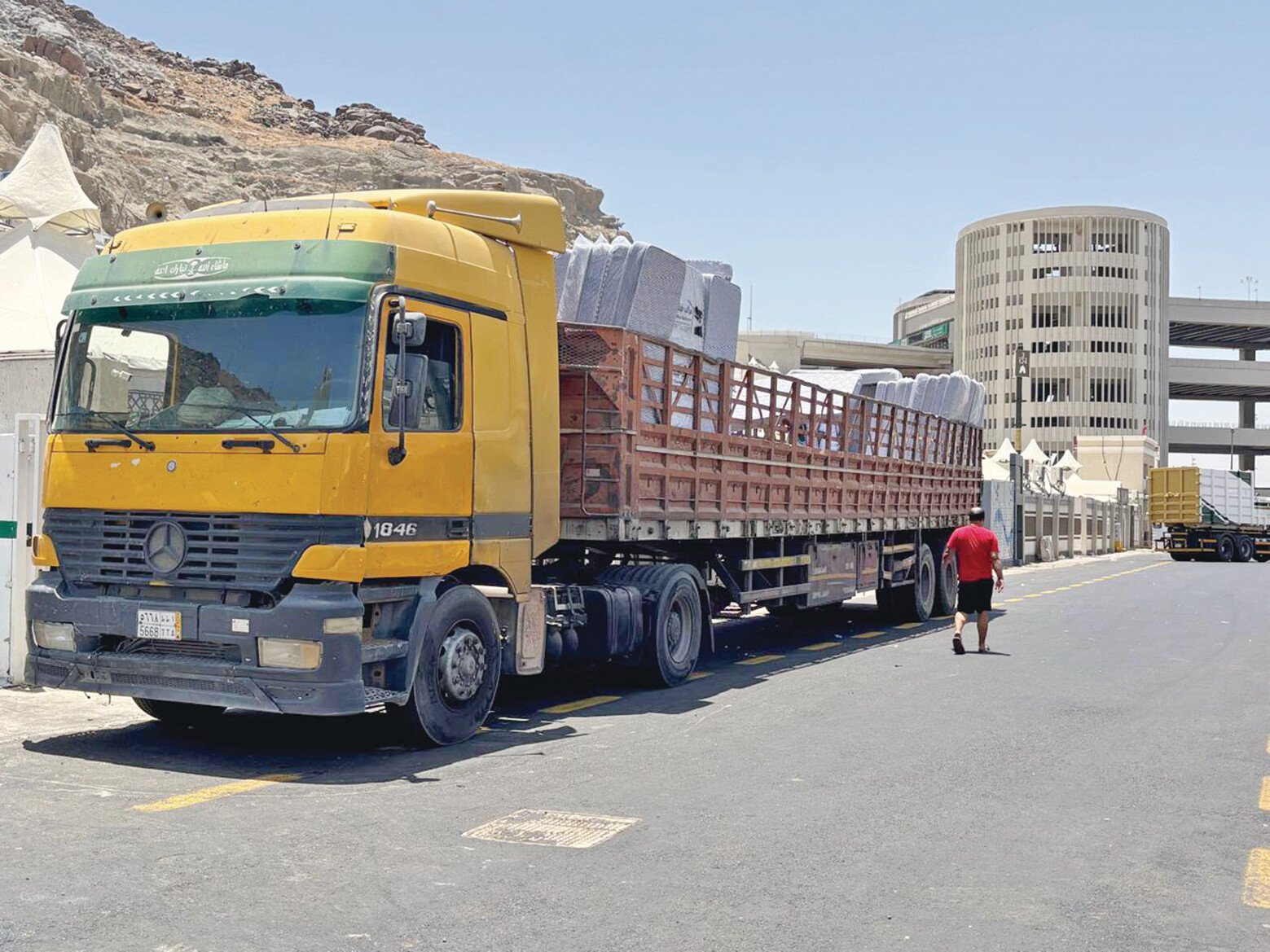
Private sector companies specialized in moving furniture and logistical services contributed to providing modern and equipped transport fleets, and they became an effective reinforcement in resetting the holy sites and returning them to their normal state, while facilitating the departure of the pilgrims with easy and safe trips that reflect the efficiency of the sector’s compliance. “Riyadh” monitored the spread of hundreds of tankers between the Mina camps, to transport equipment and supplies for pilgrim services, before handing over the sites to the competent authorities.
The security sectors appeared to us to have a remarkable logistical aspect, as they possess a fleet of tankers to transport plastic and iron barriers and umbrellas, which are used to regulate traffic in the areas.
Another feature observed by “Riyadh”, which outlines the sector’s potential, is the parking of long and giant tankers, transporting large waste compaction bins, and hygiene containers, in addition to vehicles transporting the Jamarat Bridge waste of throwing gravel and plastic containers.

An important role for the sector in Hajj

Great readiness to prepare feelings