Although initially advertised as a completely private investment, the Albanian government suddenly allocated over 4 million euros from the emergency fund through a Normative Act to support the concert of the controversial rapper, Kanye West in Tirana – a decision that according to experts contradicts the legislation.
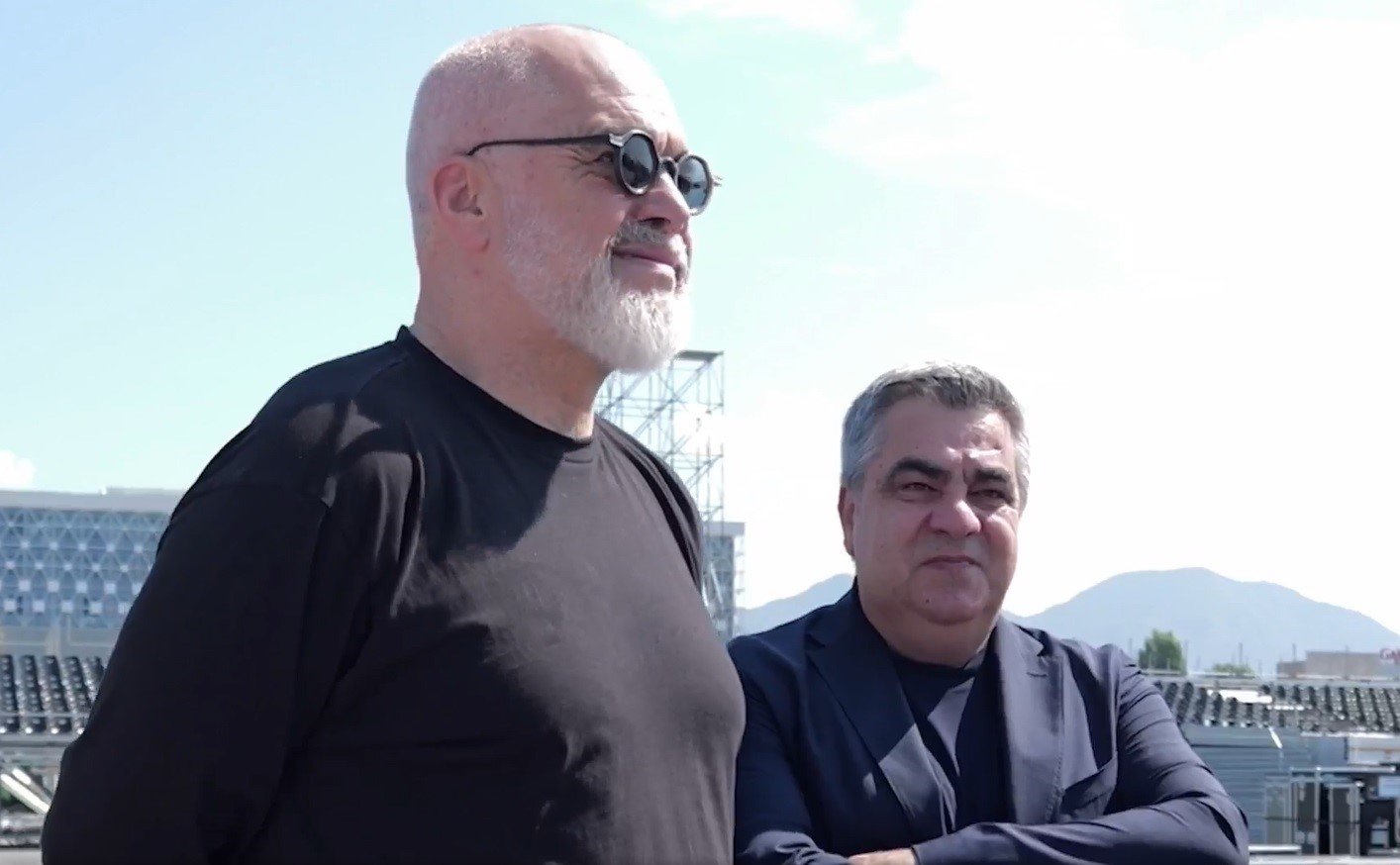
In a video shot among the scaffolding and dust of the construction site at the temporary “Eagle Stadium” arena in Kashar, Prime Minister Edi Rama and the Minister of Economy, Culture and Innovation, Blendi Gonxhja, appeared enthusiastic while inspecting the construction works of the stadium for the concert of the controversial American rapper, Kanye West.
From that ground, the head of the government, although he insisted that it was an event “organized entirely by the private group”, declared that “the Albanian state was forced to intervene” by paying 4 million euros.
Rama justified the financing of 400 million lek (4.2 million euros) by claiming that “if (the concert) remained unrealized, it would be one less opportunity for the city’s economy.”
The money, meanwhile, was passed through a Normative Act approved on July 6 and published in the Official Gazette on July 7, which cites Article 101 of the Constitution as a legal basis for urgent needs. An article that, referring to the decisions of the Constitutional Court, can only be used in well-argued and proven emergencies.
According to the explanatory report that accompanies the Normative Act, the government justifies the need to commit public funds with the argument that it is faced with an artistic event of “such proportions that it significantly affects the image of the country”.
The government also seeks to justify the criterion of urgency for the Normative Act with the fact that the normal time of the legislative process would not be able to solve “the immediate problem of the risk that the Kanye West concert will not take place”.
West’s concert, on the other hand, was announced by Rama himself months ago, at the end of April, and until recently, the Albanian government, including the Ministry of Tourism, Culture and Sports, categorically denied the use of public money.
“It is important to note that there are no additional committed budget funds for this project,” stated the official response that MTKRS sent to BIRN on June 23.
Zef Preçi, director of the Albanian Center for Economic Research, strongly criticized the act as a violation of the law, calling it null and void. “A legitimate Assembly would never approve this Normative Act,” Preçi told BIRN.
Even Rigels Xhemollari from Qëndresa Civicare told BIRN that the act in question was in violation of the Constitution.
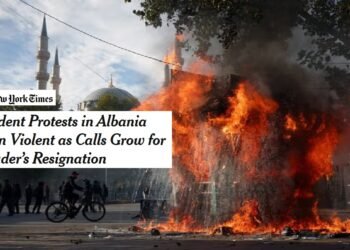
“Of course, the Constitution is being misused”, said Xhemollari, noting that the amount spent without transparency, even minimal, showed that the government had not reflected on the protests that have been taking place for over 37 days in the capital.
Asked by BIRN through a message on the WhatsApp application, Minister Gonxja refused to answer.
“What am I, your secretary?!”, said Gonxhja, asking the media to “apply the law”, even though there is no law regulating requests for comment.
Misuse of the concept of emergency
The choice of the Albanian government to financially support the rapper’s concert comes at a time when the artist is a very controversial figure in the international arena. In recent years, he has faced harsh criticism and a widespread boycott after a series of public statements with anti-Semitic content, sharing conspiracy theories and hate speech.
He was recently banned from entering the United Kingdom due to anti-Semitic comments and a song he released titled “Heil Hitler”; His scheduled appearance at a festival in London was cancelled, as were similar concerts, including one planned in Italy.
Until recently, Rama and his subordinates have responded to criticism of West’s support and his stances by insisting that the event was private. But the government’s decision and use of the emergency fund raises questions about support.
Meanwhile, the normative act that finances the concert raises serious questions about the way the government interprets “emergencies”. Zef Preçi emphasizes that no lawyer or economist can justify the financing of a commercial activity within the legal framework.
It specifies that the reserve fund is designed exclusively for extraordinary situations: natural disasters, national security risks, or unexpected public health emergencies.
“The fund is not used for routine expenses or long-term development policies,” argues Preçi, noting that the concert case contradicts any restrictions that Albanian legislation places on the use of this money.
For his part, Xhemollari raises the concern that the money was being wasted. Focusing on the bill of 4.2 million euros, activist Rigels Xhemollari notes that this amount could have been translated into vital public investments, such as a new school, a hospital, or the purchase of 30 electric buses for Tirana – the city with the oldest public transport in Europe.
For Xhemollari, the prime minister’s justification raises doubts that the only real “emergency” behind this act was the failure to sell tickets and the weak marketing campaign. According to him, in the absence of a transparent prevention from the institutions, this financial hole of the organizers is being compensated with citizens’ taxes, placing the prime minister simply in the “role of Kanye West’s contractor”.