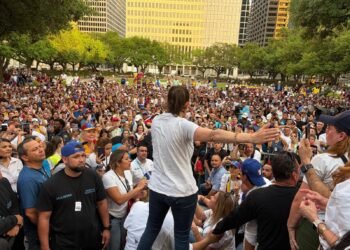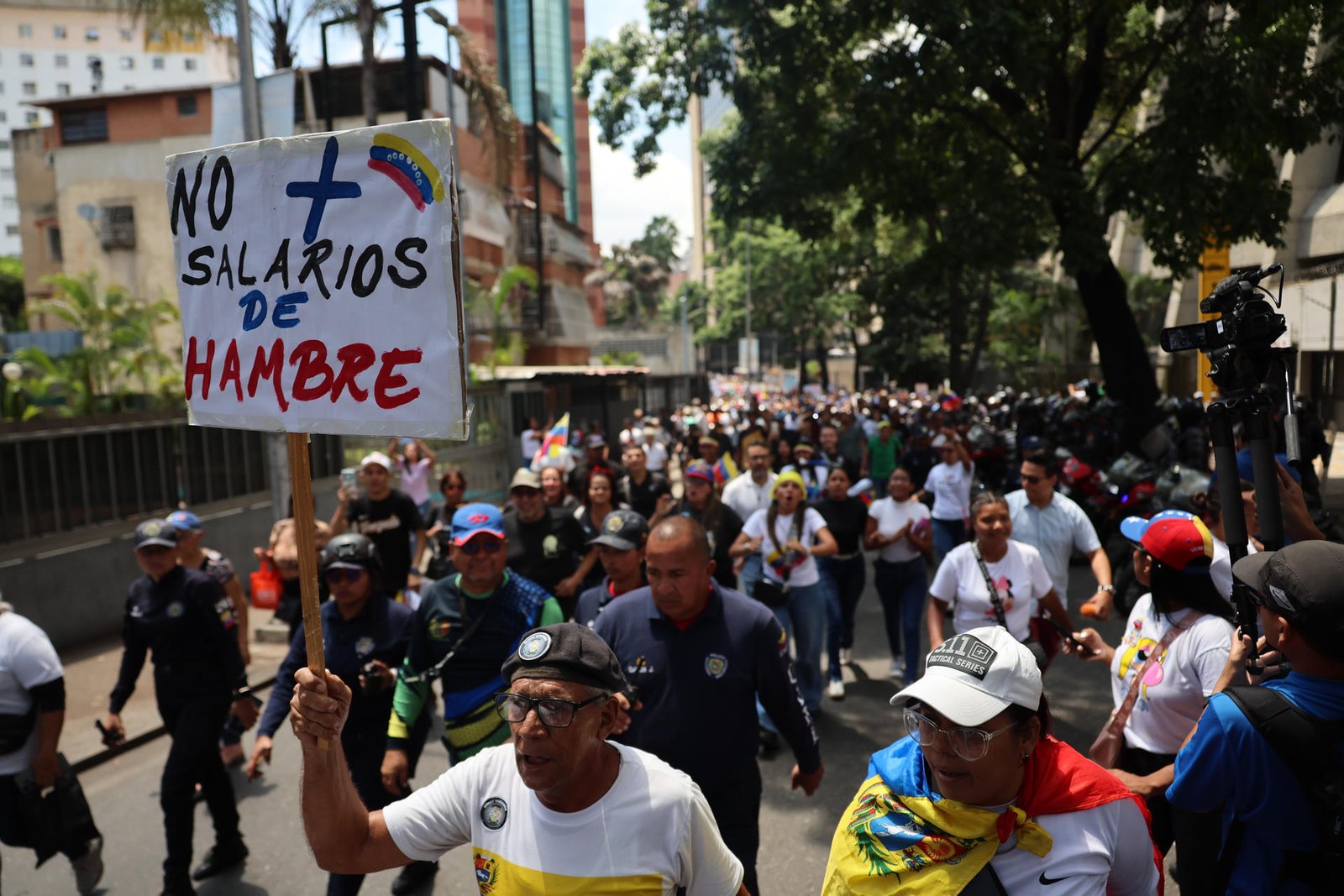
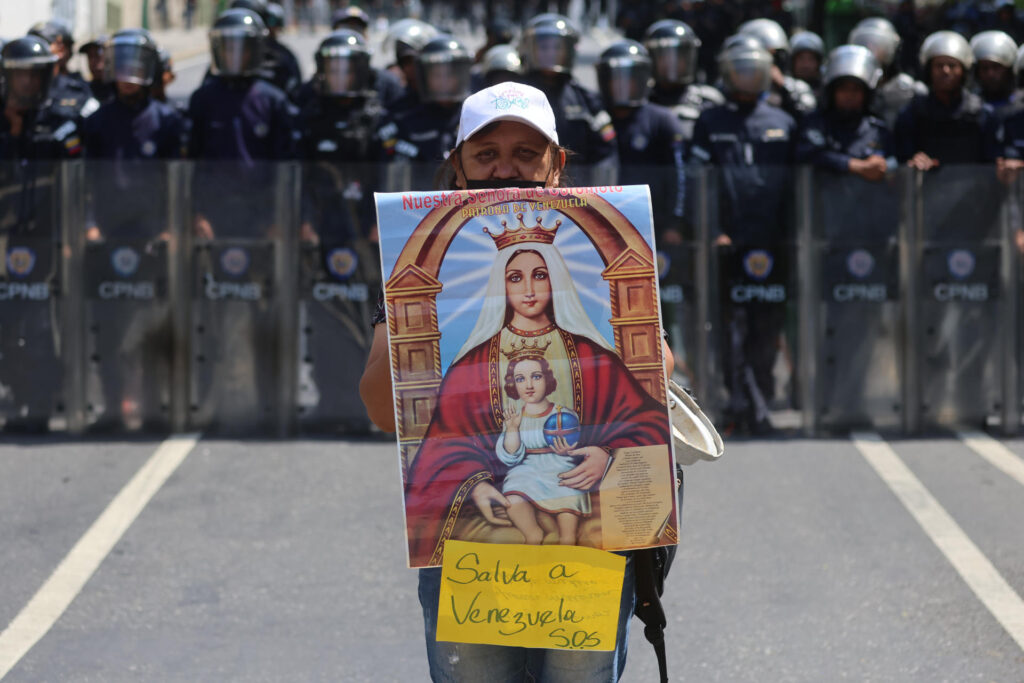
Group of workers. The 29 degrees of temperature that lit up at noon on May 1, in the city of Caracas, were not an impediment for a battalion of citizens, led by older men and women, to march from Plaza Brión, in Chacaíto, to Plaza Morelos, on México Avenue. The objective was only one: to reach the headquarters of the Ombudsman’s Office to deliver a petition to Egleé González Lobato, who has been in charge of that office for less time.
The demand is specific: they ask that the official, as part of the Citizen Power, assume her role as mediator and demand that the national Executive comply with labor rights and salary improvements.
Despite the fact that this April 30, the acting president Delcy Rodríguez announced an increase of 240 dollars in the comprehensive minimum income and 70 dollars in pensions, active and retired workers, within the framework of International Worker’s Day, marched against what they consider to be an insufficient and confusing increase.
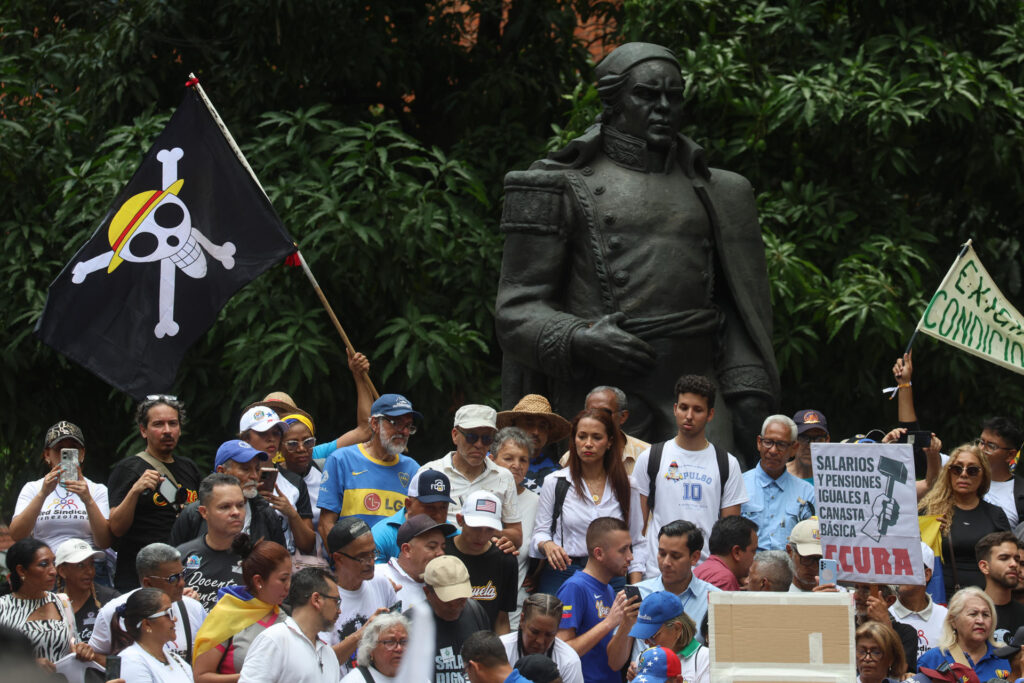
With banners, tricolor caps, whistles and flags, thousands of citizens complained that the salary was converted four years ago into a bonus, which has no impact on social benefits and other labor demands, in addition to not being established in the Constitution.
The impact on the regions and the teaching union
At the march, Yuraima Palacios, a retired teacher from Barlovento, Miranda state, waved a flag and made her indignation known at the recent economic measures.
The teacher linked the lack of decent salaries with the deterioration of the educational system and the need for a political transformation in the country.
“This government showed that it is not there for the Venezuelans, it is not there for the workers. I am a person who dedicated 30 years of my career to educating and today this irresponsible government is against all workers. At no time has the government thought that with a decent salary we can have a better quality of life to be better professionals, because a nation without education is nothing and that is why today more than ever I am convinced that what is needed are elections and a change of government,” she said.
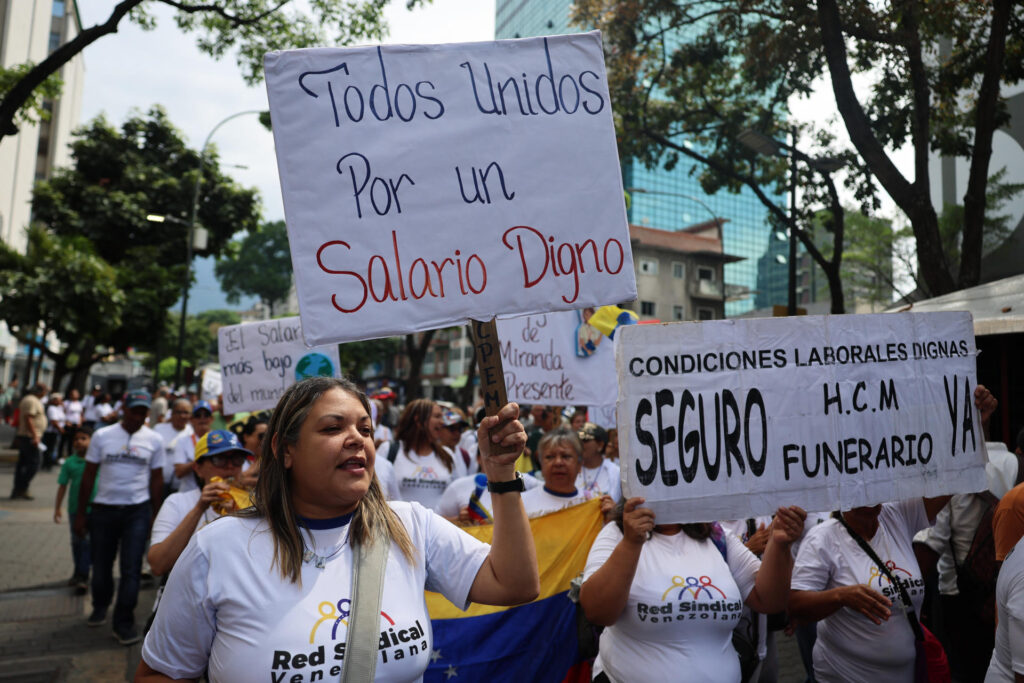
Palacios denounced that his active colleagues face critical situations to cover basic needs, which forces many of them to resort to the informal economy. «A teacher sells lollipops or does any other business to survive. They only have the war bonus and the basket tickets and today no person can cope with what they are being given. “It is a mockery and a lack of respect,” he said.
For his part, Pedro Flores, 74 years old and originally from the state of Trujillo, said that he had to migrate internally to Caracas three years ago due to the precariousness in his region.
“The increase in pensions is a mockery, it is a humiliation. It is not enough for anything. What they pay us senior citizens is very little, and the little we earn we pay for in medicine. There in Trujillo the situation is very harsh,” he said.
Legal requirements
The lawyer and human rights defender, Eduardo Torres, based the mobilization on non-compliance with constitutional regulations. During the journey to the Ombudsman’s Office, he emphasized that the bonus policy applied by the Executive lacks legal basis compared to the right to a salary linked to the basic basket.
“Constitutional salary, article 91, equal salary for the basic basket. Venezuela has the resources to generate wealth with these workers. Unfortunately, they do not want to receive the workers because they have an invention: the responsible salary. That does not exist in the Constitution or in any law,” he said.
Torres indicated that the protest also included the demand for freedom for those detained for political reasons and demanded immediate humanitarian measures. “The relatives of the political prisoners who did not want to receive yesterday also come here, but the proposal is still very much on the table. General pardon now,” he stated.
From the San Pedro parish in Caracas, Mrs. Maritza Castillo, 69, added her voice to the demand for transparency and institutional renewal. The woman questioned the insufficiency of the announced amounts and the management of the current political leadership.
“That amount of 240 (dollars) is nothing. How do we live in Venezuela with that if everything (prices) go up? We have to look for the future of Venezuela. I fight for those who come after me,” he stressed.
Union actions
José Gregorio Afonso, representative of the Association of Professors of the Central University of Venezuela (Apucv), at the end of the day, spoke with Cocuyo Effect and described the labor relations model imposed by the Executive as “pre-modern”, by ignoring current legislation and collective contracts.
“We were received by the Ombudsman, who promised to mediate before the authorities in relation to what we pointed out, that labor rights are human rights. This is a clear mobilization because yesterday (Thursday) there were some presidential announcements that do not have a single letter of responsibility. The salary did not move and with it does not move any benefits that are established in a collective contract, in the law or in the Constitution.”
The university representative denounced the arbitrariness in the allocation of bonuses that exclude specific sectors, such as retirees in certain areas. Given the lack of adjustments to the national minimum wage, Afonso warned that the inter-union movement, which brings together the health, education, oil and electrical sectors, will intensify its protest agenda.
“The government had a very important opportunity yesterday to enter into the Constitution and it did not do so. Consequently, if the government does not change its policy, we are not going to change our mission of staying mobilized. In the university sector, assemblies are coming throughout the country this week and we will address new actions. We will announce more activities to protest against bonuses and to demand the minimum wage and not bonuses,” said the union member.