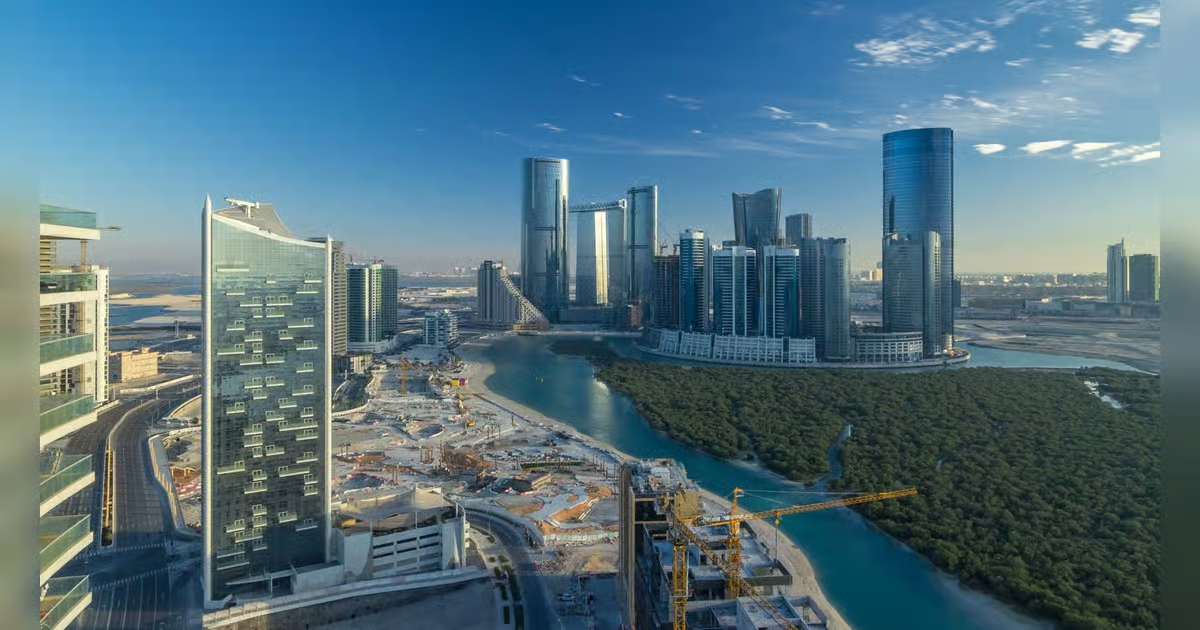
The Abu Dhabi Real Estate Centre announced earlier this week that the annual rental increase percentage has been cut from 5 per cent to 0 per cent across residential, commercial and industrial properties. The decision took effect immediately and will remain in place until further notice.
Under the new rule, all lease renewals and new agreements on previously rented units will be based on the value recorded in the most recent registered Tawtheeq contract.
Industry professionals say the decision directly addresses one of the biggest concerns among tenants in recent months: the risk of being priced out of familiar communities as rents climbed sharply across the capital.
Stay up to date with the latest news. Follow KT on WhatsApp Channels.
New lease prices rose 15 per cent across Abu Dhabi and 23 per cent in investment zones compared to last year, while the repeat lease price index recorded a 16 per cent annual increase as of March 2026.
Data from Bayut covering January to May 2026 shows that demand has remained strong across the emirate’s most sought-after communities. Reem Island, Khalifa City, Al Raha Beach, Mohammed Bin Zayed City and Al Riyad topped searches for apartments, while Khalifa City, Mohammed Bin Zayed City, Yas Island, Al Riyad and Al Reef led demand for villas.
More tenants expected to stay put
“The decision adds a higher level of stability to the relationship between tenants, landlords and brokers,” Viba Ahmed, Vice President of Sales at Bayut, told Khaleej Times.
“For tenants, it reduces the pressure associated with relocation and makes renewal a more attractive option in many high-demand areas. For landlords, it reinforces the importance of thoughtful pricing and building long-term relationships with tenants.”
Experts said the freeze could particularly benefit families and long-term residents who may otherwise have been forced to move to more affordable areas because of rising rents. By limiting increases on renewals, the decision gives tenants more certainty when planning household budgets and reduces the financial disruption that often comes with moving homes.
Mohammed Shuaib, Chief Executive Officer of Capstone Real Estate, said the impact goes beyond individual tenancy contracts.
“Rental stability helps build more cohesive and sustainable communities,” Shuaib told Khaleej Times. “It also strengthens confidence in the market and supports responsible leasing practices that benefit all parties.”
Ali Ishaq, Head of Residential at Savills Abu Dhabi, said tenants have become more attuned to market movements and are placing greater importance on pricing stability when making housing decisions.
The freeze, he said, comes at a time when confidence is especially important, as residents weigh whether to renew, relocate or wait for more clarity in the market.
Ghazi Ballout, Sales and Leasing Manager at La Maison Real Estate, said the decision reflects the maturity of Abu Dhabi’s regulatory approach.
“It reflects the level of sophistication that Abu Dhabi’s real estate market has reached,” Ballout told Khaleej Times. “It confirms that regulators are committed to balancing growth with sustainability, which strengthens confidence among both investors and tenants.”
Relief for businesses
The freeze also applies to commercial and industrial properties, giving businesses greater predictability over one of their key operating costs.
Industry experts said small and medium-sized businesses, in particular, are likely to benefit from the added certainty as they plan renewals, expansion and staffing decisions.
For residents and businesses alike, the move is expected to encourage longer-term planning in a market that has seen strong demand and rising rental pressure over the past year.