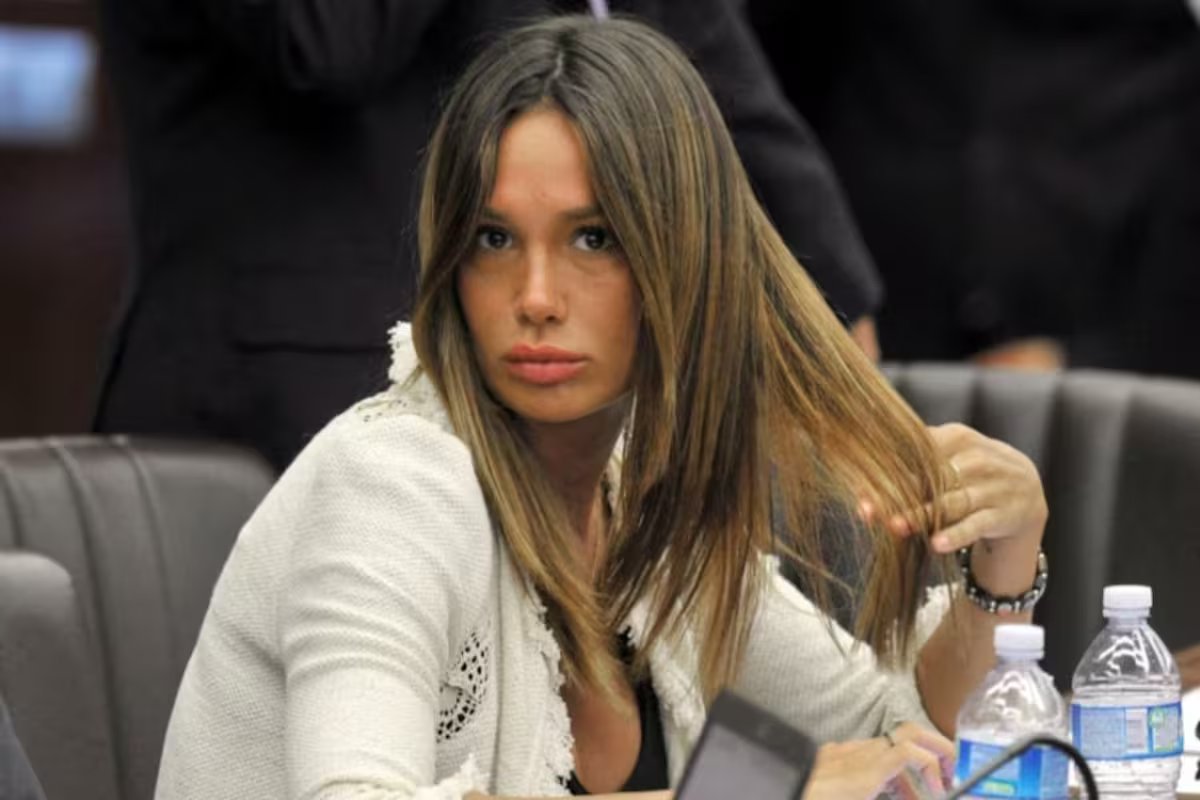
MONTEVIDEO.– The granting of a presidential pardon for Nicole Minetti in Italyfar from closing a judicial chapter, opened a complex international plot that now directly involves Uruguay. What started as a pardon granted for humanitarian reasons -he care of a sick minor– led to an investigation that puts under the magnifying glass both the child adoption process such as the veracity of the arguments presented to obtain state forgiveness.
Minetti, a former television personality and former regional councilor in Lombardy, had been sentenced to almost four years in prison for her role in scandals linked to former Prime Minister Silvio Berlusconiparticularly for induction into prostitution in the so-called “Ruby case” and for embezzlement of funds. His pardonsigned in February 2026 and publicly announced on April 11 by Italian President Sergio Mattarella, is justified by the need to assist a seriously ill minor in his/her care.
However, a journalistic investigation by the newspaper Il Fatto Quotidiano He questioned that foundation. According to the report, the child in question –adopted in Uruguay with his partner, the billionaire businessman Giuseppe Cipriani– would not have been abandoned at birthas indicated in the application for clemency, but had identified biological parents. This point is key: if it is proven that there was falsehood in the arguments presented, the pardon could have been based on misleading information.
The case takes on an especially delicate dimension in Uruguay, where the couple resides. According to Maldonado court documents, the The boy entered the Uruguayan Children and Adolescents Institute system in 2018. (INAU) as a last resort, due to the mother’s vulnerable situation —in condition of indigence— and at imprisonment of his father.
The Uruguayan Justice had initially ordered the promotion of the bond between mother and child, in line with the principle of family reunification. However, Minetti and Cipriani later advanced with a adoption process that included a lawsuit for the loss of parental rights of the biological parents.
According to new documents revealed in Italy, the process had a formal path that reinforces the complexity of the case: the adoption was certified by a court in Maldonado in February 2023 and subsequently recognized in Italy by the Juvenile Court of Venice on July 19, 2024. In that Italian resolution, the premise that the minor had been “abandoned since birth” and that there was a “permanent separation” from his biological parents, who would have been deprived of parental rights.
This contrast between what was declared in Italy and the Uruguayan documents is one of the central axes of the investigation. In turn, journalistic reports in Montevideo cite sources close to the INAU who describe the adoption as “highly irregular”while pointing out possible links between the couple and the institutionincluding donations and activities with minors in Maldonado.
Another element that raises doubts is that, according to the investigation, the minor would have been transferred to the United States in 2021 for a medical intervention without having legal authorization corresponding to leave the country.
The case becomes even more complex due to a series of parallel episodes that reinforce suspicions and heighten the public impact.
On the one hand, the biological mother of the childMaría de los Ángeles González Colinet, is located missing since February. The Uruguayan Ministry of the Interior issued a national tracing request on April 14, a few days after the scandal broke out in the Italian press.
On the other hand, the lawyer representing biological familyMercedes Nieto, she died in June 2024 with her husbandMario Cabrera, in a fire in his home in Garzón (Maldonado). Although an initial report attributed the incident to a domestic accident, a private report detected signs of violence on the bodies. A third official report once again leaned towards the accidental hypothesis, but the Maldonado Homicide Prosecutor’s Office, headed by Sebastián Robles, decided to keep the case open as a possible double homicide.
In parallel, the Italian justice is trying to determine if there is any connection between these events and the adoption processin a context where also It is investigated whether the biological mother had initiated efforts to recover possession of the child before disappearing.
Beyond individual responsibilities, the case raises fundamental questions for Uruguay. The Requesting international cooperation involves reviewing in detail the adoption mechanisms and the traceability of the filesin a country that has historically defended the solidity of its rule of law.
The possibility that an adoption has been used—eventually—as an instrument to obtain judicial benefits in another country generates concern and public debate. In particular, for the risk of establishing a perception that people with high economic power or influence can circumvent institutional controls.
“It is not possible that the rich and famous can do whatever they want here, breaking all the rules,” protested a young man who worked in the cafeteria at the Montevideo airport.
For his part, an elderly man of Italian origin immediately responded angrily: “It’s a terrible story and we need to clarify things. We are not a banana republic, we are a serious country”.
In Italy, the controversy quickly escalated to the political level. He President Mattarella asked the Minister of Justice for urgent explanationsCarlo Nordio, suspecting that the pardon may have been based on false information. The opposition, led by the Democratic Party, demanded his resignation.
The Milan Prosecutor’s Office has already started an investigation to determine if there were “alleged falsehoods” in the request for clemency. The focus is on establishing whether the minor was used as a central argument to justify the presidential pardon based on a situation that did not completely reflect reality.
The prime minister Giorgia Meloni defended her government’s actions and endorsed Nordioensuring that the procedure followed did not differ from other pardon cases.
Minetti, for his part, denied all the accusations. Through his lawyers, he maintained that the adoption process was carried out “in full compliance with the law” and denounced the dissemination of false information that, according to him, violates the privacy of the minor.
ANSA Agency and newspaper The Country Uruguay/GDA