Former Vice Chancellor Carlos Ruiz-Hernández expressed in a panel held in the city of Washington, DC that the concept of neutrality in Panamanian foreign policy should be redefined, when consulted by The Star of Panama on whether the country should align with the United States in a context of geopolitical tension with China.
“Panama must choose itself, and that is exactly what it has done. We have chosen our legal framework and our institutions to respond to situations that come before this current context. Eventually, those relationships and associations will fall into place. Panama will always be where its leadership says it should be: we are a sovereign country,” said Ruiz-Hernández.
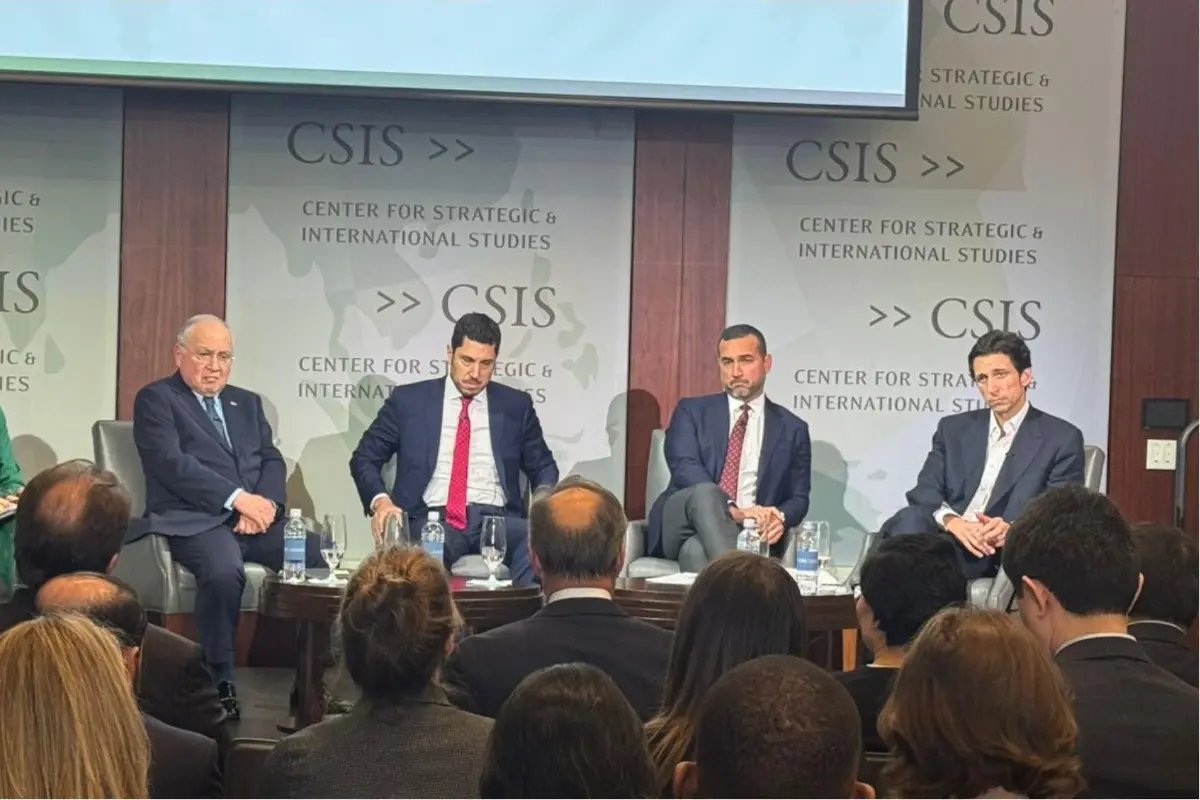
He added that “our main allies here in Washington recognize that sovereignty. (…) We have a neutral channel, open to the world, and it must remain that way. But when geopolitical reality prevails, it is the institutions that must respond, and that is what has happened in our country,” said the former vice chancellor in a panel organized by the Center for Strategic and International Studies (CSIS) held within the framework of its Future Summit and which was called “The new alliances around infrastructure.”
PORTS CONTROVERSY
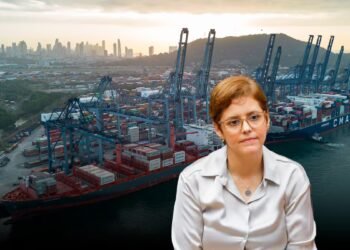
A case mentioned during the CSIS panel is the declaration of unconstitutionality by the Supreme Court of Justice, which declared unconstitutional on January 29 Law No. 5 of January 16, 1997, which granted Panama Ports Company (PPC) the development, construction, operation and administration of the Balboa and Cristóbal port terminals.
Later, in February, with its publication in the Official Gazette The transfer of the temporary operation of the ports to the Danish shipping giant Maersk was made official, as well as to the Swiss company Mediterranean Shipping Company (MSC).
In April, the company PPC decided to launch an arbitration process against Maersk since, according to PPC, Maersk had breached a long-term agreement by aligning itself with Panama in what it described at the time as a “state campaign” that led to the replacement of the port operator. Maersk responded, for its part, that it does not consider itself responsible for the claims amid the dispute over the operation of port terminals in the country.
“In 18 months these companies (MSC and Maersk) will help Panama go from the situation we were in before to the adoption of more Western and transparent standards. There is a role that the United States can play (…) I am sure that there are a series of industries in which American capital and companies can help us,” added Ruiz-Hernández, who assured that Beijing tried to hinder the transition process assumed by MSC and Maersk within the framework of a scenario in which, However, he raised the geopolitical risk that retracing the diplomatic path with China that began a decade ago poses for Panama and the need for increasingly robust support for the country from Washington in the face of this scenario that goes beyond tweets.
RELATIONSHIP OF CHINA WITH PANAMA
Regarding diplomatic relations between Panama and China, Ruiz-Hernández specified that this is not about rejecting the Asian giant. “Panama deeply values Chinese culture and its ancient history. The challenge is to align the country’s democratic values, transparency and institutions with the agenda currently promoted by the People’s Republic of China in different parts of the world, as we see in the Philippines, Venezuela and Cuba. Our infrastructure would be ready to respond on the other side of the equation,” said Ruiz-Hernández, posing a hypothetical scenario in which China would use Panamanian logistics infrastructure against Washington’s interests, putting Panama in a situation complex.
“The United States has partners and tools, but it must work better on the architecture of those relations, where public and private capital can play a key role. In the end, not only diplomatic alliances are needed, but also concrete mechanisms that allow channeling important principles such as sovereignty and neutrality, fundamental to maintaining solid and balanced relations,” said the non-resident senior advisor to CSIS on building Washington’s ties with allies like Panama.
ALLIANCES FOR DEVELOPMENT
According to the previous description that CSIS provided to event attendees, the discussion – which also included Philippine Ambassador to the United States José Manuel del Gallego Romuáldez, Cerberus Frontier Co-Director and Cerberus Capital Management Senior Managing Director Alexander Benard, and Derek Berlin, Senior Vice President of Logistics Plus Inc. – was about the set of economic tools the United States could deploy to “more proactively support the development and protection of critical infrastructure abroad.”