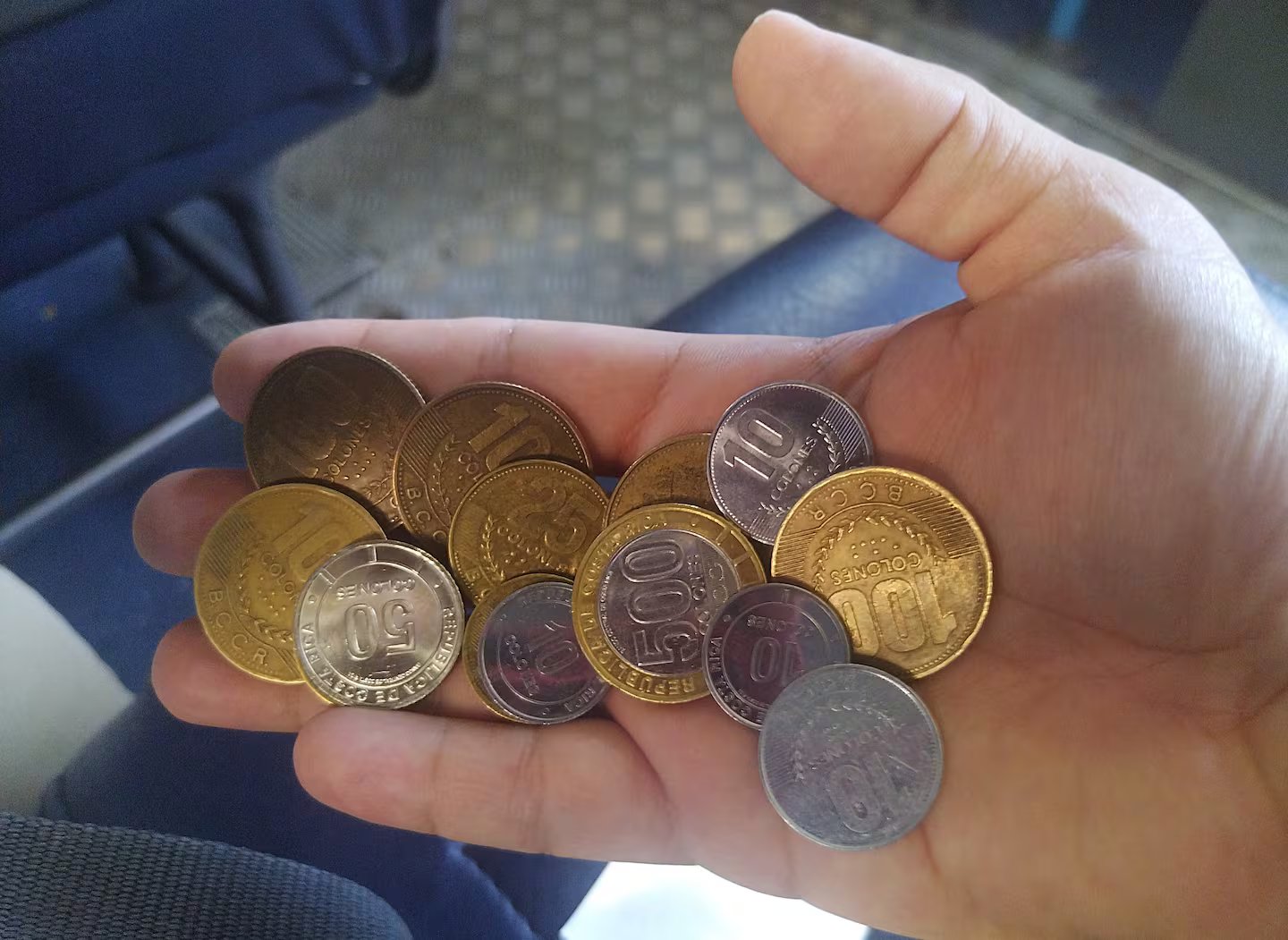
The Central Bank of Costa Rica announced a few months ago that several coins currently in circulation will no longer be used as a means of payment in the country in 2026, as part of a process of updating the monetary system.
The ¢5, ¢10 and ¢25 coins of the previous design They will stop working as a means of payment in Costa Rica as of July 1, 2026, according to the Central Bank. From that date, these denominations will no longer be accepted in commercial transactions throughout the national territory.

The measure is part of a strategy to modernize the monetary conewhich includes the replacement of old coins with new versions with different characteristics. The change will affect denominations that are still used in everyday transactions.
Among the defined adjustments, the Central Bank established that the withdrawn coins may be exchanged or deposited in financial institutionswhich will allow the population to recover its value before they lose validity.
The process also responds to previous decisions about the coin production efficiencyparticularly in denominations whose manufacturing cost exceeded their face value. This led to progressively eliminating some parts of the system.
The ¢10 and ¢25 coins of the previous design They will be removed from circulation as part of the replacement process for new pieces of the monetary cone.
To advance with this change, the Central Bank has already placed 28 million ¢10 and 10 million ¢25 coins on the market, and maintains more than 100 million additional coins of each denomination in reserve, which it will incorporate according to demand.
In the case of the ¢5 cointhe withdrawal will be final, since its production has been stopped since 2020 because its manufacturing cost exceeded its nominal value. With this decision, the ¢10 coin will become the smallest denomination in circulation within the new monetary system.
Coins of ₡5, ₡10 and ₡25 of the previous design will stop working as a means of payment on July 1, 2026