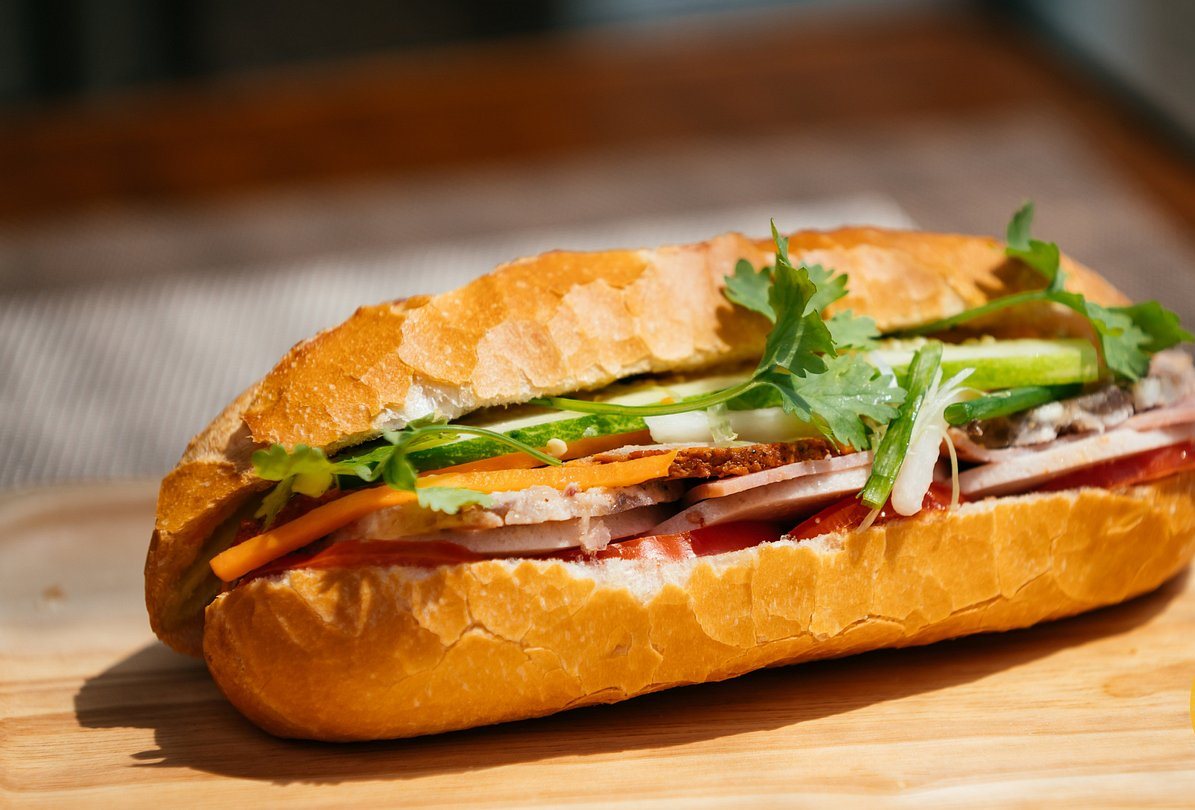
‘Banh mi’ has been a staple across generations in Vietnam.
Banh mi has been a staple across generations, from cities to rural areas, but repeated food safety incidents associated with outbreaks of Salmonella and Staphylococcus aureus infections are eroding public confidence.
Studies show that more than half of contamination cases originate from Vietnamese-style mayonnaise made from raw egg yolks and poorly stored pâté.
Salmonella thrives in raw eggs, making homemade mayonnaise a common source of contamination.
Pâté, if not cooked at sufficient temperatures or refrigerated properly, can quickly become a breeding ground for bacteria, especially in Vietnam’s hot climate where temperatures often exceed 30-35 degrees Celsius.
Staphylococcus aureus poses an even greater challenge, as its toxins survive baking temperatures and remain dangerous once formed inside fillings.
Street vendors frequently leave Vietnamese-style mayonnaise and pâté exposed for hours, allowing bacteria to multiply.
A banh mi cart left in the sun from morning to afternoon can see bacterial growth within just two hours.
Cross-contamination is also common when vendors handle money and food with the same hands.
Experts warned that the diverse mix of ingredients like meat, pâté, mayonnaise, pickled vegetables, and herbs creates an ideal environment for bacteria.
Without proper storage and hygiene, the risk of foodborne illness rises sharply.
To safeguard banh mi’s reputation, food safety advocates call for stronger cooperation among three groups including authorities, vendors, and consumers.
Authorities must tighten oversight, not only at small vendors but also at large producers of pâté and cold cuts.
Food safety certification should be paired with practical training to help vendors understand bacteria risks and proper storage.
As for vendors, they should treat each loaf of banh mi as a responsibility for customer health.
Separating raw and cooked ingredients, avoiding bare-hand contact after handling money, and keeping fillings chilled in glass cases or ice boxes are essential steps.
Regarding consumers, they should be more discerning, choosing vendors who practice safe food handling and avoiding eating banh mi left exposed in the heat.
* This article was originally written in Vietnamese by doctor Nguyen Thanh Uc and translated by Tuoi Tre News.