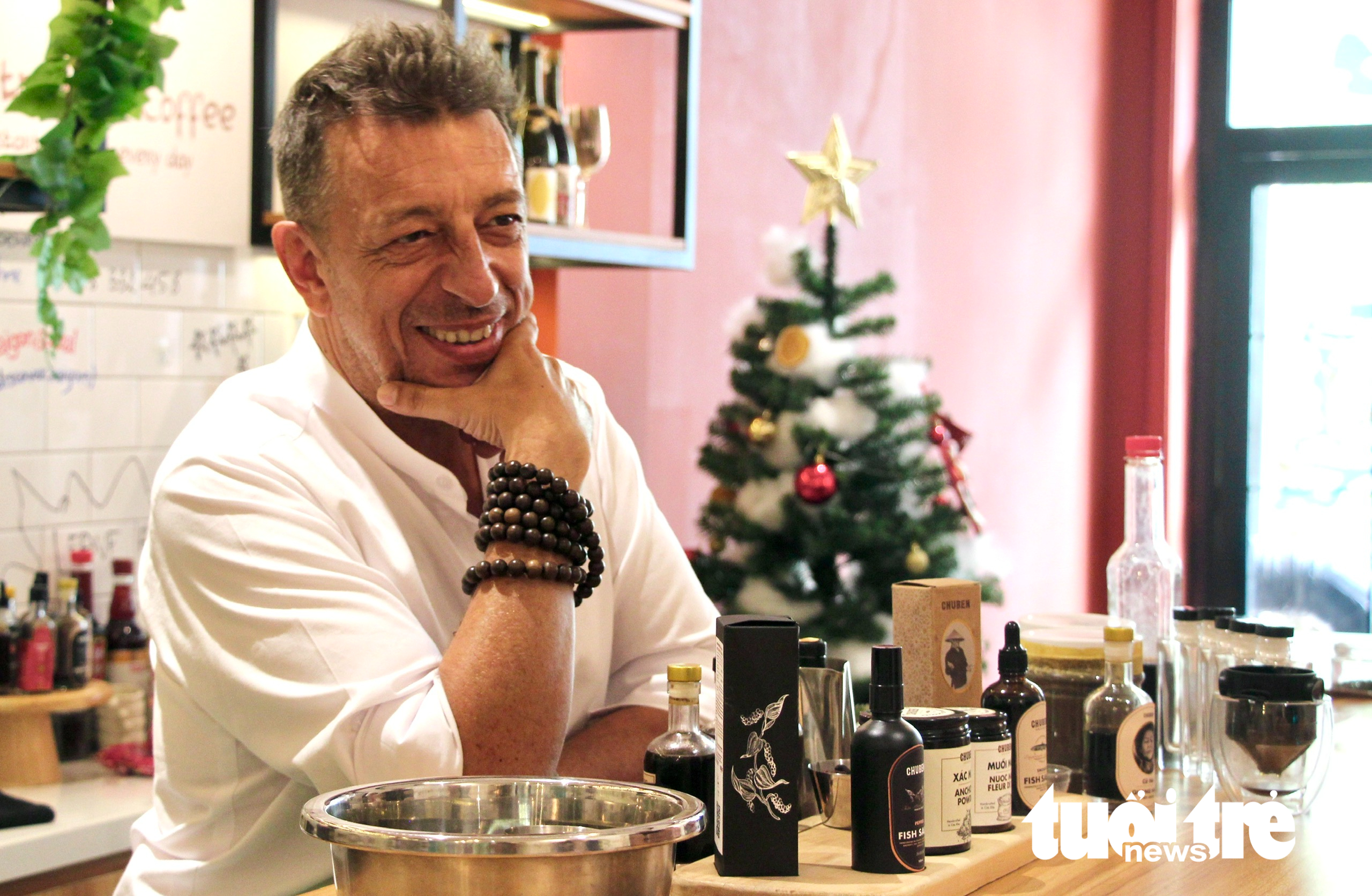
Benoît Chaigneau introduces his fish sauce varieties to guests at a tasting session at Saigon Social in Ho Chi Minh City. Photo: Dong Nguyen / Tuoi Tre News
“Do you know how fish sauce is made? It takes just two ingredients: anchovies and salt,” Benoît Chaigneau said as he opened a fish sauce workshop and tasting session at Saigon Social, a culinary exchange space run by Singaporean food blogger Jovel Chan in Ho Chi Minh City.
Gathered around him was a small group of foreign guests from the U.S. and New Zealand, along with a few Vietnamese participants.
They listened closely as Chaigneau explained the traditional fish sauce-making process in Vietnam, its nutritional value, and new ways of pairing fish sauce with food.
At one point, he even brought along a jar of fermenting fish sauce and invited participants to smell it.
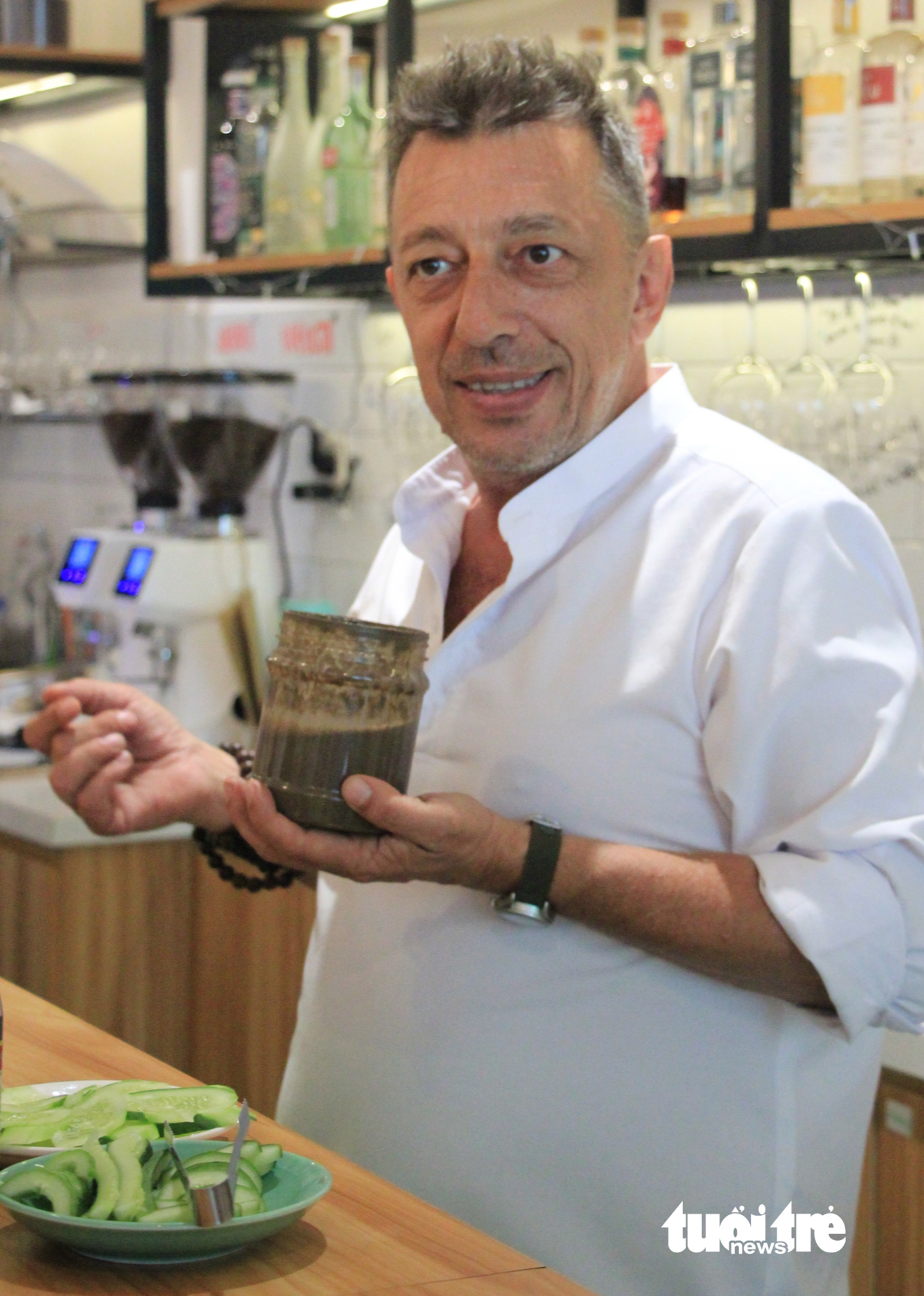
Benoît Chaigneau invites guests to smell fermenting fish sauce during a tasting at Saigon Social. Photo: Dong Nguyen / Tuoi Tre News
‘Haute Couture’ fish sauce
Chaigneau is the founder of Hoi An-based ChuBen Fish Sauce, a brand known for fish sauce products priced far above the market average.
His fish sauce also stands out for its unfamiliar format. Instead of the usual 500ml or one-liter bottles, it comes in spray or dropper bottles, each holding just 100ml.
Chaigneau himself calls his fish sauce ‘Haute Couture’ in the world of fish sauce.
A Frenchman coming to Vietnam to make fish sauce and sell it for over VND200,000 (US$7.60) per 100ml bottle might sound surprising, if not hard to accept, for many Vietnamese.
Asked what gives him the confidence to charge such prices, Chaigneau said quality depends on many factors, from the freshness of the fish and the quality of salt and spices to the time, labor, and energy invested, not to mention packaging.
“Every ingredient is carefully selected,” he said.
“For example, I only use anchovies about six centimeters long, caught between 11:00 pm and 4:00 am.
“That is before the fish feed, so their stomachs are empty.
“All spices are organic. I’m very careful about the origin of all the ingredients I’m using.”
Chaigneau said that he sometimes goes fishing with local fishermen himself to ensure the catch meets his standards.
I also want people to understand that ‘cheap’ is not the right price for fish sauce. For most Vietnamese fish sauce makers, it takes more than a year to produce a finished product.
Benoît Chaigneau
An unexpected connection
In 2020, Chaigneau, a former television host and food critic with 20 years of experience, came to Vietnam as a tourist and became stranded in Quang Nam Province, central Vietnam because of COVID-19.
During that time, he discovered a passion for Vietnamese fish sauce and decided to stay in the country to pursue a new career.
One oft-told anecdote has Chaigneau stringing up a hammock and lying in front of a local home in Quang Nam for three straight days, determined to convince the owners to teach him how to make fish sauce.
His persistence eventually paid off, but on the condition that he work 12 hours a day, six days a week, for a monthly wage of VND5 million ($190).
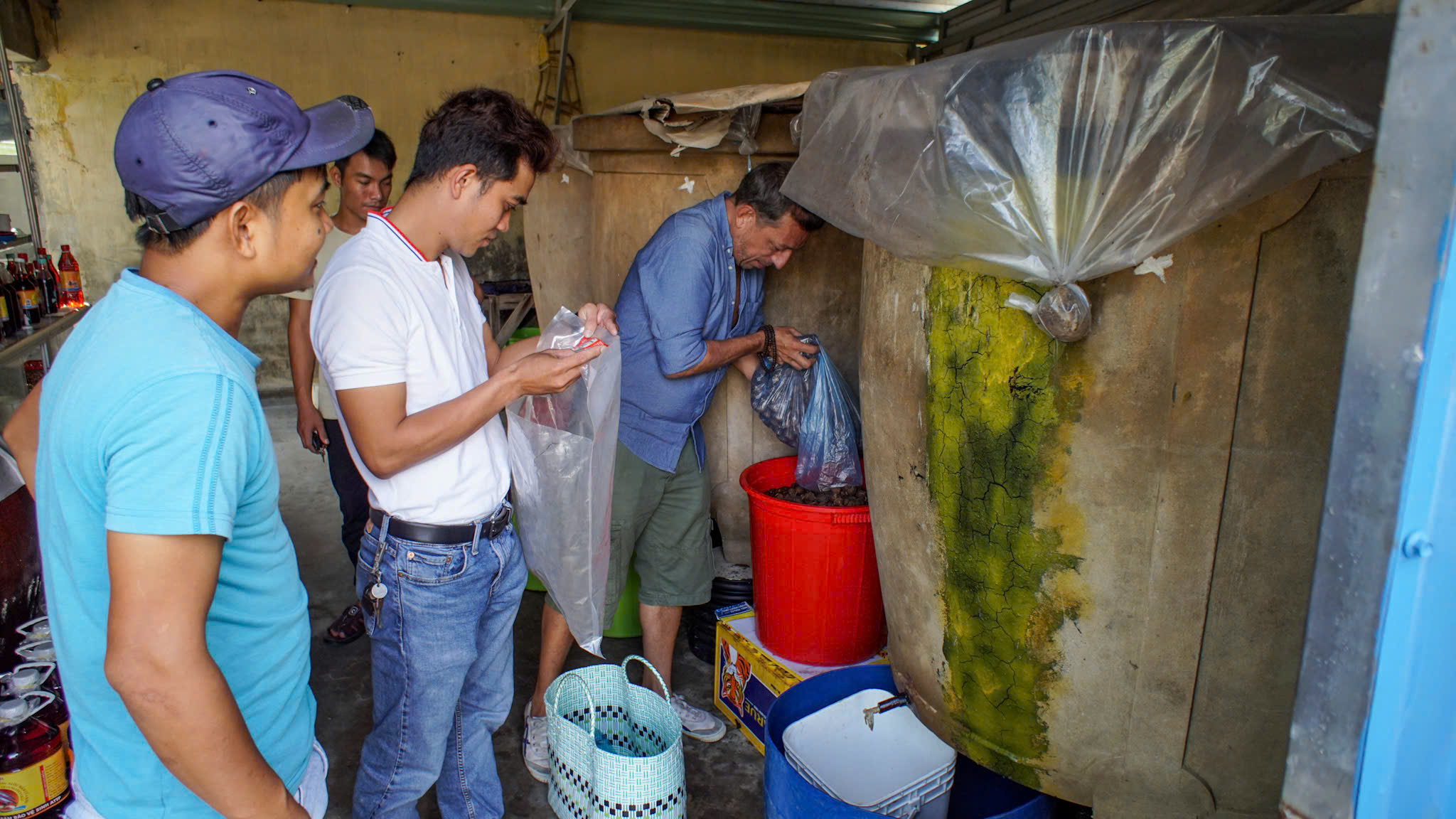
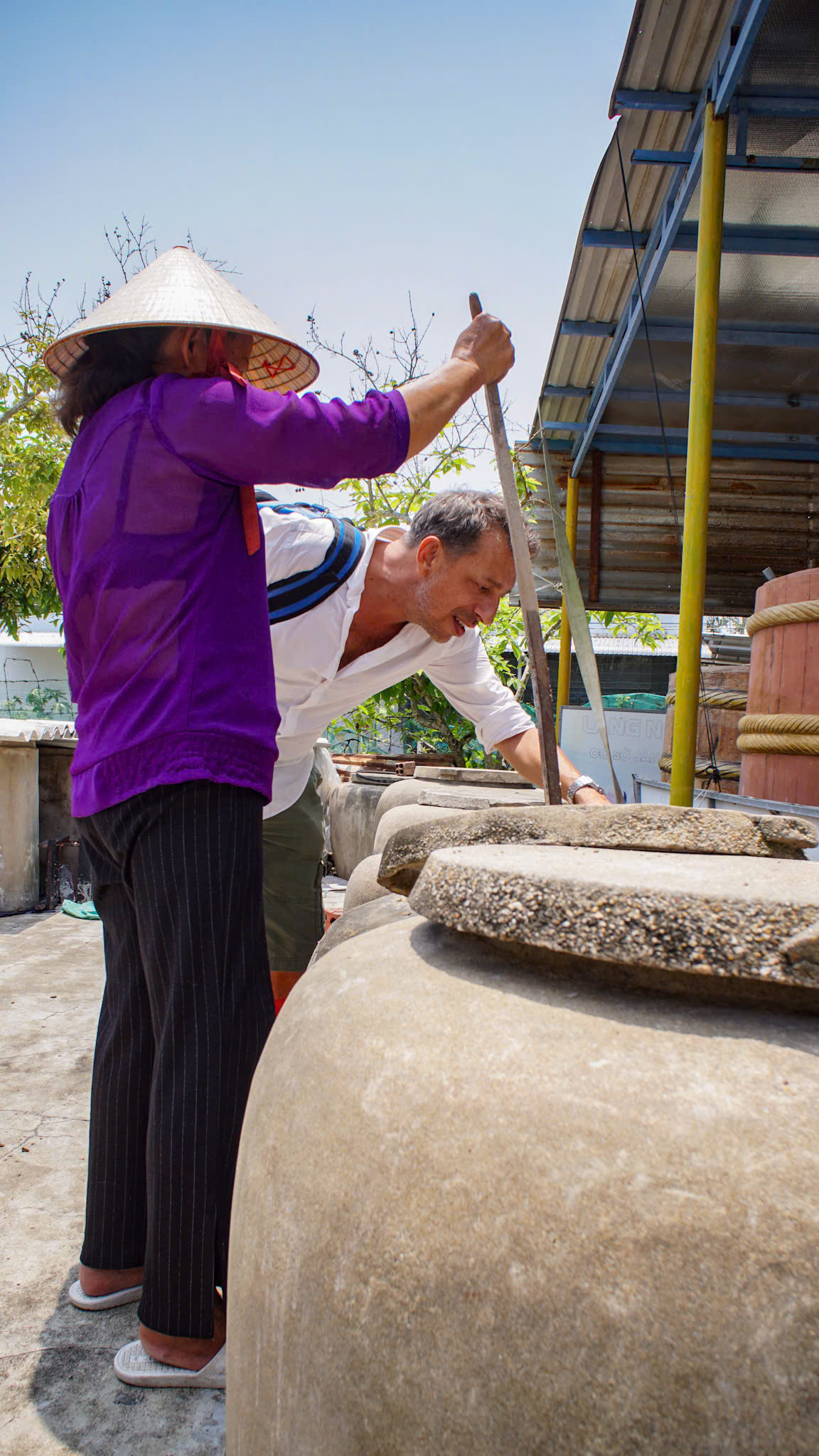
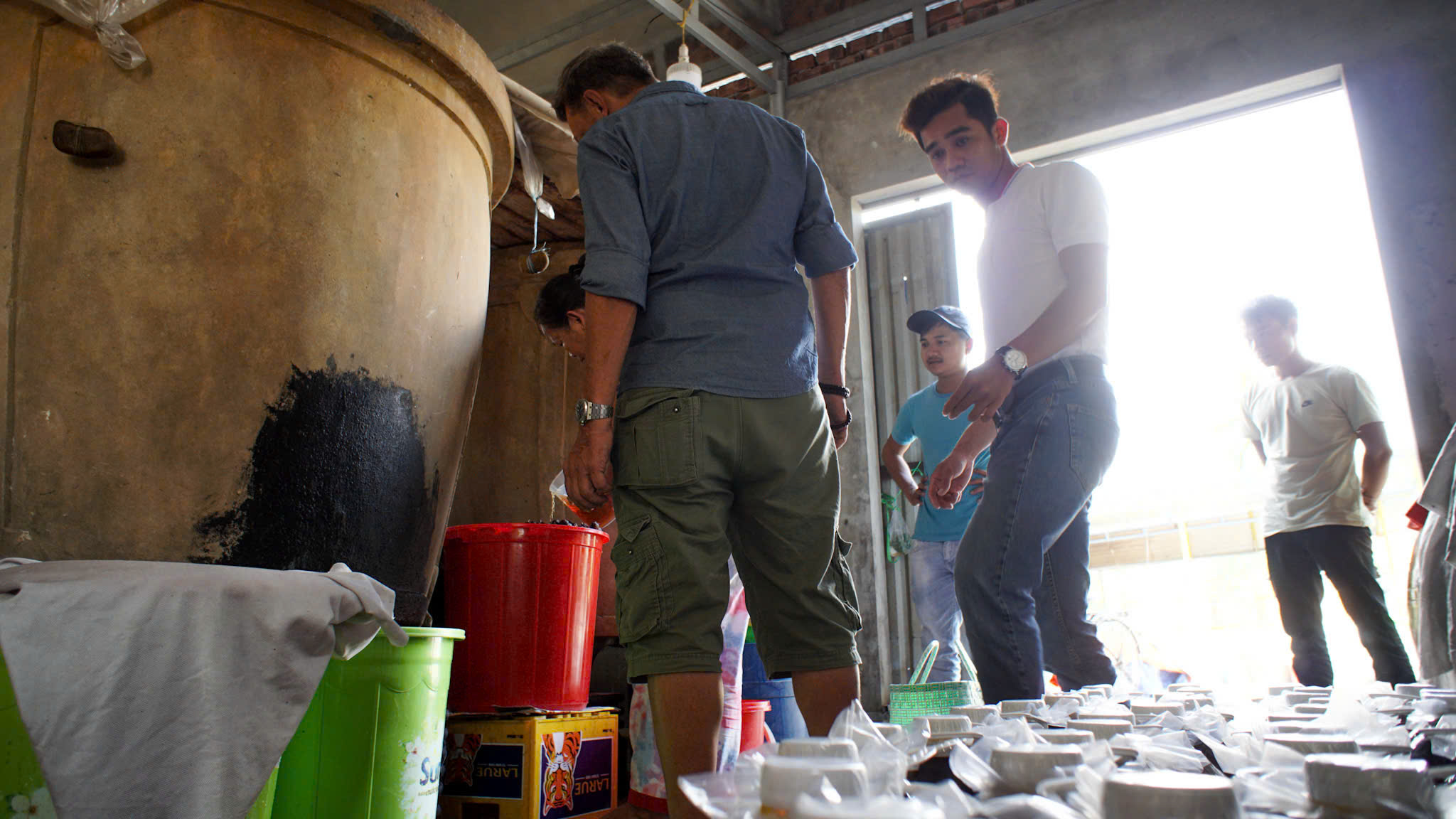
Benoît Chaigneau learns the craft of fish sauce making in Vietnam. Photo courtesy of Chaigneau
Chaigneau learned on the job while also reaching out to the chefs he knew to study the science behind fish sauce fermentation.
The Frenchman unexpectedly found a connection between fish sauce in Vietnam and his roots.
“Fish sauce is made from anchovies. I come from the Mediterranean coast, where anchovies are widely used,” he explained.
“There are flavors and products I was already familiar with.
“Making fish sauce fascinated me. It felt like reconnecting with my roots.
“What was exotic was how Vietnamese people use fish sauce, how they make it, and how they cook with it.
“For me, fish sauce became a bridge between the West and the East, and I think that fish sauce can be a universal link for all kitchens.”
That belief seemed to become the guiding principle of Chaigneau’s adventure with fish sauce.
He traveled from north to south, visiting famous fish sauce regions such as Phu Quoc and Phan Thiet, asking to observe and learn in barrel houses and workshops.
He also spent time reading and researching the history of fish sauce, amassing some 5,000 pages of related materials.
“When people heard there was a Westerner making fish sauce in Vietnam, many laughed at me, as if to say, ‘What do you know about Vietnamese fish sauce?’ But they were wrong,” he said confidently.
“I have invested an enormous amount of time and effort into learning.”
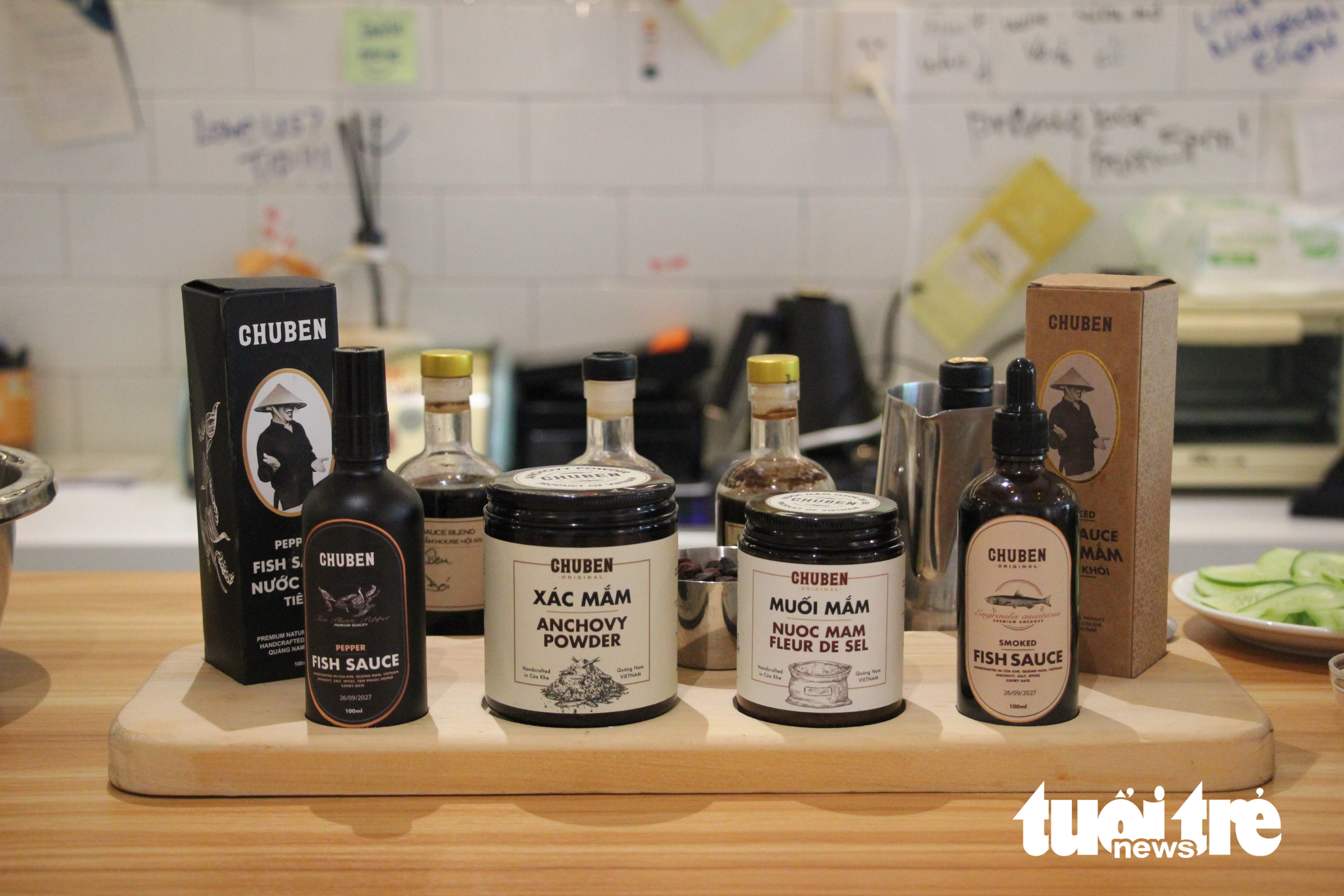
Fermented fish products developed by Benoît Chaigneau. Photo: Dong Nguyen / Tuoi Tre News
In 2023, that determination culminated in the launch of his own fish sauce line.
Instead of following a purely traditional path, he took a modern approach, creating flavored varieties such as smoked fish sauce and black pepper fish sauce.
“The foundation of my products is still traditional Vietnamese fish sauce,” he said.
“I first make fish sauce from anchovies and salt using traditional methods in wooden barrels.
“After that, the fish sauce is transferred to stainless steel tanks, where spices are added and the fish sauce is aged for another six to eight months.
“Altogether, it takes nearly two years before bottling.”
Fish sauce with a purpose
The spray and dropper bottle designs are not merely about making the product look expensive.
Chaigneau wants fish sauce to be used like a finishing seasoning, similar to a small salt cellar on a kitchen counter or restaurant table.
According to him, spray and dropper formats help those unfamiliar with fish sauce better control the amount used.
“With a spray bottle, you can put it right on the table. When cooking, instead of sprinkling salt, you just spray fish sauce,” he explained.
“Salt gives you saltiness. Fish sauce adds umami and layers of flavor.”
Similarly, his black pepper fish sauce is designed as a replacement for the habit of sprinkling salt and pepper.
“I wanted something that combines saltiness and pepperiness,” he said. “The spray is essentially a perfect replica of ‘a pinch of seasoning.’
“For example, when grilled meat is served, instead of adding a pinch of salt and pepper, you just lightly spray black pepper fish sauce.
“The umami from the fish sauce blends with the pepper, making the dish much richer.”
Talking with Chaigneau, it is easy to sense his boundless energy when discussing his fish sauce experiments.
At the Saigon Social tasting, he led guests from one surprise to another as they sampled his creations, including fish sauce infused with calamansi, with robusta coffee, and with fat from Spanish cured ham.
He even developed a caramelized fish sauce paired perfectly with vanilla ice cream.
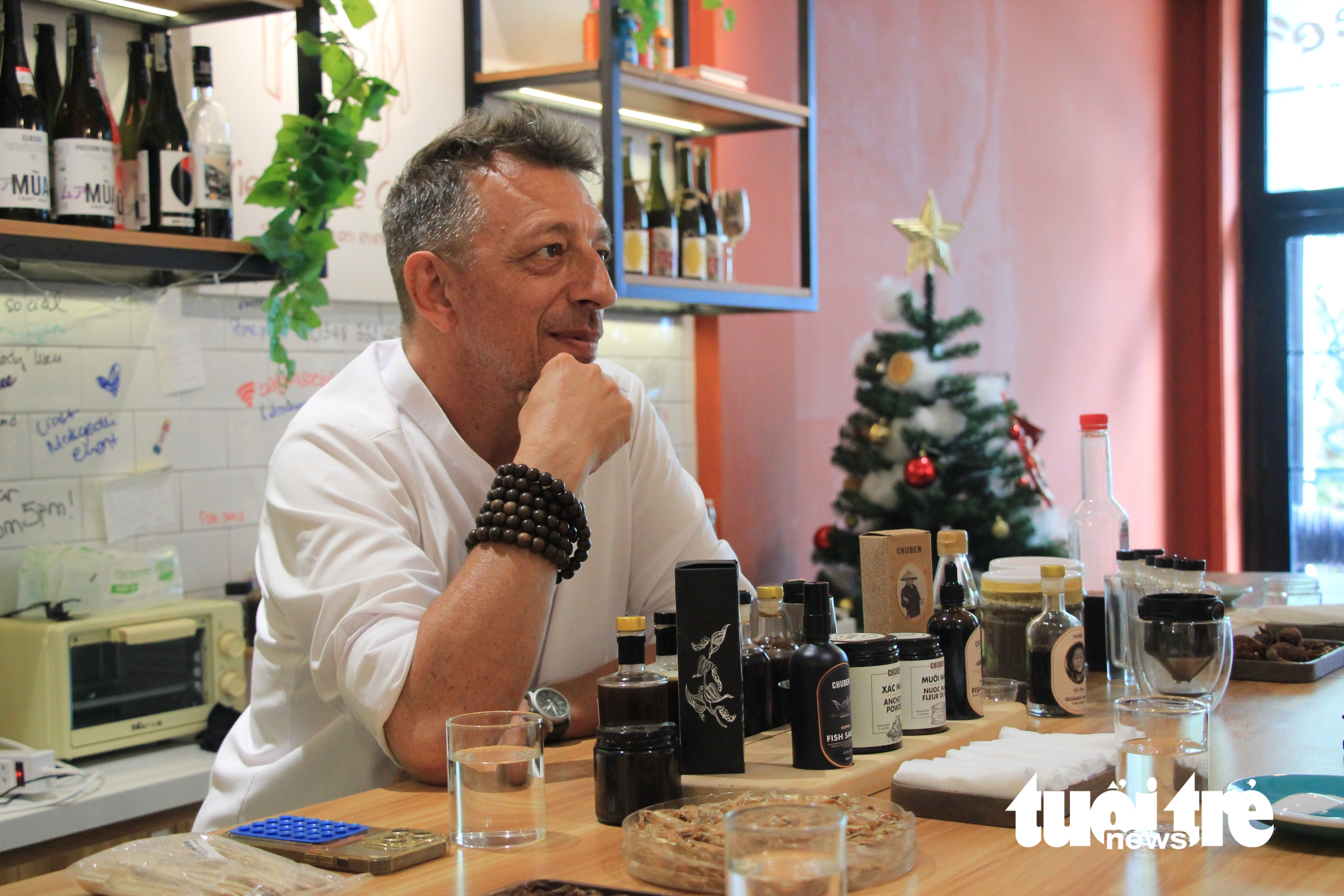
Benoît Chaigneau introduces his fish sauce varieties to guests at a tasting session at Saigon Social in Ho Chi Minh City. Photo: Dong Nguyen / Tuoi Tre News
Xac mam: from animal feed to dining
Chaigneau’s innovations do not stop there. He has also launched two products made from what is usually discarded during fish sauce production: muoi mam (fleur de sel – flower of salt) and xac mam (anchovy powder).
“In Europe, zero-waste living and exploiting as much as you can with everything you have are very popular trends,” he said.
“During fermentation, some salt crystallizes on the surface of the fish sauce. I collect that salt and dry it in the sun. It is beautiful, with the taste of fish sauce, forming golden, crispy flakes that add texture to dishes. To me, it is solid gold.”
As for xac mam, the solid remains after the liquid is extracted, Chaigneau learned that local producers typically feed it to pigs or chickens.
“I thought, if pigs can eat it, humans can too, it just needs to be treated differently,” he said.
He sun-dries the solid remains for about a month, grinds it into ‘anchovy powder’ and experiments with it in cooking.
“When I introduced it to fine-dining chefs, they loved it,” he recalled.
According to Chaigneau, many customers buy the product to season everything from pasta, salads, and roasted tomatoes to fries, popcorn, and grilled fish. Essentially, it is fish sauce in powdered form.
At the tasting session, Chaigneau invited guests to sprinkle the anchovy powder directly onto French fries. The room buzzed with approval at the familiar yet unexpected depth of flavor.
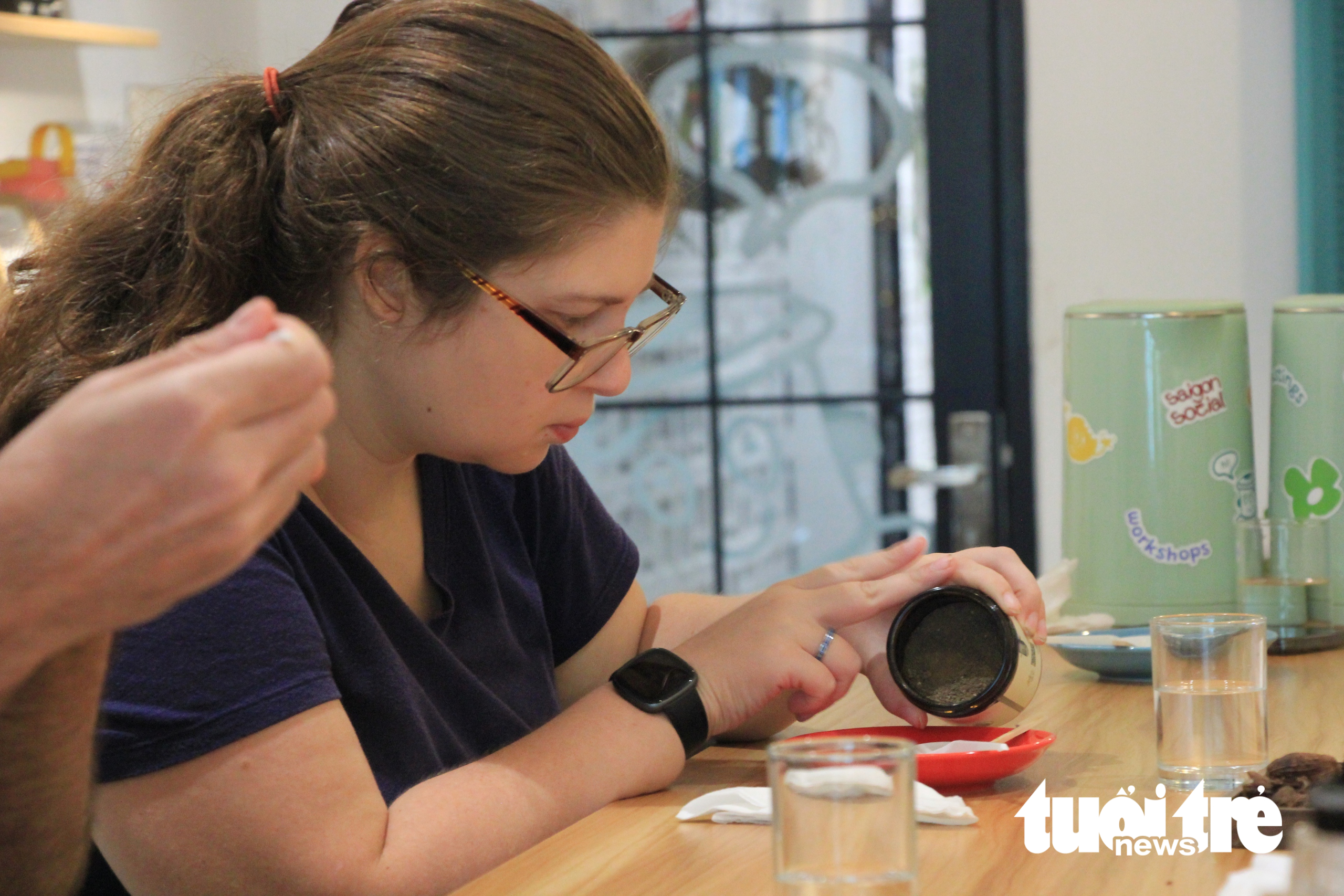
An attendee sprinkles anchovy powder over French fries at a fish sauce-themed tasting at Saigon Social hosted by Benoît Chaigneau. Photo: Dong Nguyen / Tuoi Tre News
On his website, he suggests using the anchovy powder to replace cheese powder on popcorn, or mixing it with olive oil and lemon juice or rice vinegar for a simple salad dressing.
In another recipe, he even encourages customers to replace Worcestershire sauce in classic French beef tartare with anchovy powder, mixing it with finely chopped raw beef, capers, shallots, and olive oil. “Anchovy powder replaces Worcestershire sauce and gives unique intensity,” the recipe claims.
Chaigneau believes this approach can add value to fish sauce production by utilizing by-products.
“I am happy to share this method with local producers to help them create added value and increase income,” he said.
Previously, fish sauce solid remains were sold to livestock farmers for around VND20,000 per kilogram. Meanwhile, Chaigneau’s anchovy powder retail price is about VND2.5 million per kilogram. (US$1 = VND26,338)
A fish sauce for all cuisines
Driven by his love for fish sauce, Chaigneau aims to make it a global staple, following the path Japan paved with soy sauce.
“What I really want is to see people outside Asian cultures start using fish sauce in their own kitchens,” he said.
“This challenge was once faced by soy sauce.
“About 20 years ago, soy sauce was considered smelly and used mainly within Asian communities. Now it is found in almost every kitchen in Europe and the U.S. because it is tasty, rich in umami, and healthy.
“Fish sauce is more than that, it is high in protein and Omega-3.”
Chaigneau was proud that from April to October last year, his fish sauce, along with Phu Quoc fish sauce, was selected by the Ministry of Culture, Sports, and Tourism to be displayed at the Vietnam Pavillion at Expo 2025 Osaka for its traditional and modern characteristics.
“And I think keeping the tradition while working toward modernity is very important if we want to reach foreign markets, as the majority of fish sauce that is sold outside of Vietnam is bought by Vietnamese or Asian, not by Westerners because they don’t know how to use it,” he explained.
“And it’s sometimes too smelly or too strong.
“So I’m trying to make a fish sauce that can fit with any kind of cuisine. That’s why I put a lot of recipes on my website, which are non-Asian recipes.”
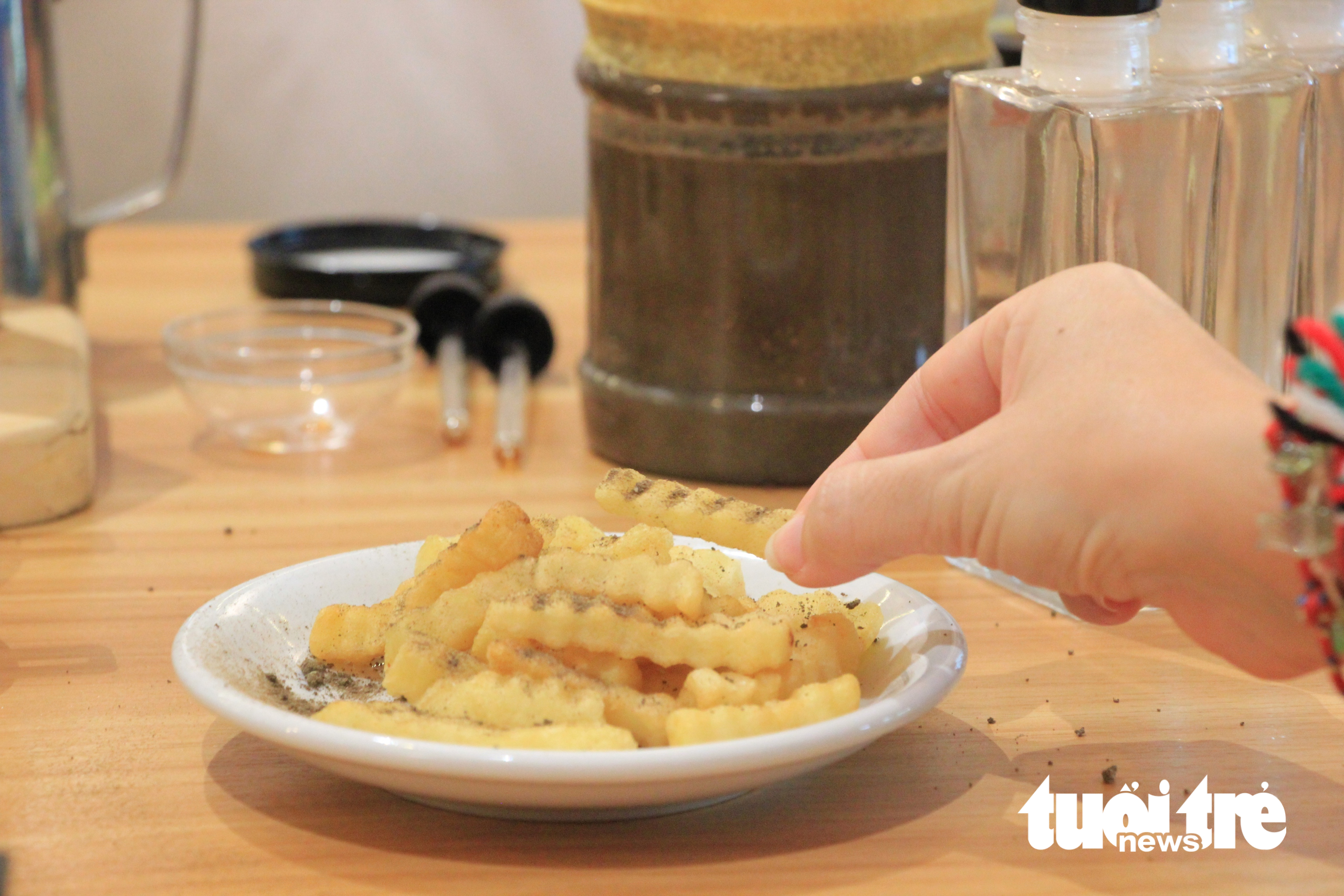
Fries sprinkled with anchovy powder during a demonstration by Benoît Chaigneau. Photo: Dong Nguyen / Tuoi Tre News
Fish sauce now shapes nearly every aspect of Benoit Chaigneau’s life in Vietnam.
In addition to producing it and leading workshops, he runs a restaurant in Hoi An, where fish sauce finds its way into every dish, even coffee.
Dong Nguyen / Tuoi Tre News
Dong Nguyen / Tuoi Tre News – Courtesy of Benoît Chaigneau