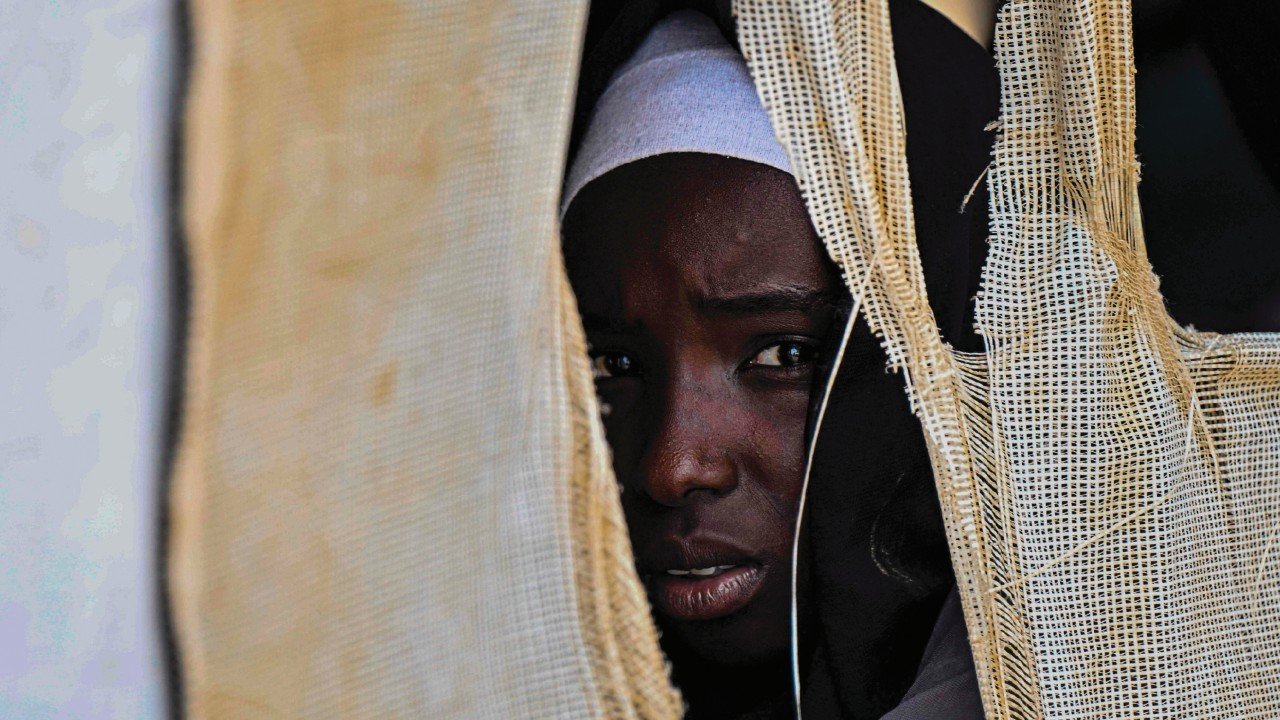
There are those who want to become surgeons, those who want to become psychiatrists, those who want to become English teachers. They are some of the over 1,000 children and young people who in the Al-Hichan camp for displaced people, in the north-east of Sudan, go to lessons in the tents transformed into a school, when the African country is now experiencing its fourth year of war between the Khartoum army and paramilitaries. Almost a third of those pupils followed an accelerated UN programme, in collaboration with local NGOs, to catch up on their education: of the over 25 million Sudanese minors – effectively half the population – eight million are currently out of school, according to a recent Unicef estimate.
But, in the emergency, it is the determination that unites them, as evidenced by an AFP report. Afrah, 13, says that during the months in which she was unable to attend school, forced to move due to the continuous fighting that has raged since 15 April 2023, she went over the lessons “again and again”. Now, in this cluster of tents near Port Sudan, students recite poetry, learn the basics of physics and chemistry, take hygiene courses, and play during recess. But behind their lightheartedness lies a life of horror, hunger, violence, sometimes forced recruitment, sexual abuse.
At the beginning, as soon as they arrived in Al-Hichan, their drawings were a continuous reminder of the war. “They arrive here scared, exhausted, wary, but over time their sketches change”, explains Mira Nasser, spokesperson for Unicef: they begin to adapt to a new “normality”, even if in fact it isn’t normality. One of the little pupils was injured in Khartoum, her right arm was amputated just above the elbow. For everyone, the nightmare of hunger remains: more than 825,000 children under 5 in Sudan are victims of acute malnutrition.
Yet in Al-Hichan the resumption of lessons means the future. Ibrahim, 14, dreams of becoming a petroleum engineer. (aquiline jade)