The primary military threat facing Canada comes from hypersonic or cruise missiles arriving from the north, the sea or even space, launched by adversaries such as Russia or China, according to the Canadian Armed Forces.
To defend itself, the government of Canada wants to acquire half a dozen new “flying radars” — officially called Airborne Early Warning and Control (AEW&C) aircraft — at a cost of more than $5 billion.
The program aims to purchase planes packed with radar and detection equipment that fly at altitudes of more than 10 kilometres, searching for enemy missiles, aircraft and drones. Since Russia’s full-scale invasion of Ukraine began, these threats have become increasingly sophisticated and lethal.
Once crews detect a threat, the aircraft can relay information to other Canadian Armed Forces systems and the country’s allies to co-ordinate a military response.
In an ideal world, the Canadian military wants this equipment to be as compatible as possible with its future F-35 fighters and other “fifth-generation” capabilities.

The main options for the contract are the Swedish GlobalEye, made by Saab, as well as two American offerings, namely the Aeris X by L3Harris and the E-7 Wedgetail by Boeing.
The Carney government wants to act quickly to purchase these new detection planes, and to fulfil its promise to increase domestic production of military equipment.
“In its 2025 electoral platform, the Liberal Party of Canada committed to acquiring Canadian-made Airborne Early Warning and Control aircraft,” said Laurent Blanchard, spokesperson for Stephen Fuhr, the secretary of state responsible for military procurement.
“The government has undertaken a rigorous analysis of the options, moving the procurement forward much faster than usual.”
The debate surrounding the surveillance aircraft is reminiscent of the clash over the American F-35 fighter and its Swedish rival, the Gripen. The Canadian government has already begun the purchase of F-35s, but is still exploring the option of a mixed fleet that could include Gripen jets.

Military analyst Justin Massie said the federal government faces a political choice on detection aircraft: continue to buy mainly American equipment to meet its needs, or begin shifting toward a greater variety of European military equipment.
“The decision is becoming political in regards to the geopolitical orientation that Canada wants to give to the Canadian Armed Forces,” said Massie, director of the department of political science at l’Université du Québec à Montréal.
“Do we continue to integrate ever more closely with the United States, or do we want to diversify and reduce our dependence by developing stronger ties with Europeans?”
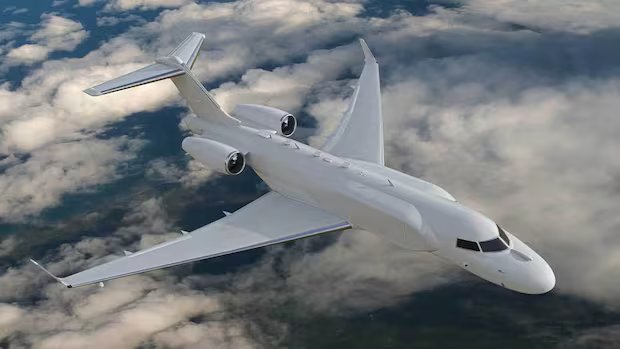
The GlobalEye and the Aeris X install their respective radar and other detection systems on Global 6500 jets manufactured in Toronto by Bombardier. As such, both companies would ensure a high level of Canadian content.
L3Harris is also promising to carry out the integration of the radar and detection systems on Canadian soil at its existing facilities in Mirabel, north of Montreal.
The platform for the E-7 Wedgetail, meanwhile, is a Boeing 737 manufactured in the United States, but the firm could integrate its detection equipment in Canada, as it has done for other customers.
According to several experts and government sources, each aircraft has its advantages, but they also present challenges, complicating the selection of a winner.
Within the Canadian government, some believe Canada should show more patience and allow the competing companies time to refine their aircraft.

At the same time, federal decision-makers want to demonstrate that the government’s approach is speeding up military procurement, with a major emphasis on job creation.
There is a strong push within the Carney government to strengthen the military alliance between Canada and Sweden, although there are also warnings that it would be more difficult to operate Swedish aircraft within NORAD.
Radio-Canada granted confidentiality to certain sources close to the matter who were not authorized to speak publicly.
Because the GlobalEye and the Aeris X use the same Bombardier platform, the biggest differences between the two are their detection and surveillance equipment, as well as their potential economic benefits.
The main radar on the GlobalEye is located on top of the fuselage, similar to a cargo box installed on the roof of a car. For the Aeris X, the radars are instead installed in the aircraft’s “cheeks,” near the nose.
The difference goes beyond aesthetics.
L3Harris claims its main radar offers 360-degree coverage, while the GlobalEye’s perspective is partially obstructed by the aircraft’s tail. (Saab said the GlobalEye still offers “360-degree sensor coverage.”)
The fact that the Aeris X uses a radar system manufactured by Elta Systems, based in Israel, raises potential obstacles, however. Canada suspended military export permits to Israel in 2024, which could affect future transfers of technology and equipment between the two countries, according to several experts.
In a presentation provided to various governments, L3Harris claims the Aeris X flies higher and covers a larger area than the GlobalEye, in addition to maintaining its radar coverage during sharp banking turns.
L3Harris adds that its aircraft offer better interoperability with other Royal Canadian Air Force fleets and American aircraft, particularly regarding communications and data transmission.
The first Aeris X units are still in the production stage, as L3Harris sold the aircraft to South Korea in 2025. The firm is also in the running for a NATO contract.

Saab has already sold GlobalEyes to Sweden, France and the United Arab Emirates. The company is also well-positioned to become the surveillance aircraft supplier for NATO.
Saab says Canada would contribute to the future technological development of its aircraft. Saab already has partnership agreements with CAE, a Montreal-based company specialized in flight training, and Cohere, a Toronto firm specialized in the field of artificial intelligence.
“If Canada moves forward with purchasing GlobalEye, Saab will share the intellectual property and knowledge transfer to Canada to allow for domestic build, maintenance and upgrades to the platform,” said Sierra Fullerton, spokesperson for Saab Canada.
Saab insisted that both the Gripen and GlobalEye can communicate and function effectively with any Canadian or American aircraft within NATO and NORAD.
The E-7 Wedgetail is already in use in some countries, but its production has faced delays in the United States. Boeing could offer to perform part of the integration of its detection equipment on its 737s in Canada.
“The E-7 has been modified in four different nations (US, Australia, Korea, and Türkiye) and is being modified in the United Kingdom now,” Boeing spokesperson Cynthia Waldmeier wrote in an email. “Boeing will work with our Canada customer to determine the best solution for delivering the capability and meeting RCAF’s requirements.”
For now, the government says it’s conducting an analysis of market options. The process is being carried out under the direction of the departments of National Defence and Industry, as well as the new Defence Investment Agency, which is managing the file.
The government said it will provide an update in the coming months.
“Canada is working to modernize the way it provides equipment to the men and women of the Canadian Armed Forces, ensuring they receive what they need to protect our sovereignty faster and more effectively,” said Blanchard, Fuhr’s spokesperson.