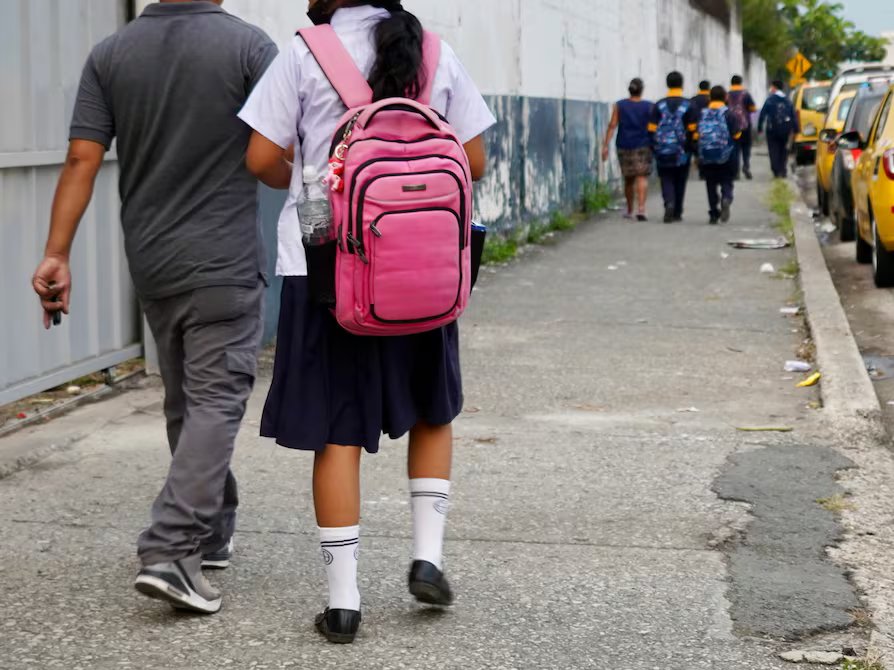
More than 1.8 million students of the Costa-Galápagos regime of fiscal schools begin the 2025-2026 school year this Monday, May 4, with modifications to the internal regulations.


The start is applied in a staggered manner. Today, with high school and initial, the 5th with upper basic and preparatory general education and the 6th with intermediate and elementary basic general education. In previous weeks, private schools have gradually resumed classes.
This Monday, the Minister of Education, Gilda Alcívar, will accompany the return of the students to the classrooms in Guayaquil. He will do so at a public event at the Rita Lecumberri fiscal college and then visit other academic spaces.
Before this return to classes, the vice minister of Educational Management, Juan Carlos Rodríguezmentioned that they have made deliveries so that students can start their school year with language, mathematics and physics materials for the different levels.
Regarding infrastructure, he added, there is an investment of more than $50 million in repowering and improving school buildings.
Furthermore, in management risks has been destined more than $1 million in arrangements and adaptations in two phases: the first in 124 institutions, and the second in 144, related to the rainy season.
There was also mingas of safe environments and spaces that bring together the community, teachers, managers, as well as ministry departments, he said.
In direct support to students and families, there are plans to deliver free school textbooks to more than 1.6 million beneficiaries, school uniforms to more than 613,000 students, food to more than 1.45 million students and school transportation in rural areas for 9,761 students. The sum of investments in these areas reaches $143 million.
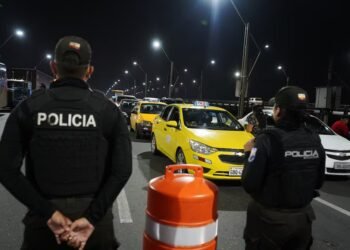
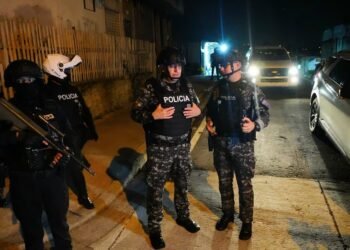
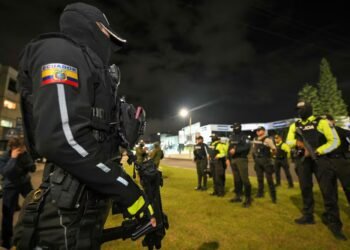
In addition, the Ministry of the Interior together with the Police coordinate an operational plan to guarantee security at the start of classes.
The strategy contemplates the deployment of 12,719 police officers outside campuses to prevent crimes and provide security for the entry and exit of students.
As part of the regulations, in addition, the Ministry of Education reported that the use of mobile devices in educational institutions continues to be regulated under Ministerial Agreement 2025-00015-A.
He detailed that in Initial Education and Basic General Education It is not allowed or recommended.
In Baccalaureate Its use is exceptional, strictly for academic purposes and always under the authorization and supervision of the teacher.
That state portfolio, however, issued a new agreement on socio-educational and disciplinary measures that optimizes conflict management to give way to effective solutions.
He highlighted that the educational authorities now have more powers to act immediately.
He added that they are looking for quick responses in the event of disciplinary offences, fewer procedures and more training.
In addition, specialized care is reinforced in cases of bullying or violence. These processes will be quickly referred to the District Conflict Resolution Board.
The agreement, issued by the minister Gilda Alcivardetails that the highest authorities of educational establishments are delegated to know and directly resolve the disciplinary offenses provided for in article 211 of the Codification of the Organic Law of Intercultural Education, except for offenses related to bullying, school violence, academic harassment or situations in which the educational or administrative staff of the institution are involved, whose jurisdiction will be exclusively the District Conflict Resolution Board.
The institutional authorities, the document maintains, will be obliged to apply the disciplinary educational measures for students when they relate to offenses such as:
Disciplinary offenses and educational measures
Commit academic fraud or dishonestysuch as copying an academic work by any means with your consent; using notes or other materials during an evaluation without the teacher’s permission; present as your own the work, ideas or texts of another person or the Internet without citing the source; or take a test or assignment for another person.
Disrupt peace, harmonious coexistence and disrespect the codes of coexistence of educational centers, such as wearing the uniform in risk situations (fights, drug use, in bars, discos and others that affect the well-being of the student) outside the educational establishment; abandon any educational activity and the institution without authorization or justification; request financial contributions without authorization from the educational authority; consume alcohol, tobacco and other illegal drugs within the educational institution; or not comply with the agreements and commitments established in the code of coexistence.
Voluntarily deteriorate or destroy institutional facilities and public and private propertysuch as intentionally damaging, destroying or deteriorating the educational materials or resources that the institution lends to students for their use, with the obligation to take care of them and return them in good condition; scratching, writing or drawing on desks, doors or walls of the educational institution; or lose the assets of the educational institution: equipment, furniture and technical equipment.
Failure to comply with the provisions contained in the Codification of the Organic Law of Intercultural Education (obligations and responsibilities of students), such as not treating members of the educational community with respect.
Obstruct or interfere with the normal development of the academic and cultural activities of the institutionsuch as carrying out proselytizing actions related to political movements or parties; sabotage electoral processes of the educational institution and other participation bodies of the educational community; promote the paralysis of the educational service by inciting other students to abandon or interrupt academic activities; or constantly interrupting classes through shouting, excessive jokes, noise, entering or leaving the classroom without authorization or conduct that impedes the normal development of academic activity. It does not include students with educational needs associated or not with a disability.
The aforementioned catalog is referential and may be expanded in the coexistence codes of educational institutions, according to the document.