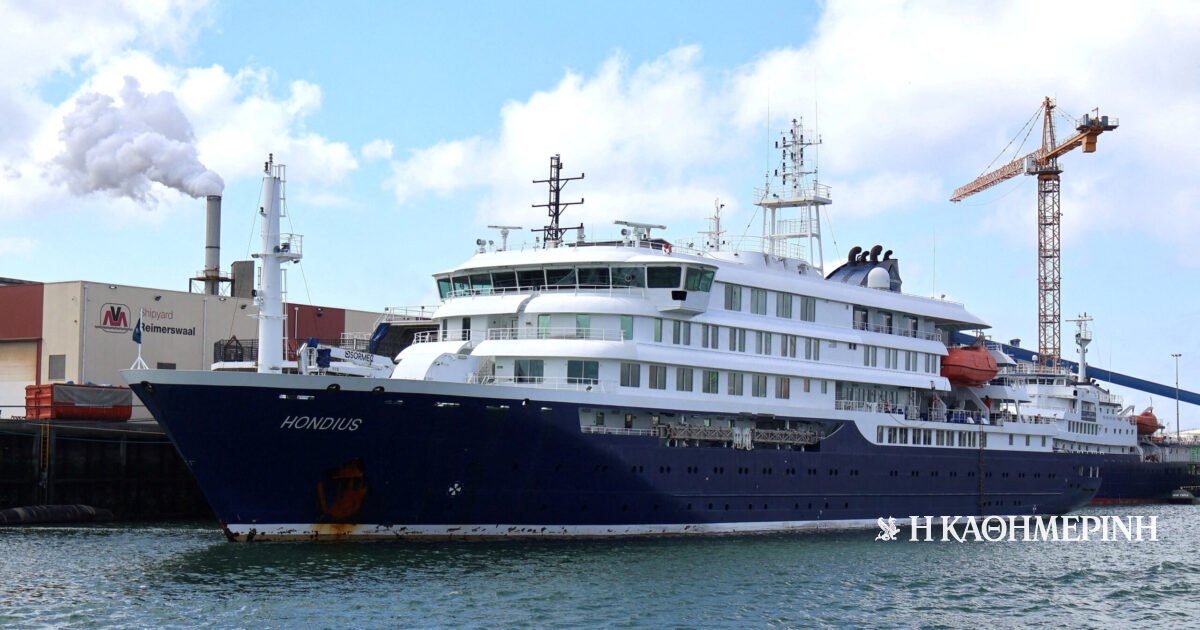
A Greek man is among the 149 passengers of the cruise ship “MV Hondius”, where three deaths were recorded from the virus, according to an announcement by the ship’s owning company Oceanwide Expeditions, which released data on the nationalities of the passengers and the course of the case.

As it became known, three people have died and three others have become ill, following an outbreak of hantavirus at sea in the Atlantic Ocean. All passengers and crew members have been quarantined, while the ship remains stationary off the coast of Cape Verde.

“Although rare, hantavirus can spread from person to person and cause severe respiratory disease. Close monitoring of patients, appropriate support and treatment is required,” the WHO emphasizes.
“Thorough investigations are ongoing, including further laboratory analyzes and epidemiological investigations. Medical care and support is provided to passengers and crew,” the Agency notes.

The timeline of the case
According to the data so far, a Dutch couple – a 70-year-old man and a 69-year-old woman – are among the dead. The 70-year-old man was the first to show symptoms. He ended up at sea and his body has been taken to the island of St. Helens, a British territory in the South Atlantic Ocean. His 69-year-old wife also fell ill on the ship and was flown to South Africa, where she ended up in a Johannesburg hospital. The third victim, a man of German origin, is on board.
Hantaviruses are transmitted to humans through infected wild rodents, such as mice or rats. A bite, contact with these rodents or their droppings, or breathing in “contaminated dust” can lead to illness.
There are many types of handavirus, differentiated by their geographic distribution and clinical presentation. According to the website of the Swiss Federal Office of Public Health (FOPH), “only one type of the virus, which is extremely rare, can be transmitted from person to person.”