KPL
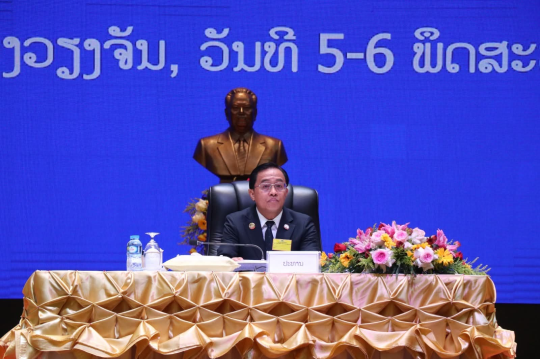
The National Meeting on Public Works and Transport (PWT) for 2025–2026, alongside discussions on the implementation of the 5-Year Sector Development Plan (2026–2030), convened on May 5 at the National Convention Center.
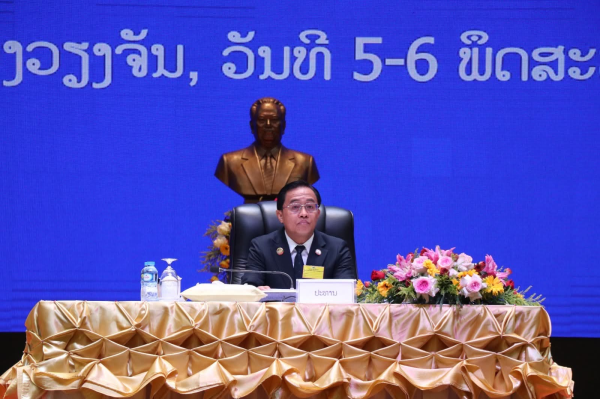
(KPL) The National Meeting on Public Works and Transport (PWT) for 2025–2026, alongside discussions on the implementation of the 5-Year Sector Development Plan (2026–2030), convened on May 5 at the National Convention Center.
The meeting was presided over and officially opened by Leklay Sivilay, Minister of Public Works and Transport. Participants included deputy ministers, vice presidents of the State Inspection Authority and State Audit Organization, provincial and Vientiane authorities, directors of state-owned enterprises, private sector representatives, and other relevant stakeholders.
Meeting Sets Direction for Sector Development
The meeting aimed to review progress and define priorities for the public works and transport sector. Officials presented a summary of nationwide activities in 2025, outlined implementation directions for 2026, and discussed the adoption of the 5-Year Development Plan (2026–2030).
Eleven Key Issues Highlighted for Discussion
Participants focused on eleven strategic areas critical to sector advancement:
First, infrastructure policy discussions addressed progress in road construction and maintenance, particularly through Output- and Performance-Based Road Contracts (OPBRC) and PRTC projects.
Second, the meeting reviewed the execution of the Road Fund, including road repair efforts and the establishment of maintenance units in line with the “Three-Builds” (Sam Sang) directive.
Third, modernization efforts emphasized digital transformation across the PWT sector.
Fourth, officials examined a draft ministerial agreement on the organization and operations of PWT at the subdistrict level.
Fifth, discussions covered the management of freight and passenger transport services.
Sixth, load control measures focused on regulating heavy trucks and enforcing penalties against overloaded vehicles.
Seventh, traffic safety was addressed through strategies to reduce violations and accidents, including speeding, non-compliance with traffic laws, and unsafe transport of construction materials.
Eighth, waterway safety discussions highlighted the management of navigation standards for tourism boats, cargo vessels, and passenger ferries.
Ninth, resource management focused on regulating the extraction of stone and sand for construction and preventing illegal mining activities.
Tenth, participants emphasized improving coordination mechanisms within the PWT sector and with other government agencies.
Finally, green energy transition strategies explored mechanisms to support the adoption of electric vehicles (EVs), with a national target of achieving 30 percent vehicle penetration by 2030.