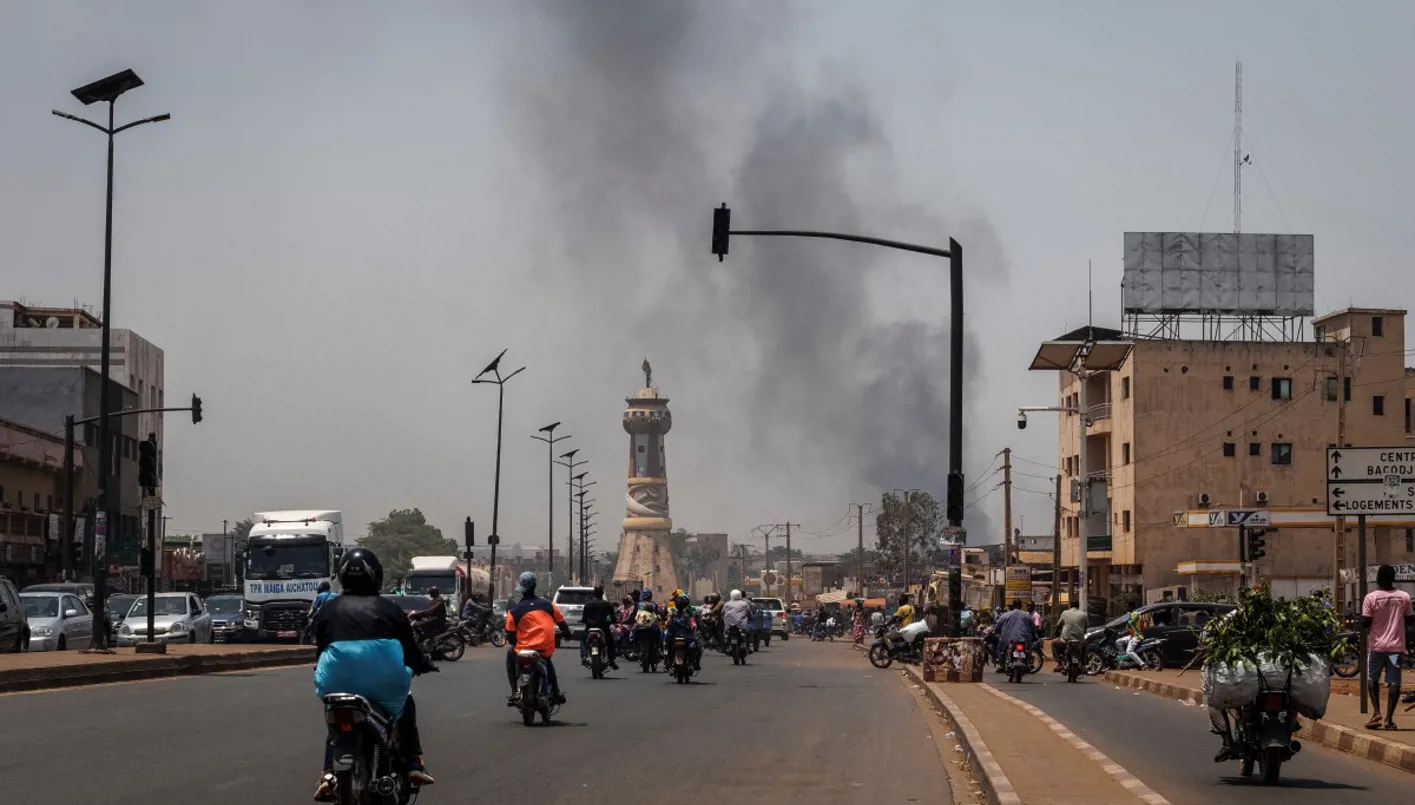
In light of the decline in the role of the traditional “security belt” that separated the two regions, security experts warn that the repercussions of what is happening in financial It may exceed its geographical borders, affecting the entire North African region, which is no longer immune to the disturbances of the Sahel region.
Mali is under the weight of weak central authority
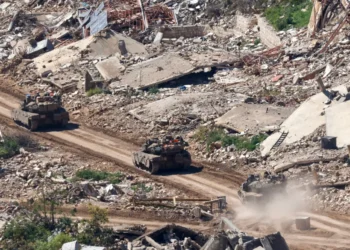
For days, Mali has been experiencing an unprecedented security development, with mutual attacks between the Malian army and extremist groups in several areas, reaching the capital, Bamako, while the separatist “Front de Liberation de Azawad” took control of the city of Kidal in the north of the country.
The security situation in the region has become open to different scenarios.
Algerian researcher and academic Jilali Karais says that Mali is part of the Sahel region, which is a soft region, and lives in a state of fragility and structural weakness in the central authority, which makes the region as a whole experience endless tensions and conflicts.
He points out the role of foreign intervention and the conflict of interests between the major powers in shaping the scene in the country, especially the French presence where you are looking France According to him, “about achieving economic and strategic interests, and strengthening its areas of influence after it witnessed a clear decline in recent years.”
He adds that Mali lives in semi-isolation with its African surroundings due to the policies of the ruling authority, “which increases the fragility and danger of what is happening there,” according to his estimate.
Since 2020, the military council close to… Russia to power, but he faces violent rebellions from separatist groups and armed militias, most notably the “Support for Islam and Muslims” organization, “ISIS,” and the “Front de Liberation de Azawad” in the north.
Are North African countries witnessing waves of migration and asylum?
In a region where irregular migration is one of the issues that burdens their governments, North African countries fear that the security events and state of chaos that Mali has been experiencing in recent days will prompt large waves of migration, as a large number of Malians are expected to flee to Niger and…Algeria And from there to Tunisia andLibya.
Krais stresses that the situation in Mali is dangerous and could lead to waves of migration, and what makes the situation more dangerous in his estimation is “the relationship of the ruling authority with its neighbors, especially Algeria,” which, according to him, “can provide assistance and has many keys to the conflict.”
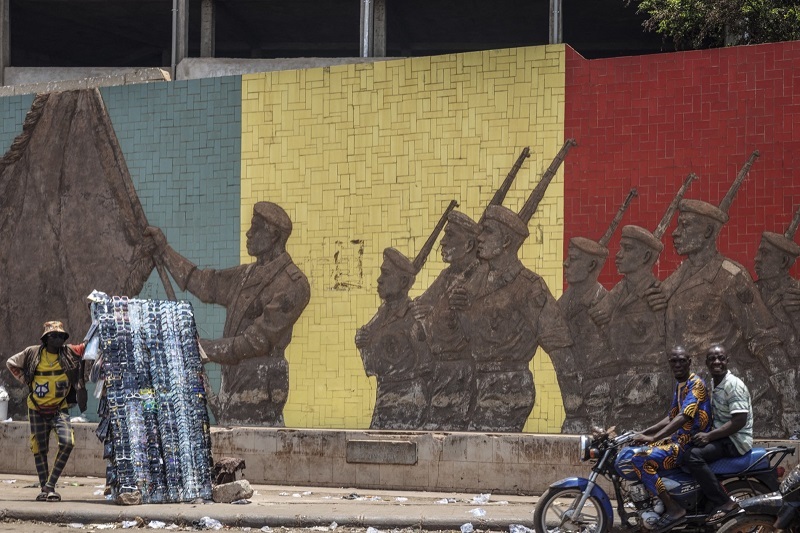
A mural supporting the Malian army in the capital, Bamako. (AFP)
But he points out that Algeria, which has the longest border strip with Mali, has its own approach and strategy to secure its borders and not allow the crisis to spread to it, pointing out that it has expertise and experience in dealing with such crises.
Despite the great mineral wealth it possesses, Mustafa Abdel Kabir, an expert in African affairs, told Al-Nahar that Mali is suffering from a severe economic crisis that is forcing its citizens to seek to leave in any way possible, as about half of its population is below the poverty line.
He believes that recent events will push thousands of Malians to think about crossing the border towards Europe, stressing that North Africa will be their next destination.
Although Tunisia does not have a land border with Mali, it is expected that flows of Malians fleeing the furnace of war will reach it through its border with Algeria.
He points out that the crises and conflicts experienced by sub-Saharan African countries pushed waves of irregular migrants to Tunisia as a transit station towards Europe.
He points out that the situation will be similar to what happened in Libya and Sudan.
Since 2011, Tunisia has witnessed large waves of irregular migration, and has become classified as a major transit area on the journey to the other side of the Mediterranean.
The irregular immigration file has become one of the files that raises human rights, legal, economic and political controversy in the country.
Most North African countries signed strategic cooperation agreements with the European Union, which were met with widespread human rights criticism, as critical voices believe that they have turned them into an advanced maritime border guard for the coasts of Europe.
Are terrorist networks exploiting the Mali crisis to infiltrate?
Concerns do not stop at migrant flows, as experts warn that what Mali is experiencing and the authorities’ inability to control the system will create a large security vacuum that will give large space for terrorist and crime networks to move.
According to many expectations, it is feared that this will have repercussions on the northern countries.
Abdel Kabir says that elements belonging to terrorist and criminal networks may infiltrate through these flows, which constitutes a major security challenge for the countries of the North African region.
He believes that these countries are required to be more vigilant and intensify control over their borders and coordination between them to prevent the infiltration of these dangerous elements into them.