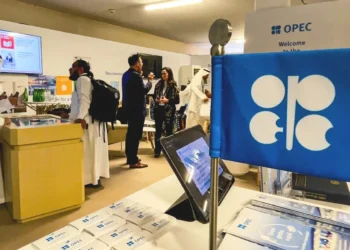
It’s a decision United Arab Emirates The withdrawal from OPEC and its broader alliance naturally sparked widespread interest, and analysts were quick to gauge its implications for production quotas, the organization’s cohesion, and its future ability to influence prices.
In reality, the immediate impact will be limited. The UAE is undoubtedly an important producer, but its exit does not fundamentally change the current supply balance within OPEC. The organization still represents about a third of production Global oilTogether with its partners, it is close to half of the global supply, and therefore its ability to influence prices will remain, at least in the near term.
But the most important question is not who leaves?OPEC“But who might leave later, and under what alignment?
There is a deeper transformation that may be taking shape, and it does not revolve around an internal disintegration within OPEC, as much as it relates to the emergence of a parallel energy bloc led by the United States.
Washington has expanded its influence over… Oil sector in Venezuela During recent months, it is the country that possesses the largest proven oil reserves in the world, at about 300 billion barrels, and the most strategic question is whether this effect may extend to include Iran, whose reserves exceed 200 billion barrels, and whose production has witnessed a gradual recovery despite the sanctions?
If such an alignment is achieved – with both Venezuela and Iran operating within a framework of American influence outside OPEC – the repercussions will be structural.
The numbers here are telling
The global supply of oil currently amounts to about 106 to 108 million barrels per day, and the United States alone produces about 13.5 million barrels per day, or approximately 16% of global production. With the addition of Iran (about 3.5 million barrels per day) and Venezuela (about one million barrels per day), a bloc will be formed with a production of approximately 18 to 19 million barrels per day – equivalent to about 17% to 18% of Global supply.
This size may not be dominant, but it is enough to create a counterbalance.
However, the most important shift appears when looking at reserves. The reserves of Venezuela, amounting to about 300 billion barrels, and Iran’s reserves, which exceed 200 billion barrels, in addition to the reserves of the United States – although of course they are smaller – raise the total resources of this bloc of proven reserves to approximately 600 billion barrels, which puts it in a position close to the remaining “OPEC” after the exit of some of the largest owners of reserves from it.
Today, OPEC’s strength lies not only in production, but also in its control over about 70% of the world’s proven oil reserves, and the exit of Iran and Venezuela from this framework would significantly reduce this share, and with it the organization’s long-term influence on the supply side will decline.
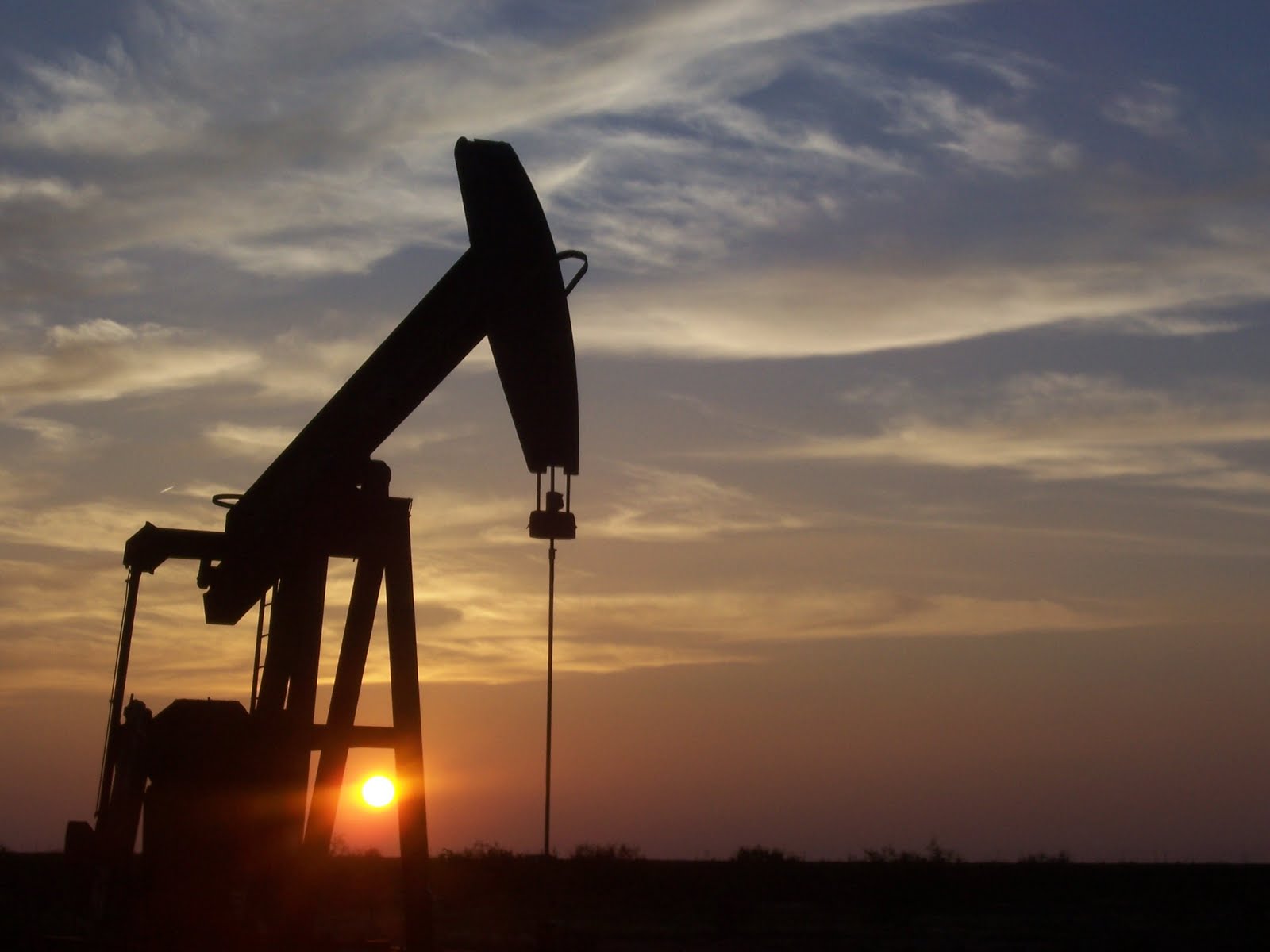
Oil exploration facilities (AFP)
Here lies the essence of transformation.
For decades, OPEC’s influence has been based on its ability to manage supplies from low-cost producers, while the potential American bloc will operate according to a different model, combining three production patterns:
American shale oil, which is quick to respond to price cycles.
Iranian conventional oil, which is scalable and cost competitive.
Venezuelan heavy oil, which has huge reserves but requires large investments.
This combination does not constitute a coordinated quota system, but rather a flexible balance that responds to market signals rather than adhering to specific production restrictions.
The result is a gradual erosion of OPEC’s ability to set the “marginal barrel.”
In such a system, any sustained rise in prices led by OPEC will be matched by an expansion in production from this alternative bloc, and the result is not necessarily an immediate reduction in prices, but rather a lower price ceiling in the medium and long term.
What is taking shape here is not fragmentation, but rather a rebalancing from a market governed by one dominant party, to a bipolar market in which the flexibility of supply is distributed between two main centers.
For policymakers and investors, this distinction is crucial. The exit of the UAE is a remarkable piece of news, while the formation of an energy bloc led by the United States – extending across the Americas and parts of the Middle East – is a much deeper transformation. This transformation, unlike OPEC’s internal dynamics, is not related to cohesion, but rather to who will shape the features of the next phase of energy markets.