More than half of the countries in the world are in a “very serious” situation in terms of press freedom, according to the World Classification published by Reporters Without Borders on April 30, 2026.
Among them, Nicaragua appears for the second consecutive year, in last placeamong the Latin American countries, with the worst situation of press freedom, surpassing Cuba (160) and Venezuela (159), and is ranked 168, among 180 countries evaluated.
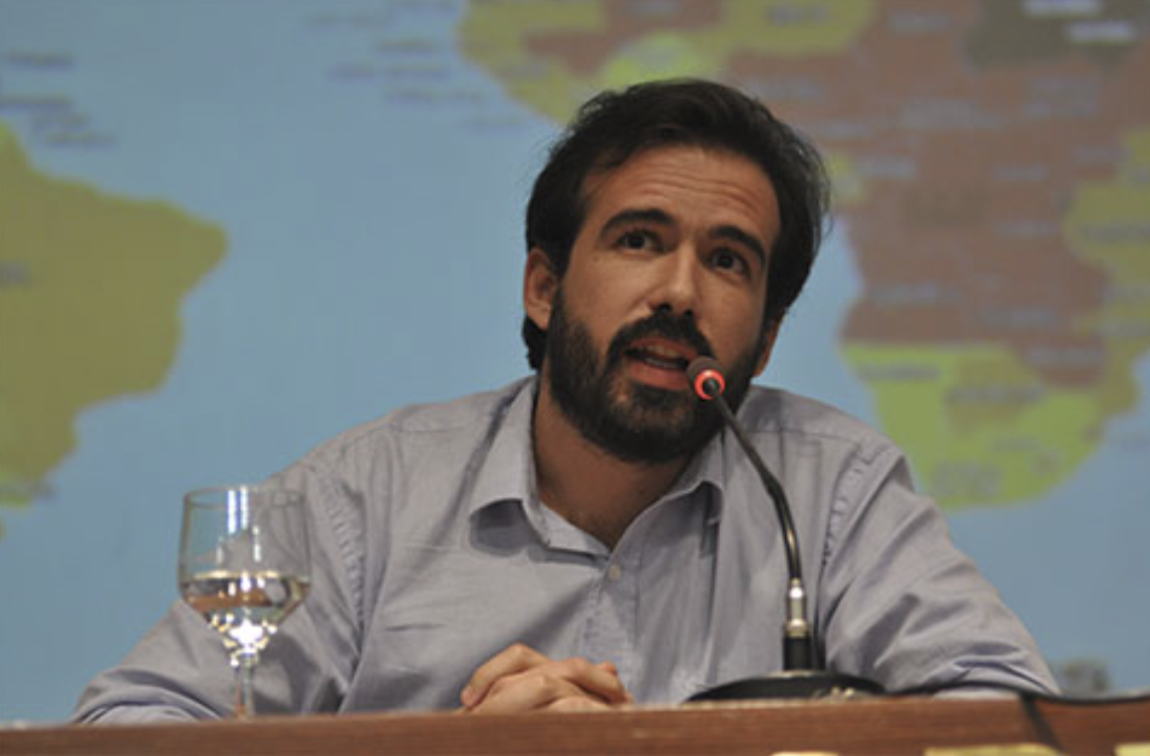
“The three countries that are in the worst situation for journalism in Latin America are Nicaragua, Cuba and Venezuela,” says Artur Romeu, director for Latin America of Reporters Without Borders, however, in Nicaragua, “we have an important ecosystem of Nicaraguan media in exile.”
In an interview on the program This weekwhich airs this Sunday, May 3 on the channel CONFIDENTIAL YouTubedue to television censorship in Nicaragua, Romeu highlighted that “journalism in exile does absolutely vital work to guarantee that there is some level of free and independent information about what is happening in those countries, which live in a context of systematic propaganda and disinformation caused by the same governments that are in power.”
“Journalism in exile must be strengthened and supported as a vector of guaranteeing the right to information of all citizens in those countries,” said the director for Latin America of Reporters Without Borders.
According to Reporters Without Borders’ global index, more than half of the countries are in a very serious situation of lack of press freedom, and this is the worst moment in 25 years. What is the cause of this deterioration?
Artur Romeu, director for Latin America of RSF. The causes are multiple, countries that are in a situation of armed conflict, war, Ukraine, Palestine, Sudan, Democratic Republic of the Congo. Other countries that are experiencing a situation of deterioration, but systematic, such as North Korea, Eritrea, China, Nicaragua, of course, countries in which the information space has been completely closed in recent years and there are few changes and variations, are experiencing a closure of the space for the exercise of journalism and access to information.
And others in which there are regime changes that are causing, even in democracies, a situation of deterioration, for example, the case of the United States, which falls many positions that year in an open war declared by the Trump government against freedom of the press, and other countries that are going down that same path, Argentina, El Salvador, Peru, Ecuador, in Latin America, in which they are going to emulate that logic of permanent hostility towards the press, and although they are in democratic frameworks, the space for the exercise of journalism deteriorates.
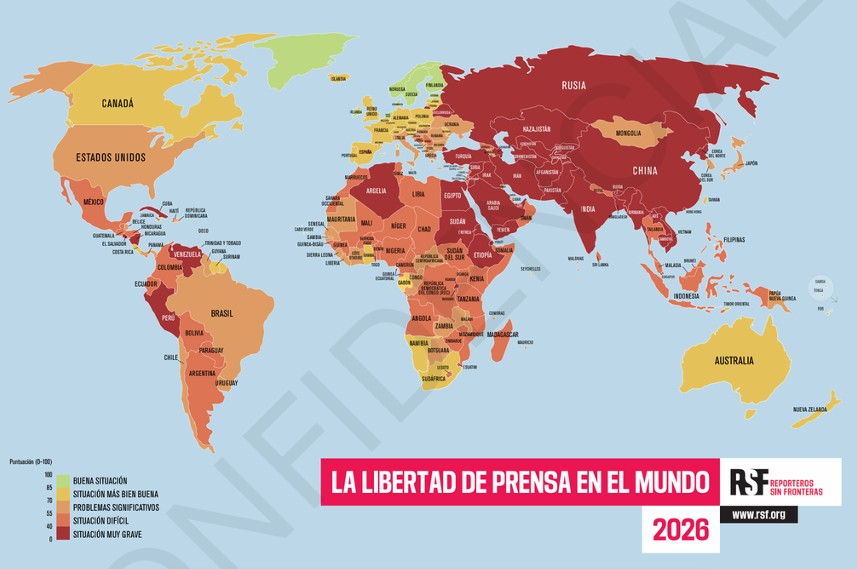
In the case of the American continent, in addition to that drop in the press freedom index in the United States that you have mentioned, there are other countries that have a marked deterioration such as Ecuador, Peru, El Salvador, while Venezuela and Cuba remain in the worst situation in which they already were. And Nicaragua is in last place for press freedom in Latin America, in position number 168 among 180 countries in the world.
Yes. In fact, the three countries that are in the worst situation for journalism in Latin America They are Nicaragua, Cuba and Venezuela. These three countries already came from other editions of previous years with quite poor classifications. Little has changed. With the situation in Venezuela, it is difficult to have a clearer idea of what is going to happen in the country. There is a lot of uncertainty. That year’s index does not necessarily capture the changes happening in Venezuela after January 3 of that year, for example, the release of journalists. But there is still a lot of uncertainty and we cannot yet speak of an opening in the Venezuelan context.
Nicaragua is totally closed, we are talking about journalism in a situation of ruin, it is extremely difficult to practice journalism while in Nicaragua, although we have an important ecosystem of Nicaraguan media in exile. And Cuba, of course, with the crisis, now it is a crisis within a crisis, with what is happening with the blockade, with the energy crisis. The journalists who are still in the country are affected and it is also a context of great uncertainty.
Ecuador had the worst losses of the entire classification that year. It dropped 31 positions reflecting a scenario that has been confirmed in the last 4 or 5 years of an increase in the presence of organized crime and a security crisis for practicing journalism, in addition to a crisis of institutionality. We have frequently declared states of exception in the country, a silent suffocation of journalism in Ecuador.
Peru has dropped more than 60 positions since 2022. El Salvador, since Bukele we have a closure of the information space, hostility, and has declared the press as its enemies.
And more recently, Argentina also seems brutal to us, even with the recent news of the closure of the Casa Rosada so that journalists can access it, emulating the same logic of pressure that Trump exerts on the press in the United States.
How do you evaluate journalism in exile that is practiced in these countries where there is censorship, criminalization of journalism? The case of Cuba, Venezuela and Nicaragua, and also El Salvador
Journalism in exile in Central America has unfortunately become a very clear symptom of the deterioration of the journalism information space throughout the region. There are hundreds of exiled journalists operating in a context of extreme difficulty, in terms of sustainability of their journalistic projects, access to their audiences, access to funds so that they can continue practicing journalism, and a condition of considerable fear due to the transnational repression exercised by the governments of the countries from which these journalists left.
In El Salvador, last year, the adoption of the Foreign Agents Law caused a wave of exile from the country; more than 50 journalists had to leave the country, media outlets, entire newsrooms, and even journalists’ defense associations, who had to leave.
They do absolutely vital work to ensure that you can have some level of free and independent information about what is happening in those countries that live in a context of systematic propaganda and disinformation caused by the same governments that are in power. Journalism in exile has a fundamental role and must be strengthened and supported as a vector of guaranteeing the right to information of all citizens in those countries.
Is there awareness in societies of this crisis of press freedom? Does the recovery of press freedom depend exclusively on journalists, or does civil society have an important role in that task?
We need a clear message for citizens that the defense of press freedom is not an exclusive defense of journalists. We are not facing a sectoral corporatist agenda, but rather the defense of the right of all citizens to be well informed.
The right to information belongs to the entire society and not only to journalists and the media. The challenge is driven by a discussion about a crisis of trust in journalism, a fragmentation of information and the ways in which information is produced, disseminated, and consumed globally.
Creating links with audiences and transmitting the need that the promotion of the right to free, plural, independent, reliable information belongs to all citizens is vital for the future of journalism. And that is something that also appears clearly within the framework of the global deterioration evidenced by the Reporters Without Borders report.
In the edition of Esta Semana, this Sunday, May 3, we will talk about the challenges of journalism in exile in Latin America. We will talk with Carlos Dada, director of El Faro, from El Salvador; Luz Mely Reyes, director offecto Cocuyo, from Venezuela; and Pablo Díaz, director of Diario de Cuba, from Cuba. We are waiting for you at 8:00 pm at the CONFIDENCIAL YouTube channel.